Boot trees and storage shape
Boot shapers support the shaft during storage; they should not be confused with tools intended to stretch footwear. Choose a shape that supports the boot without forcing its material outward or making removal difficult.
Measure the part that needs support
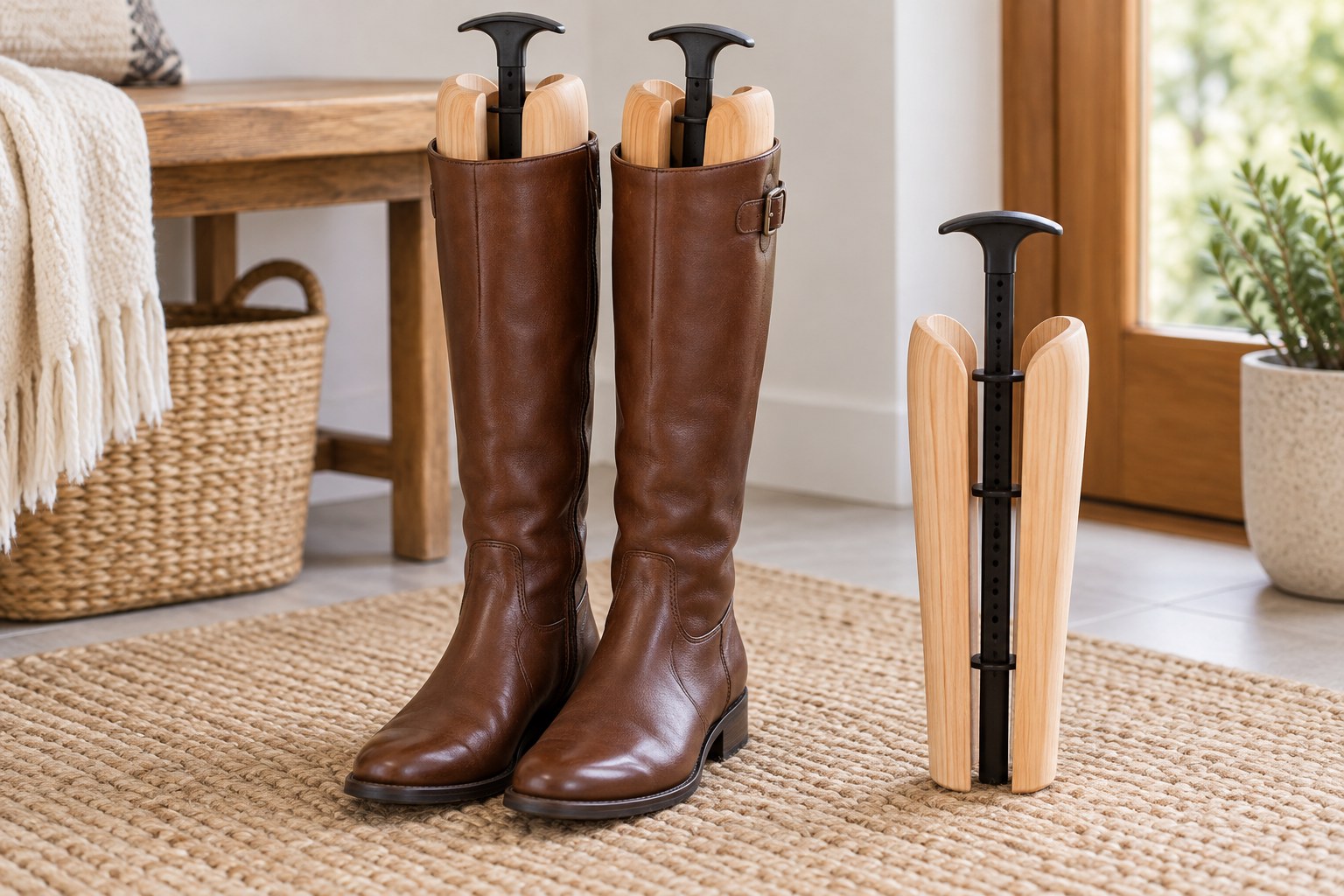
Identify whether the problem is a tall shaft folding over, an ankle section collapsing or the foot area losing its stored shape. A shaft insert does not necessarily support the toe, and a conventional shoe tree does not hold a tall boot upright. Choose the function first instead of buying an accessory simply labeled for boots.
Measure the shaft height and its approximate internal width without stretching it. Compare the insert's supported range and shape with the boot maker's storage guidance. A narrow fashion boot and a wide rain boot can need very different support. Do not force a spring-loaded shaper beyond the intended fit to make one size serve every pair.
Inspect the contact surfaces
Look for smooth edges, covered joints and parts that could snag a lining. Insert and remove the shaper gently with the boot supported. It should not require pulling on a zip or decorative tab that was not designed as a handle. If the lining catches, stop and reconsider the shape rather than pushing harder.
Check whether an adjustable mechanism stays within its stated range and can be released easily. A hanging loop or clip should be used only as intended by the product. Supporting the shaft upright is different from suspending the entire weight of the boot. Verify any hanging claim before arranging footwear on a rail.
Plan the shelf and storage conditions
Measure the supported boot's full height on the intended shelf. The insert may keep the shaft upright but make the pair too tall for the existing space. Avoid folding the top sharply merely to close a cabinet door. A different shelf position may solve the problem more directly than a shorter support that leaves the main fold unchanged.
Store footwear clean and dry according to its material instructions. A shaper is not a drying appliance and should not be assumed to remove moisture or odors. If boots have become wet, follow the maker's drying guidance before enclosing them in a box or cover. Do not add direct heat simply to speed the storage routine.
Check the stored pair periodically for pressure marks or an insert that has shifted. Keep the two shapers together when the boots are worn. A useful support maintains an appropriate resting shape with easy removal; it should not stretch the shaft, complicate getting dressed or occupy more storage space than the problem warrants.