Brooms for indoor floor surfaces
An indoor broom should suit the floor finish and the kind of loose debris you normally collect. Head width, bristle behavior and the route through furniture matter more than a universal claim about cleaning every surface.
Start with the floor instructions
Identify the flooring and any care restrictions from its manufacturer. A brush suitable for a utility floor may be inappropriate for a delicate finish. Inspect the bristle tips and remove trapped grit before use. A soft-looking head is not a guarantee against damage when hard particles are caught inside it.
Think about the usual debris: fine dust, crumbs or a mix of larger dry pieces. Compare how the broom gathers that material on a small representative area. A very stiff head can feel effective on coarse debris while moving fine dust differently. Choose for the ordinary task rather than an unusually dramatic demonstration pile.
Fit the head through the room
Measure the gaps between chair legs, cabinets and other furniture where sweeping regularly occurs. A wide head covers open space quickly but can be awkward in a small kitchen. A narrow or angled head may reach corners more conveniently. Check the whole head profile, including the hard body that can strike a baseboard before the bristles reach it.
Try the handle at a length that lets you control the head without repeatedly stooping or reaching far ahead. If the handle adjusts, check the locking mechanism through ordinary strokes. A joint that turns loose is more troublesome than a modest difference in overall weight. Read the compatibility details before attaching a spare handle from another system.
Plan collection and storage together
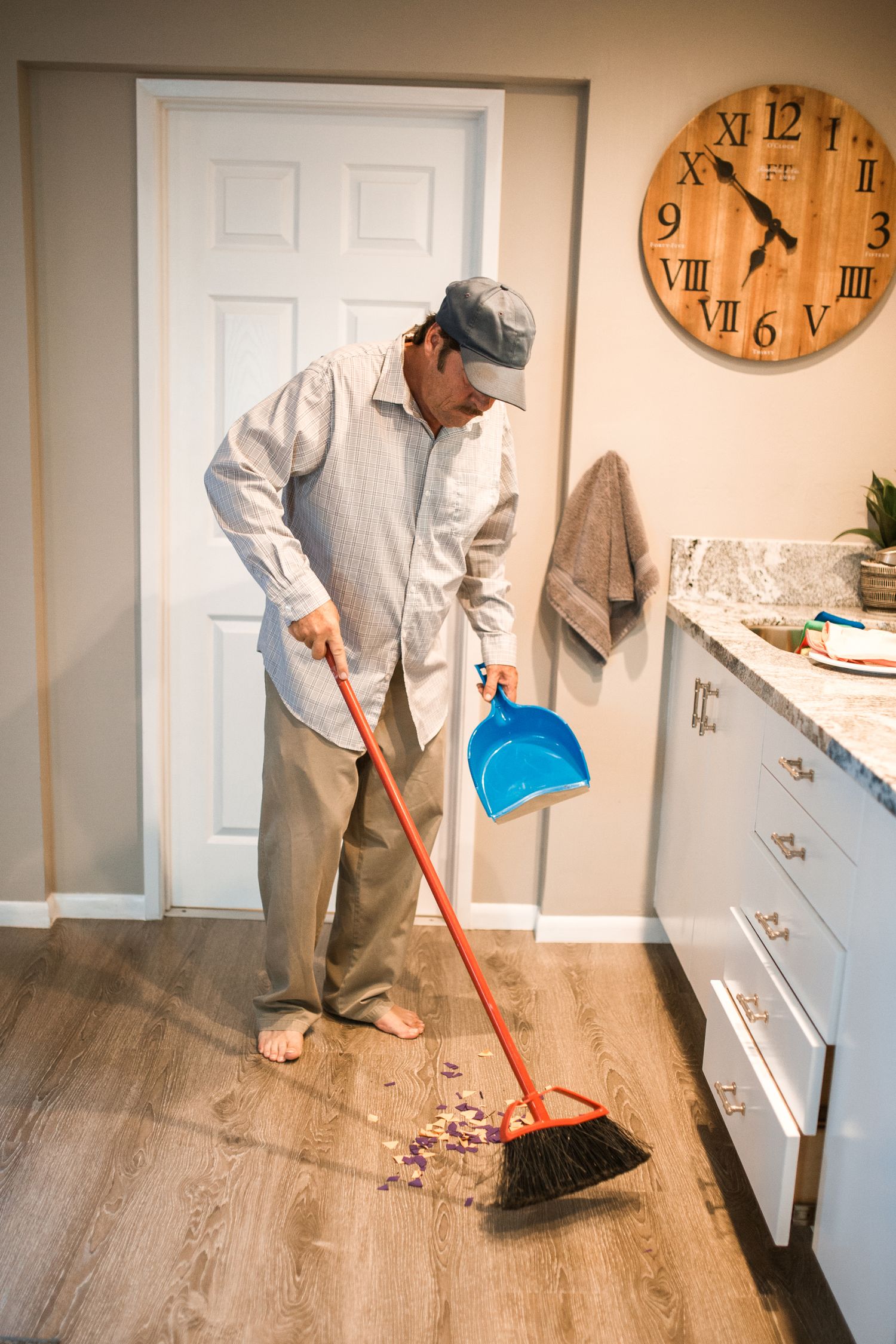
Pair the broom with a dustpan whose opening accommodates its working width. Collecting the final pile should not require scattering it into several smaller ones. Check whether the broom can stand safely only while attended or whether it needs a storage holder. Do not lean a long handle where it can fall across a passage.
Store the head so the bristles are not held under a permanent sideways load. A wall hook or supported position can be useful if it suits the product. Keep the head clean and dry according to its instructions. If the broom has a replaceable head, note the exact connection and replacement code before the original packaging is discarded.
Review the bristles when sweeping begins to leave irregular trails. Cleaning may remove trapped material, while bent or missing sections may call for replacement. A broom is a simple tool, but its useful life depends on the condition of the working edge. Replacing that part where supported can preserve a handle that still fits the room and user well.