Felt pads that match furniture feet
A felt pad needs to cover the working face of a furniture foot and remain attached during ordinary movement. Choosing a convenient packet size is less important than matching the foot, floor and attachment method.
Look underneath the furniture
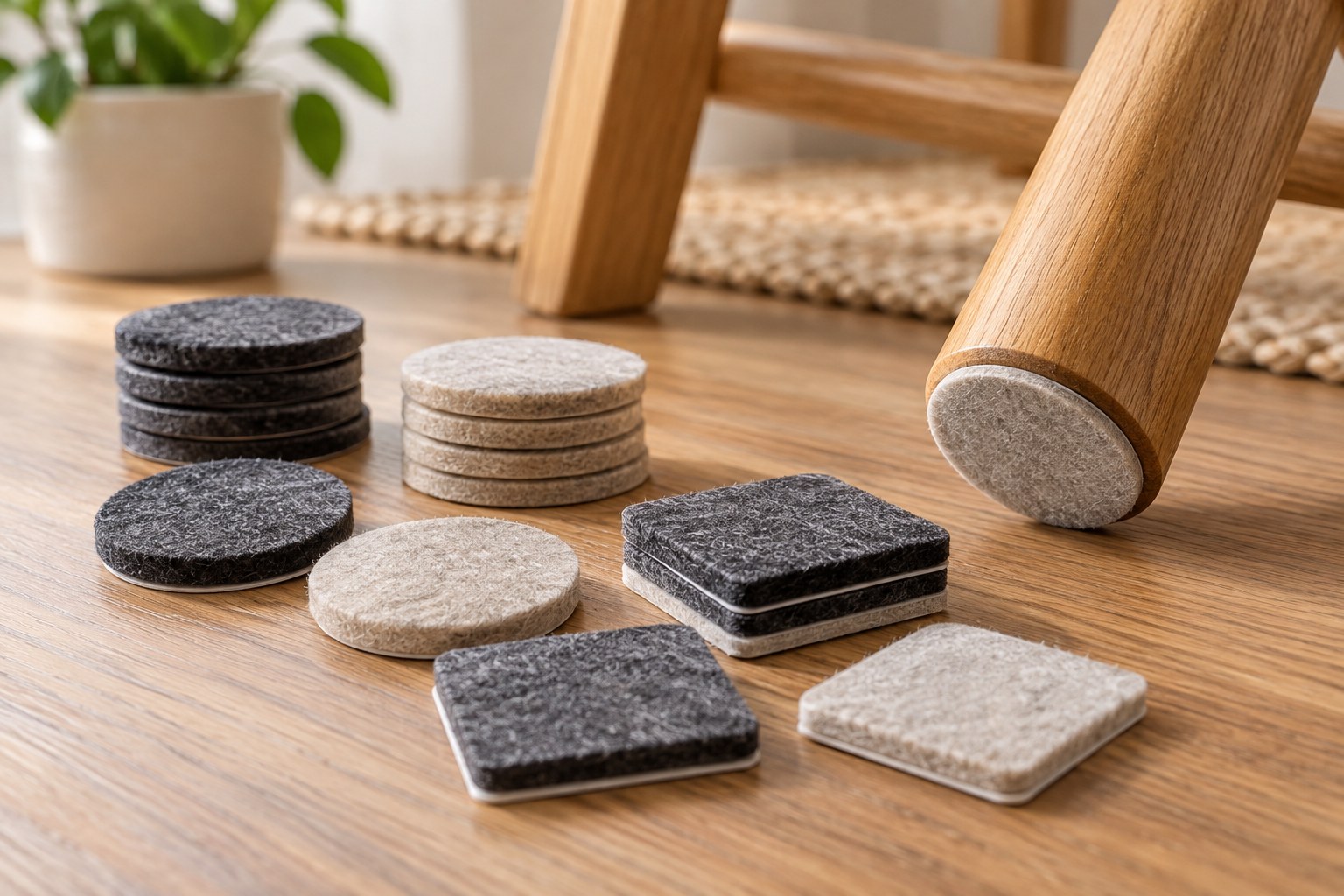
Measure the actual contact face rather than the widest part of the leg. A tapered chair leg may end in a small angled surface, while a cabinet foot can have a recessed center. Check for existing caps, screws or damaged material. A self-adhesive pad needs a suitable prepared surface; it should not simply cover a loose or broken foot.
Read the furniture and floor care instructions before selecting felt. The flooring may specify particular protectors or restrictions. A felt-looking material is not a universal guarantee against marks. Check compatibility with the finish and the expected movement, especially for chairs that are pulled out many times a day.
Fit the shape without creating a loose edge
Choose a pad that supports the contact area without projecting so far that its edge catches and peels. If cutting a sheet is permitted, mark the shape carefully and use a safe cutting method away from the furniture. An oversized piece folded up the sides is not the same as a correctly fitted protector.
Keep the thickness consistent where the furniture requires equal support. Replacing one foot with a much thicker pad can make a chair or table rock. Do not use layers of adhesive felt as an improvised structural repair or leveling system. Resolve damaged feet and required adjustment through the furniture's intended method.
Prepare and attach according to instructions
Remove old residue using a method safe for the furniture finish. The new pad's instructions determine cleaning, drying, pressure and any waiting period before use. Do not add an arbitrary strong solvent or extra glue to improve adhesion. A surface that looks clean may still be unsuitable for the product's adhesive.
Support the furniture safely while fitting pads and avoid placing hands beneath an unstable load. Check every foot after returning the item to its normal position. Move it gently as intended and confirm that pads stay centered. If they slide immediately, inspect compatibility and preparation instead of pressing them back repeatedly without addressing the cause.
Inspect the working surface
Felt can collect grit, so check and clean the contact faces regularly, particularly on frequently moved furniture. Replace worn, detached or contaminated pads as needed. A protector that was suitable when new can become unsuitable through trapped debris or uneven wear. Keep a note of the successful size and type so replacements match the existing arrangement without another round of guesswork.