Filing cabinets for household documents
A household filing cabinet should make ordinary papers easy to retrieve without becoming a place where every document disappears. Choose its internal format and access before deciding how many drawers look right beside the desk.

Sort the current papers before measuring
Group the documents you actually keep by how often they are used. Current correspondence needs different access from completed records. Do not buy a large cabinet simply to postpone sorting an unidentified pile. Decide which papers belong in folders, binders or separate envelopes, then measure those containers with their tabs and labels included.
Check whether the cabinet supports the file format you intend to use. US Letter and legal folders need different clearances, and hanging-file rails may have specific adjustment limits. The outer drawer width does not establish the usable space between rails. Compare the internal drawing with a real filled folder rather than a loose sheet of paper.
Open the drawer in the room plan
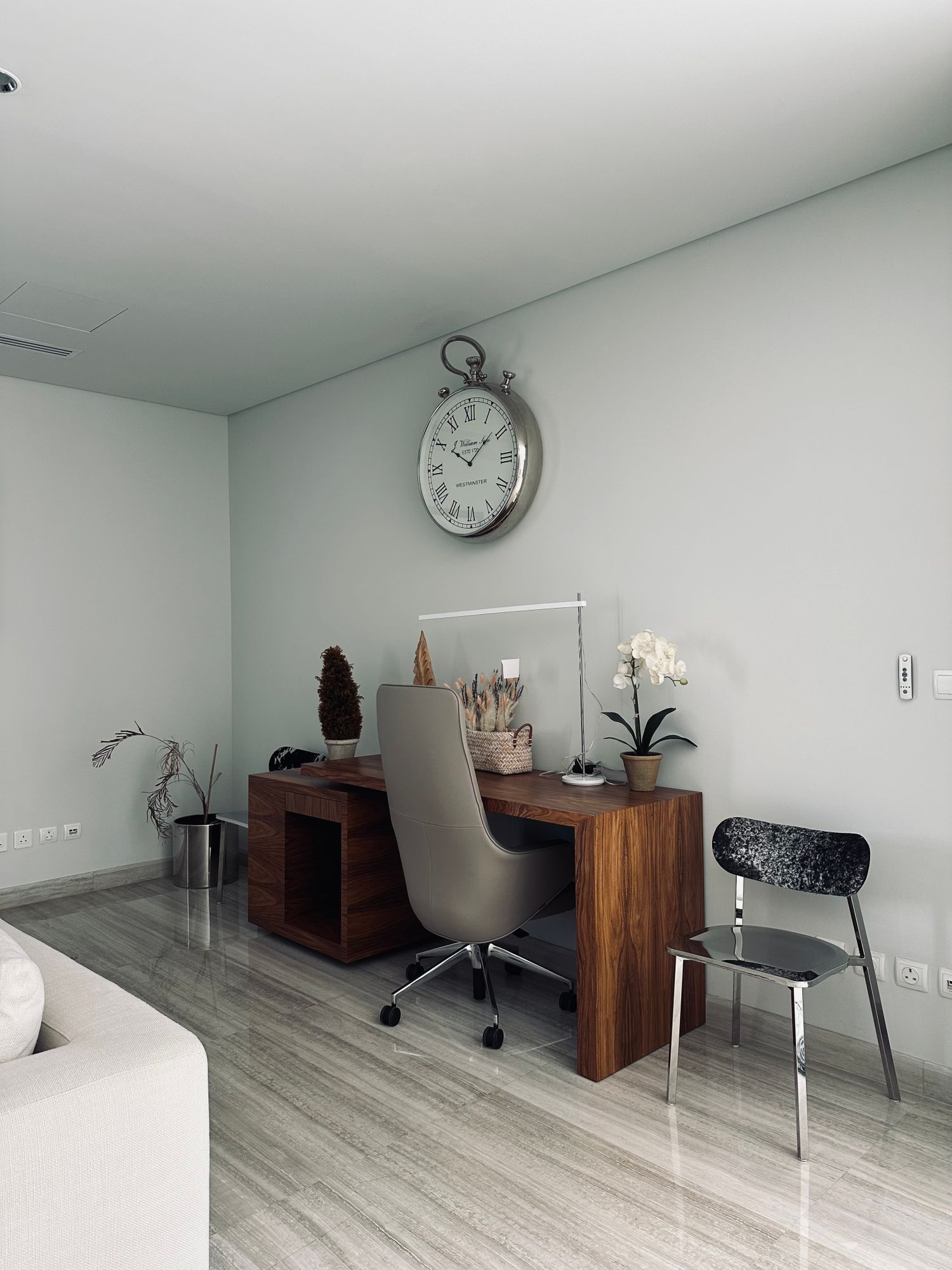
Mark the cabinet footprint and the space required by a fully opened drawer. Include where you stand or sit while looking through files. A cabinet beside a desk can fit when closed yet block the chair during use. Check the access direction before choosing a drawer unit instead of a cabinet with shelves or doors.
Read the manufacturer's installation and anti-tip instructions, including any required anchoring and limits on opening drawers. A lock is not a substitute for the prescribed stability measures. Load and use the cabinet as directed, and do not improvise by placing heavy objects on top to counterbalance an unstable arrangement.
Make the labels do the work
Use a small number of clear headings that reflect how you search for papers. A label such as 'home maintenance' may be more useful than a vague 'miscellaneous' section. Leave enough space for folders to move so a single document can be removed without lifting an entire compressed row. Capacity should include working room, not just the maximum packed volume.
Keep records of different sensitivity in an appropriate arrangement and understand what a cabinet lock is designed to do. Do not assume an ordinary lockable cabinet is fire-resistant, water-resistant or suitable for every security requirement. Those are separate documented properties. Choose additional protection only for a defined need rather than inferring it from a solid-looking front.
Keep the system usable over time
Set a regular review point for completed folders and follow the retention requirements relevant to the records. Keep the cabinet's assembly instructions and keys in known places. When adding a new category, revise the labels rather than pushing papers into the nearest gap. A modest cabinet with an understandable arrangement can work better than a larger unit whose drawers have no clear purpose.