Flat mops and removable pads
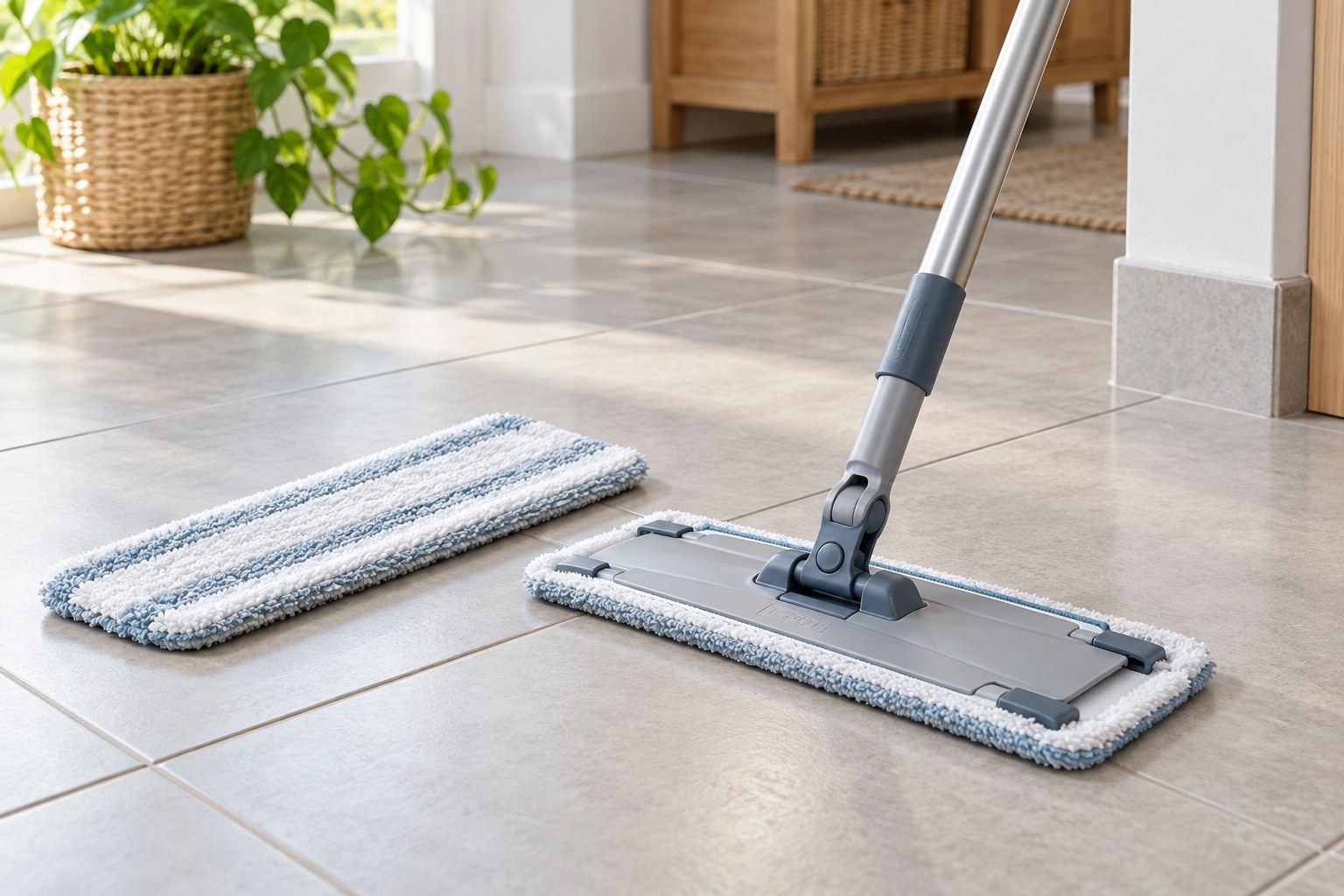
A flat mop is a system of frame, pad and moisture control. Choose it around the floor's care requirements and the way the pad is removed, washed and replaced, rather than treating the handle as the whole purchase.
Let the floor set the limits
Check the flooring manufacturer's instructions before selecting a wet-cleaning tool. The amount of moisture and permitted cleaner matter, especially where joints or finishes have restrictions. A mop advertised for many floor types does not override the care requirements of the floor actually installed. Identify those requirements before comparing pad materials.
Look at the head shape in the room. A broad rectangular frame covers open space, while its corners and joint determine how it moves around furniture. Measure the height beneath low cabinets and consider whether the handle joint can turn without lifting the pad off the floor. The working movement matters more than width alone.
Understand the pad connection
Hook-and-loop attachment, pockets and clips require different handling. Try attaching and removing the pad with the frame on an appropriate surface. A pad should stay aligned through ordinary changes of direction without bunching beneath the head. Check that the fasteners do not expose a hard edge to the floor when the pad shifts.
Verify the exact refill code and size. Two rectangular pads can look alike while using different pockets or attachment zones. Keep a note of the compatible replacement before discarding the packaging. A low initial price is less useful if ordinary refills are difficult to identify or unavailable in the market where you buy supplies.
Plan how moisture is controlled
A spray reservoir, bucket wringer and separately dampened pad create different routines. Choose the one you can use consistently within the floor's limits. Follow the tool's instructions for permitted solutions and dilution. Do not put an arbitrary cleaning mixture in a reservoir or assume a spray mechanism is designed for every liquid used elsewhere in the household.
Test on an inconspicuous suitable section using the prescribed method. Notice whether the pad is manageable and whether the frame reaches the intended corners. Avoid adding pressure or more liquid simply because a mark remains. A persistent mark may need a floor-specific method rather than more force from the mop.
Read care instructions on the exact refill
Vileda's SprayMax pad instructions, for example, specify a washing limit and exclude fabric softener, bleach and tumble drying. Other products have different directions. The important point is to follow the pad's own label rather than applying one microfiber washing rule to every refill. Include drying time when deciding how many pads are useful.
Remove loose debris as directed before washing and keep used pads separate from clean ones. Inspect attachment areas and seams after laundering. A pad that no longer sits securely should not be kept in service just because its cleaning surface looks intact. Clean the frame as instructed so trapped particles do not remain beneath a fresh pad.
Store the system ready for the next use
Choose a place where the head and pad can dry as required and the handle does not fall into a walkway. Empty or maintain any reservoir according to the model's instructions. A small rotation of compatible pads can make the routine easier than owning several unrelated mop systems. The useful purchase remains straightforward from cleaning the floor through cleaning the tool itself.