Footrests that fit beneath the desk
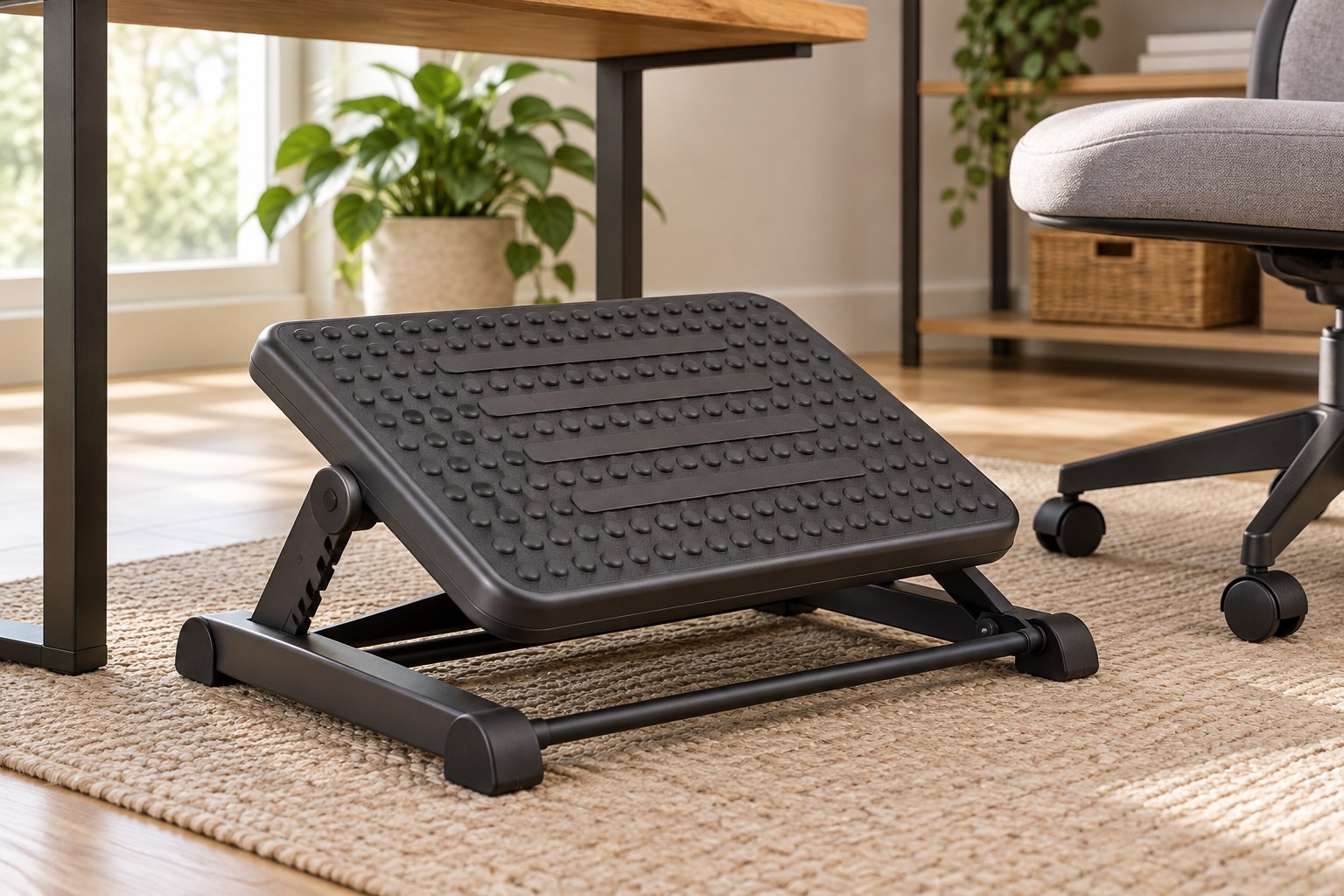
A footrest can support a seated arrangement when the desk and chair cannot otherwise be adjusted to suit the user. It needs usable space beneath the desk, a stable base and an angle that can be tested in the complete setup.
Check why support is needed
Adjust the chair and work surface as far as their intended controls allow, then observe where the feet rest during ordinary typing. OSHA's workstation guidance includes foot support when the floor cannot provide it in the chosen arrangement. A footrest should address that specific mismatch rather than being added automatically to every desk.
Keep the keyboard and chair relationship in view. Lowering the chair simply to reach the floor can create a different problem at a fixed-height desk. Equally, an unnecessarily high footrest can crowd the legs. Evaluate the arrangement together and seek individual help if discomfort persists rather than treating one accessory as a guaranteed remedy.
Measure the clear space underneath
Measure the distance between desk legs, storage units and any crossbar. Include the depth available in front of a computer tower or cable tray. A product's width may fit while its rocking movement reaches an obstruction. Place a cardboard outline on the floor and try moving the chair into its normal working position.
Check the top surface with the footwear normally worn at the desk. Both feet should have usable room without balancing on a narrow edge. If the surface is divided or strongly textured, try it rather than assuming the shape will be comfortable. A footrest must also allow you to change position and move away from the desk easily.
Compare fixed and moving designs
A fixed-angle support gives a predictable position; a rocking design permits movement but needs enough space and a stable base. Test any adjustment mechanism while following the instructions. Check whether a chosen height stays set when you remove and replace your feet. An adjustment that slips is more significant than an additional angle listed on the box.
Look at the contact with the floor. The base should suit carpet or hard flooring without sliding unexpectedly or leaving marks. Follow the maker's surface guidance and keep grit away from the contact points. Do not raise a footrest on loose books or other unstable layers to extend its adjustment range.
Keep it part of the working area
Try a normal work session and note whether the footrest is used naturally or repeatedly pushed aside. Move cables and stored objects that prevent access. Clean the top and underside according to the material instructions. The useful choice is a stable support that fits the available space and the user's setup, not a bulky object that turns the area beneath the desk into another obstacle course.