Hex keys for furniture adjustments
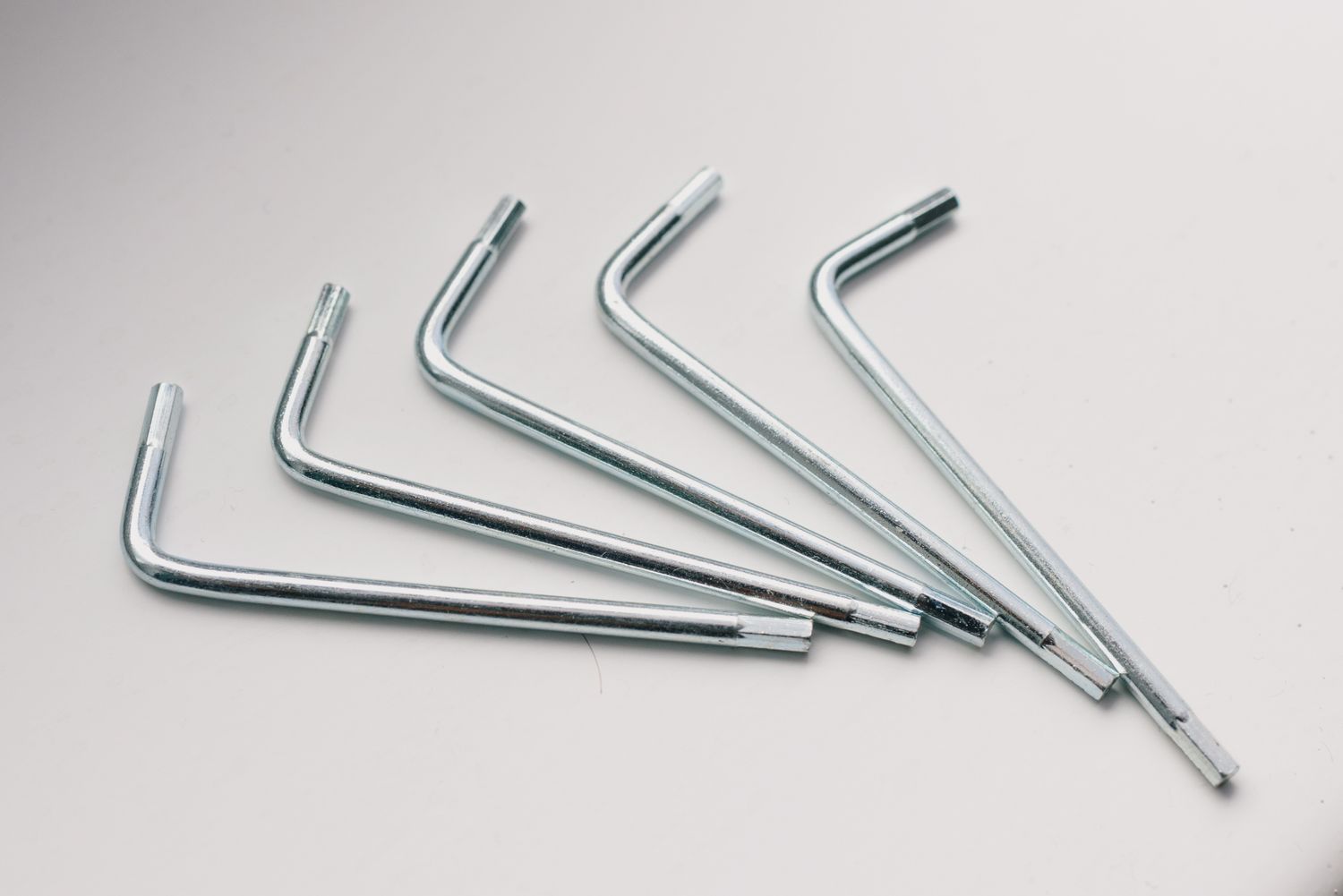
A hex key should match the screw's specified size and reach the connection without being forced at an awkward angle. Keeping a labeled set is more useful than a drawer of nearly identical keys from past furniture assemblies.
Confirm the size system
Read the furniture instructions or hardware specification for the required key. Metric and inch sizes are separate systems, even when two keys look close in width. Wera's range lists metric and imperial L-keys separately. Choose the documented size rather than accepting a loose fit and compensating with extra pressure.
Inspect the recess and the tool end before turning. Remove loose debris in the manner permitted for the hardware so the key can seat fully. A rounded or damaged recess may need a specific repair approach. Repeatedly trying slightly different keys under force can make later removal more difficult.
Choose the shape for access
A short arm can fit into limited space, while a long arm provides reach. Check the room needed for the hand and for the key to rotate through the available angle. A folding set keeps sizes together but its bulky body can obstruct a recessed furniture joint. Compare the actual connection rather than buying a shape solely for convenient storage.
Some keys have a ball end for angled access. Wera describes that feature for difficult installation positions, but the tool's instructions still determine its permitted use. Do not assume the ball end is the right choice for every tightening step or for applying maximum force. Use the end and method specified for the fastener and tool.
Keep the furniture supported
Follow the assembly or adjustment sequence and support the parts before loosening a connection. A screw may hold more than the visible panel. Do not treat a small key as evidence that the joint is unimportant. If the furniture must be unloaded or laid down for adjustment, complete that preparation before turning the hardware.
Where a torque value is specified, use a suitable method and tool to meet it rather than guessing from handle length. Avoid adding a tube or other extension to an ordinary key unless the manufacturer permits it. Extra leverage can damage the connection as well as the tool. Stop if the screw binds unexpectedly and check alignment.
Make the next adjustment straightforward
Return keys to labeled positions and keep the furniture-specific tool code with its instructions. Store duplicate loose keys only when their sizes are known and they have a purpose. Wipe and dry tools as directed, inspecting ends for wear. A compact identified set can serve several pieces of furniture while preserving the distinction between sizes that merely look similar.