Inspection flashlights for dark cupboards
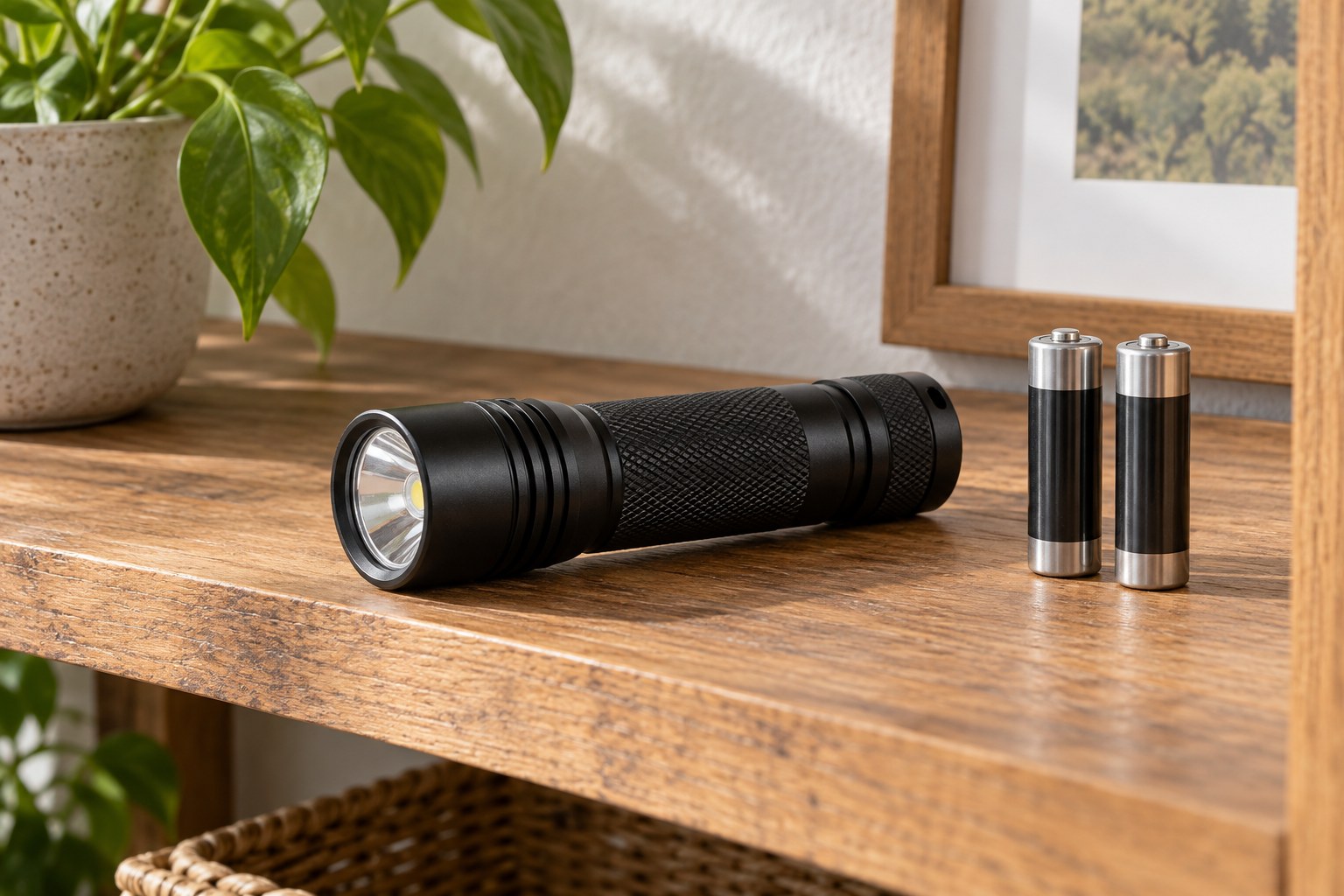
To find a loose item at the back of a cupboard, a broad, controllable pool of light can be more helpful than a narrow beam aimed across the room. Choose a small flashlight around the space you inspect and the way you can hold or position it.
Try the beam at cupboard distance
Point a candidate light at a nearby surface and compare its useful low and medium settings. A very bright center can make pale shelf interiors uncomfortable to look at while leaving the edges difficult to see. A wider, even beam makes it easier to scan hinges, corners and the space behind a box. The highest output figure alone does not describe this close-range experience.
Check whether the light starts at a predictable setting. A switch that cycles through several modes may be inconvenient when one hand is moving stored items. Look for controls you can identify by touch without pointing the beam toward your face. If the lamp remembers its last setting, understand that behavior before leaving it ready for the next use.
Move the beam from the front toward the rear of the shelf and notice where your hand casts a shadow. A short flashlight may be easy to fit into the opening but hard to aim around a deep divider. An angled head or separate inspection light can change that arrangement. Decide based on the actual cabinet rather than collecting features you do not need.
Think about positioning and power together
If you need both hands free, check how the light is intended to stand, clip or attach. A magnet needs a suitable surface; a wood cupboard does not provide one simply because the light has a magnetic base. A clip should fit its intended support securely. Do not rely on a precariously balanced light above the objects you are handling.
A headlamp offers another way to keep hands free, although the beam follows your head and can reflect from a nearby glossy surface. For brief cupboard searches, compare how quickly each option can be put into use. A lamp that needs a lengthy setup may stay in its box while you continue using the phone.
Choose a power arrangement you can maintain. For replaceable batteries, follow the specified size, chemistry and polarity and keep the battery compartment information readable. For a rechargeable model, check the required charging connection and instructions. Do not assume every similar-looking cable or power source is appropriate. Keep the charging lead with the light if it is otherwise easy to confuse with another accessory.
Give the light a predictable home
Store the flashlight where it can be reached before opening the dark cupboard. Avoid placing it behind the very objects it is intended to help you find. A shallow tray near the door or an existing household tool compartment can work, provided the switch is not pressed accidentally by neighboring items.
Inspect the lens, switch and battery area periodically and follow the maker's storage guidance, especially for long intervals without use. Wipe exterior dirt using the permitted care method; a closed flap or rugged-looking body does not establish that the light can be immersed. If you regularly cannot find a working light, improving its storage and charging routine may solve more than buying a brighter model.