Measuring tapes for buying furniture
Furniture measurements are useful only when they describe the right space. A tape measure should make the numbers clear, while your notes distinguish the furniture footprint, access route and clearance for moving parts.
Separate three sets of dimensions
Record the place where the furniture will stand, the route it must travel through and the space needed during use. A cabinet can fit its final wall while failing at a stair turn or blocking a door when opened. Keep these dimensions on separate lines so a single width is not accidentally used to answer three different questions.
For the final position, measure at more than one height where walls, baseboards or trim may reduce clearance. Note projecting outlets, radiators and window ledges. The smallest usable dimension matters more than a convenient measurement above an obstruction. Sketch the room corner and label the direction of each measurement.
Choose a readable tape
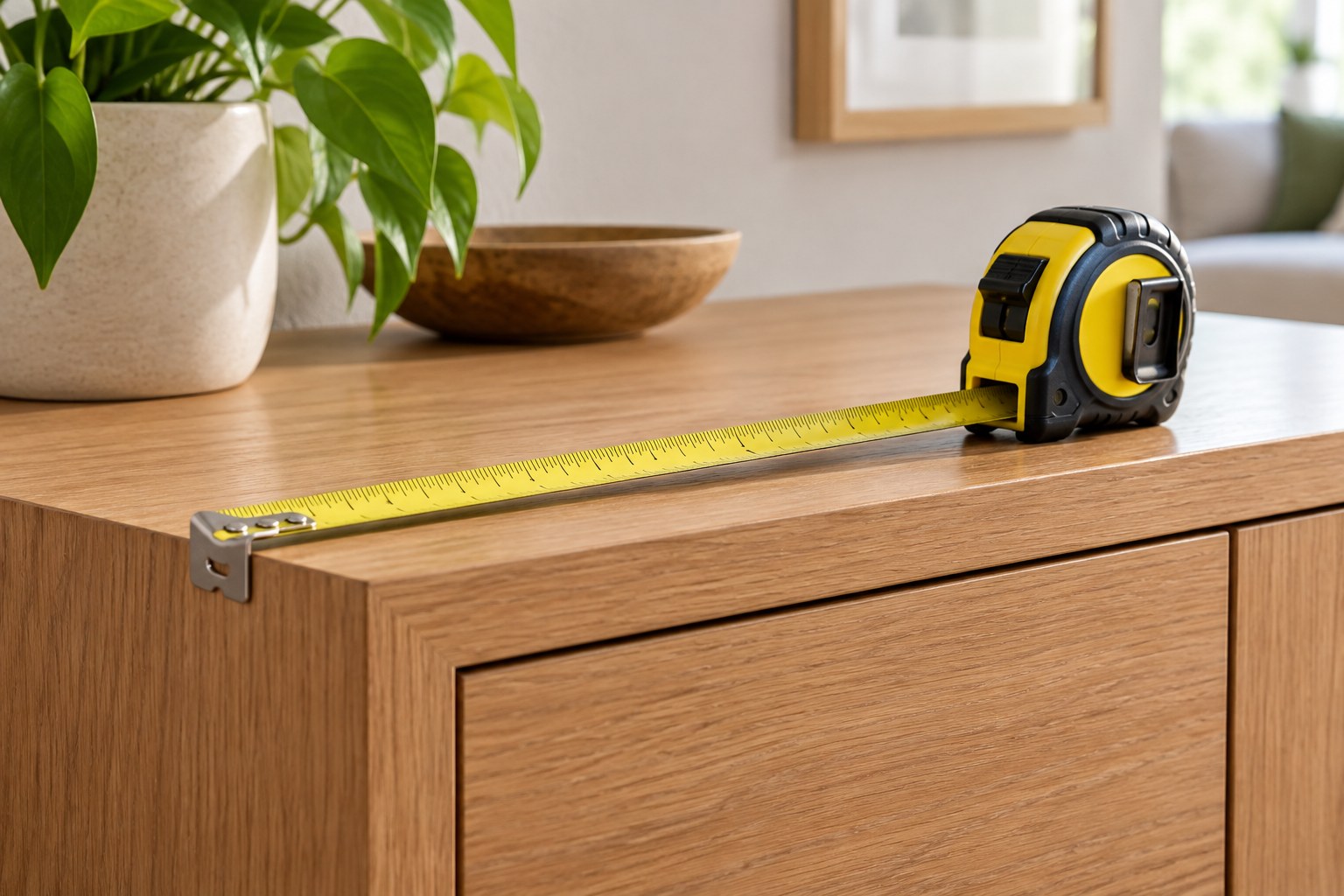
Use units that match the furniture specification and write the units beside each number. A dual-scale tape can be useful for mixed listings, but closely packed markings can also create confusion. Check the scale in ordinary room light and make sure you can distinguish the graduations at the distance you normally read them.
Inspect the tape, hook and case for damage that could affect use. Follow the manufacturer's instructions for inside and outside measurement rather than assuming the hook must be rigid. Keep the tape straight along the intended line without bending it around an obstacle and reading the result as a direct distance. Use a separate measurement for each change of direction.
Measure moving parts in the open position
Include cabinet doors, drawers, recliner movement and the space needed to stand in front of them. Mark the footprint on the floor with a suitable temporary method and move through the room. A drawer may technically open while leaving no room for the person using it. A dining chair needs space beyond the table's edge when pulled back.
Check product drawings for whether dimensions include handles, feet and other projections. Ask for missing measurements when they affect fit rather than guessing from a perspective photograph. If an item is assembled inside the room, read the assembly sequence and the clearance required to turn or raise it safely.
Make the notes usable at purchase time
Write the date, location and what each measurement includes. Photograph the sketch with the relevant space for reference, keeping private details out if it will be shared. Repeat a critical measurement independently before ordering a close fit. Allow the installation and clearance tolerances specified by the furniture maker rather than treating two identical numbers as proof that the item will slide into place.
Retract the tape under control and store it without crushing the blade or hook. A small reliable measuring tool is valuable when paired with clear notes. The goal is not collecting many precise-looking numbers; it is knowing exactly which dimension decides whether the furniture can arrive, fit and function in the room.