Mop buckets that are easy to empty
A mop bucket should be manageable when filled and predictable when poured out. The handle, pouring edge and fit with the mop matter more than choosing the largest capacity that fits in the cleaning cupboard.
Measure the routine, not only the bucket
Identify where the bucket will be filled, carried, used and emptied. Measure the sink or other permitted filling point and the route through doors. A tall bucket may fit the cupboard but be awkward beneath a faucet. A wide one can accept a mop easily while becoming difficult to carry through a narrow utility area.
Choose a working fill level you can comfortably handle rather than treating the rim as the target. Water adds weight quickly, and the bucket's advertised capacity is not a recommendation for every user to carry it full. If the route includes steps or an awkward lift, reconsider the size or cleaning arrangement before buying.
Try the grip and pouring direction
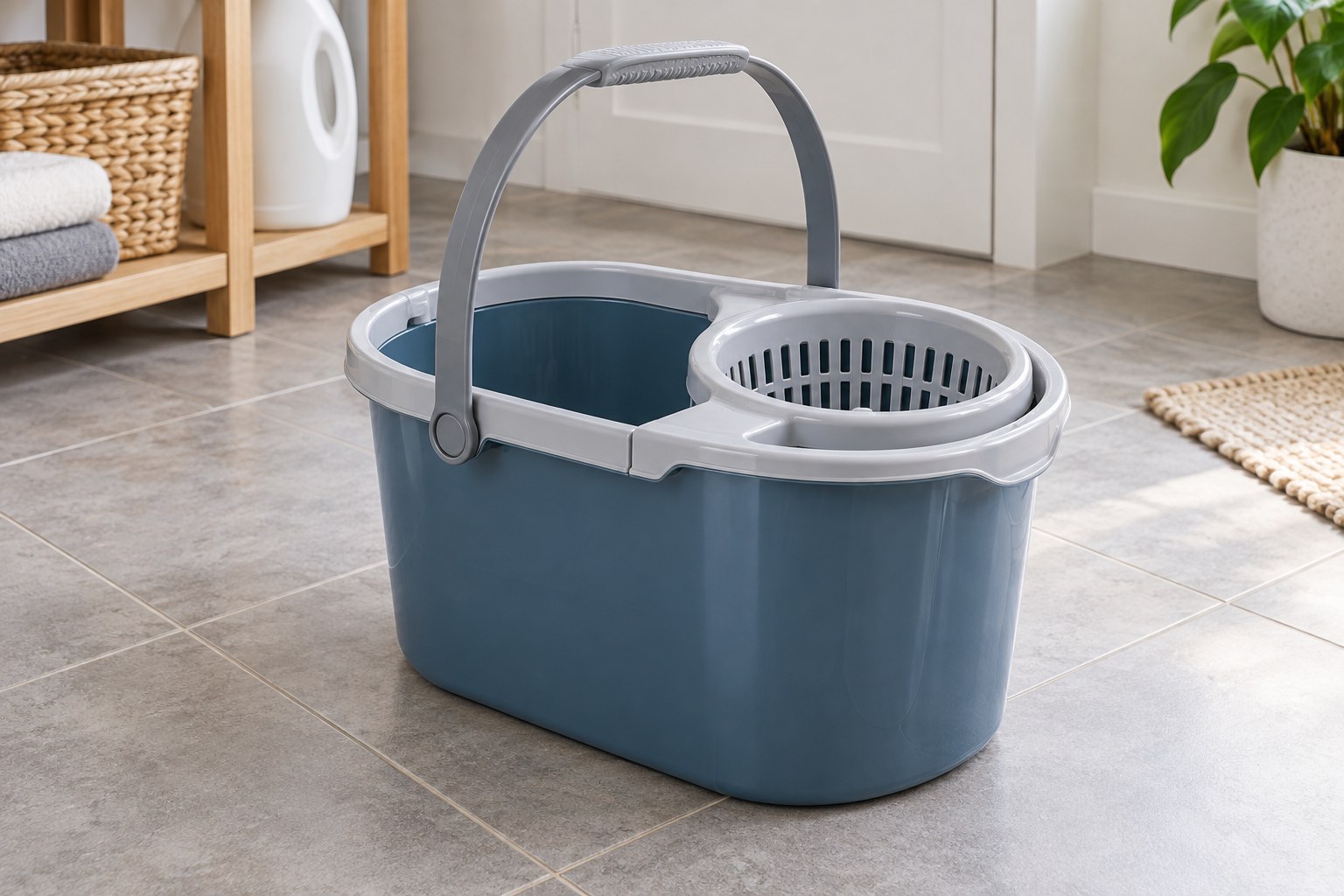
Inspect the handle where the hand rests and where it connects to the body. It should move as intended without pinching fingers or twisting the bucket unexpectedly. A second grip near the base may help controlled pouring if the design provides one. Do not improvise a handhold on a thin rim that was not intended to carry the load.
Look at the pouring edge and imagine the receiving point. The direction of the spout should suit a controlled movement without forcing a turn while the bucket is heavy. Try a modest amount of water first in an appropriate place. A neatly shaped spout is only useful if the rest of the bucket supports a steady tilt.
Check the mop and wringer as a system
A wringer should be explicitly compatible with the mop head and bucket. A flat pad, strip mop and spin system require different arrangements. Check the space needed to insert, rinse and remove the head without splashing over the rim. The wringer's attachment must remain secure under the pressure specified by the manufacturer.
Read which parts can be removed for cleaning and whether replacement components are available. Narrow recesses around a wringer can be difficult to rinse if they are permanently enclosed. Choose a design you can inspect and dry. Do not assume that a bucket's broad opening makes every attached mechanism equally easy to maintain.
Empty the bucket through an appropriate household disposal route for the cleaning solution, following the product instructions. Rinse and dry the equipment as directed before storing it. Keep the mop from trapping moisture inside a closed bucket. A manageable size with clear pouring and cleaning access is often more useful than unused extra capacity.