Notebooks that lie open comfortably
A notebook that stays open can be easier to use beside a keyboard or during a meeting. The binding matters, but paper behavior, page layout and the way you carry the book determine whether that advantage is useful.
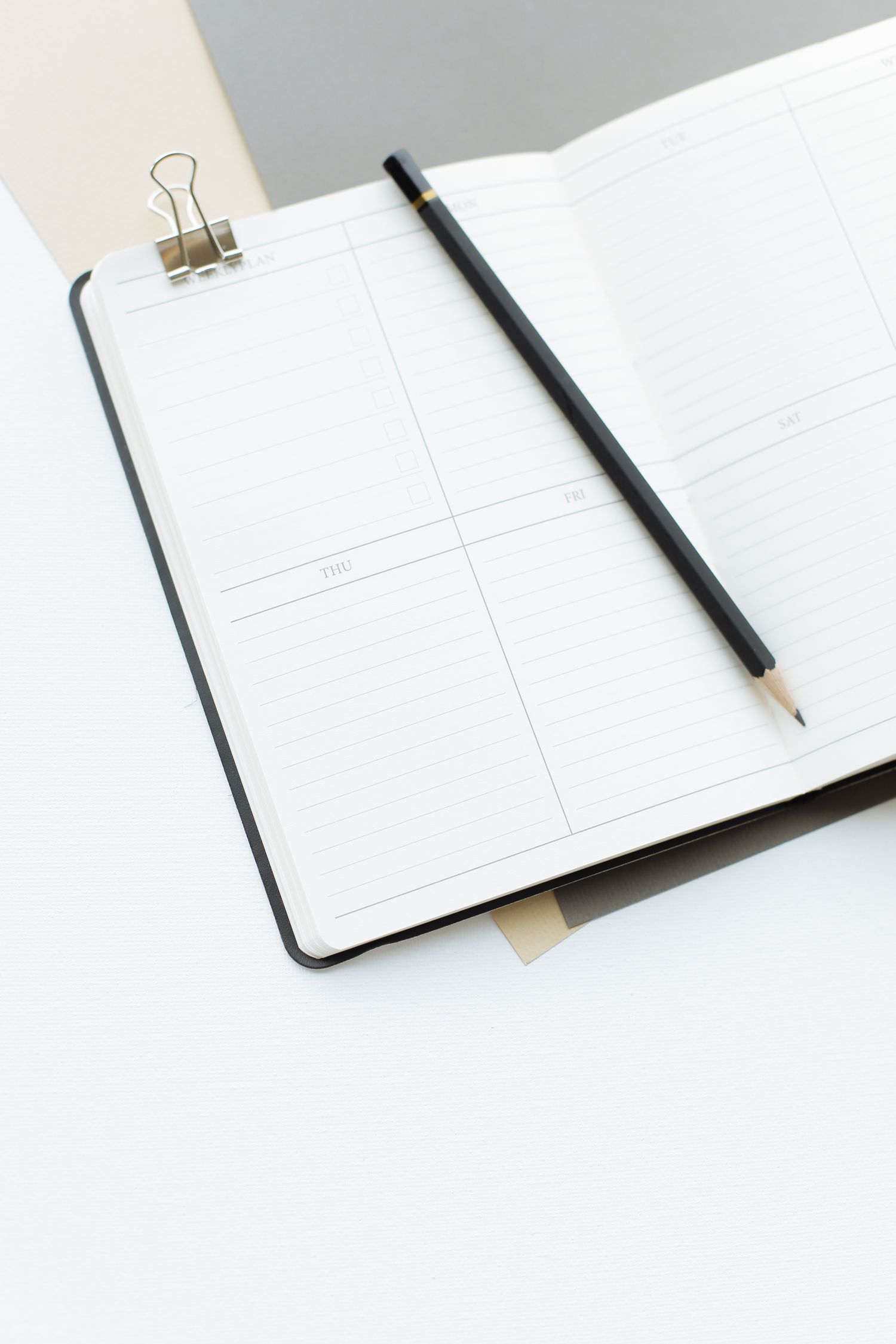
Try the middle and the ends
Open a sample near the front, in the middle and near the back. A book may lie comfortably at its center while resisting at the first few pages. Place it on the surface where you would write and see whether a hand is needed to keep the page open. Do not force the spine beyond the maker's intended opening just to make it appear flat.
Spiral, stitched and glued bindings have different physical arrangements, but the category alone does not establish the behavior of a particular notebook. Check the actual construction. A spiral can let a cover fold back, while its rings may press against a hand or catch in a bag. A stitched notebook can offer a clean edge but still need a real opening trial.
Use the pen and layout you expect
Write a few ordinary lines with the pen type you normally use if a paper sample is available. Look at show-through, ink drying and how the page feels under the nib or tip. Paper weight alone does not describe all of those properties. Avoid choosing a notebook solely from the thickness number when the writing experience is the main purpose.
Choose ruling that fits the task. Wide lines, small grids, dots and blank pages create different amounts of usable structure. Check the inner margin near the binding, where writing can become cramped. Page numbers and an index can help some workflows, but they are extra features to use deliberately rather than reasons to complicate a simple notebook.
Include the closed book in the decision
Measure the notebook with its cover and any closure attached. A familiar size label may describe the pages rather than the whole object. Check the intended bag pocket and the weight when carried with other equipment. A rigid cover supports writing away from a desk but adds bulk; a flexible cover may need a firm surface underneath.
If pages are removable, inspect how they detach and whether the remaining edge stays tidy. Keep frequently referenced notes in a format that will survive their actual handling. A notebook intended as a temporary scratch pad does not need the same organization as one kept for a long project.
During a short trial, turn pages with one hand, close the book around the intended bookmark and reopen it. The useful choice remains open when needed and closes without a struggle when work is finished. A modest notebook matched to those actions can be more satisfying than elaborate binding features that do not suit the desk or bag.