Paper shredders and sheet capacity
A shredder's sheet count describes one part of its capacity. For household paperwork, the permitted materials, running time and effort of emptying the bin can matter just as much as the largest stack it accepts.
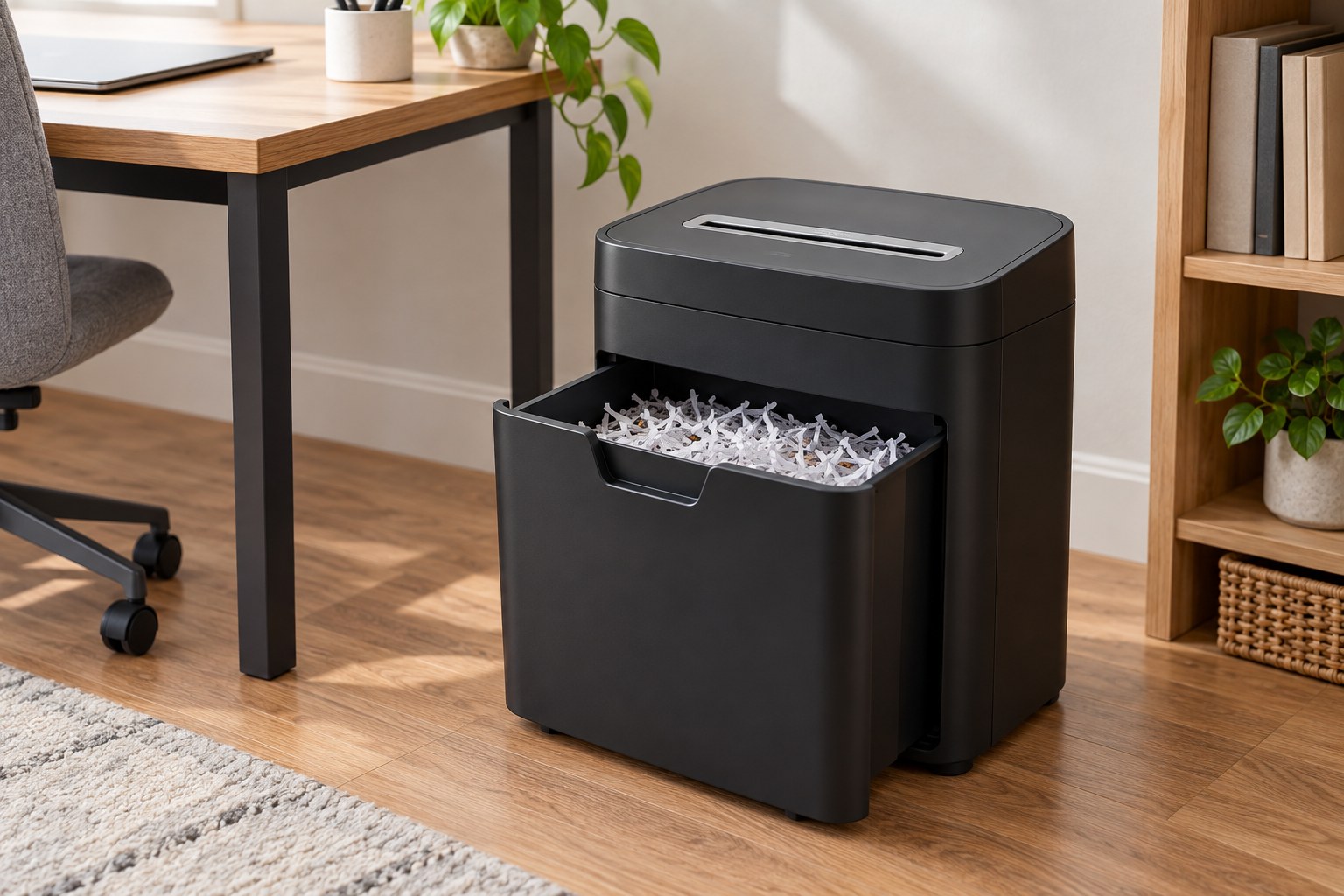
Describe the batch you actually handle
Estimate whether you shred a few items as mail arrives or deal with a larger accumulated batch. Count the approximate pages in that routine rather than buying for an unusually large annual clear-out. A machine suited to short daily use may require pauses during a backlog. The purchase should reflect how you are willing to work, including those pauses.
Read the conditions attached to the stated sheet capacity, such as paper weight. Folded sheets and thick paper should not be treated as equivalent to ordinary single sheets. Follow the manual's feeding instructions and avoid testing the limit by forcing material into the opening. A maximum figure is not an instruction to use the largest possible stack every time.
Read material permission literally
Check the exact list of materials the model can accept. Staples, paper clips, cards and other objects have product-specific rules; permission for one does not establish permission for another. Fellowes product specifications list these capabilities separately from sheet count, illustrating why a general description such as heavy duty is insufficient.
Prepare a small sorting area before shredding. Remove prohibited items and keep documents that require review separate from the discard pile. A shredder is irreversible once paper is cut, so the decision about what to destroy belongs before feeding. This article does not establish document-retention periods; use the requirements relevant to the actual records.
Compare running time with cooling time
Look for both the permitted continuous run and the required cool-down period. Fellowes' LX range, for example, publishes these as paired values rather than a single speed claim. Two machines with similar sheet capacities can therefore suit different routines. Check the exact model's instructions instead of assuming a larger bin means longer continuous operation.
Choose a location where the power control and plug remain accessible. Follow the safety instructions concerning hands, loose clothing, hair, children and pets. Keep the feed area clear and disconnect as directed before maintenance. Jam removal and lubrication should follow the manufacturer's procedure and approved materials, not an improvised method.
Imagine emptying a full bin
A pullout bin and a lift-off cutting head require different space and handling. Check the direction of removal, the weight of the part you lift and whether scattered paper can be cleaned easily. Leave enough room to remove the container without tipping it against the desk. A fill window is useful only if it remains visible at the chosen location.
Compare the documented cut type with the sensitivity and applicable requirements of the records, without treating a marketing phrase as a guarantee of compliance. Then test a modest ordinary batch within the stated limits. A suitable shredder fits a repeatable sorting, shredding and emptying routine rather than becoming another full container waiting beneath the desk.