Ring binders and paper formats
A binder must fit the paper, punched holes and shelf together. Ring size alone does not tell you how comfortably pages turn or whether a filled binder can be stored upright.
Start with the document format
Measure a typical document including any protective sleeve or divider tab. US Letter and A4 are different formats, and a cover that encloses the sheet may still leave a tab protruding. Check the binder's internal coverage rather than relying only on the outer height. If documents arrive in several formats, decide whether they need separate binders or compatible sleeves.
Compare the number and spacing of holes with the punch or pre-punched pages you already use. A three-ring arrangement is not interchangeable with every two- or four-ring system. Do not force pages onto mismatched rings or enlarge holes casually if the documents need to remain intact. Choosing a matching system at the start avoids unnecessary repunching.
Leave room for pages to turn
Capacity claims usually depend on the paper used and how tightly it is packed. Dividers, sleeves and folded inserts consume extra space. Fill a sample binder to a comfortable working level rather than its absolute limit. You should be able to turn a section without trapping pages at the rings or lifting a heavy stack by one sheet.
Check that the rings meet neatly and that the opening mechanism works without excessive force. Misaligned tips can catch paper on every page turn. Try the binder lying flat and standing on a shelf. A very large binder may reduce the number of volumes but become inconvenient to lift and use for a short reference task.
Match the cover to the storage routine
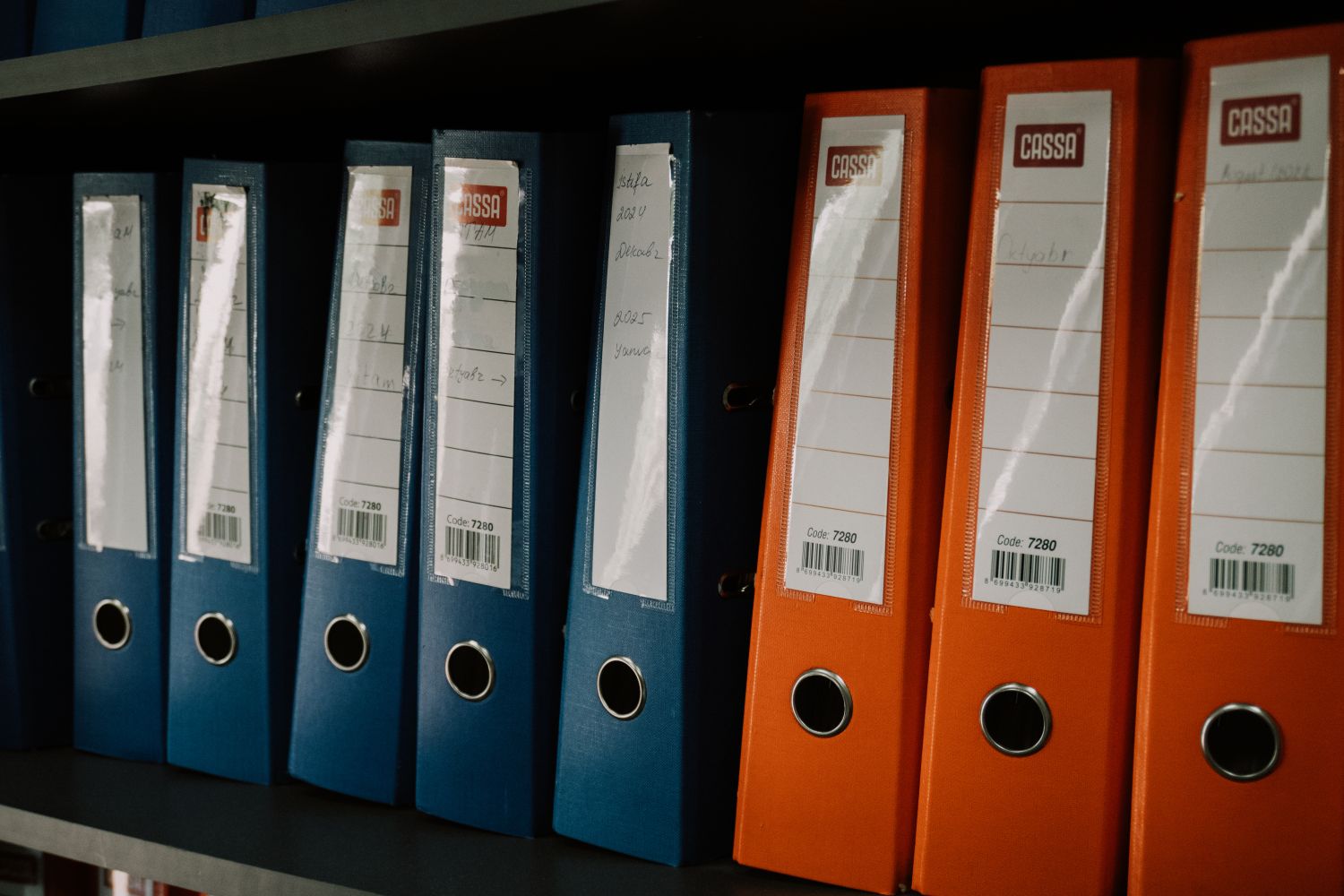
A flexible cover travels differently from a rigid one. Consider whether the binder stays on a shelf, moves in a bag or lies open beside a computer. Check the spine width against the shelf and the available label area. A replaceable spine label is useful when the contents change, provided it can be removed without damaging the cover.
If you use a slipcase or storage box, measure the filled binder rather than assuming the empty one represents its final shape. Keep heavy binders within an easy handling range and follow the shelf's load limits. A matching row is attractive, but repeated retrieval should not require dragging out several neighboring volumes.
Use dividers for a small number of meaningful sections and add a clear title to the spine. Review overfilled sections before purchasing another larger binder. The goal is to retrieve and replace a document without damaging it. A consistent paper and hole format often contributes more to that result than an expensive cover material.