Staplers matched to document thickness
A stapler should match the thickness and type of documents you normally join. The staple specification, loading method and position of the paper stop matter more than buying the largest advertised capacity for occasional use.
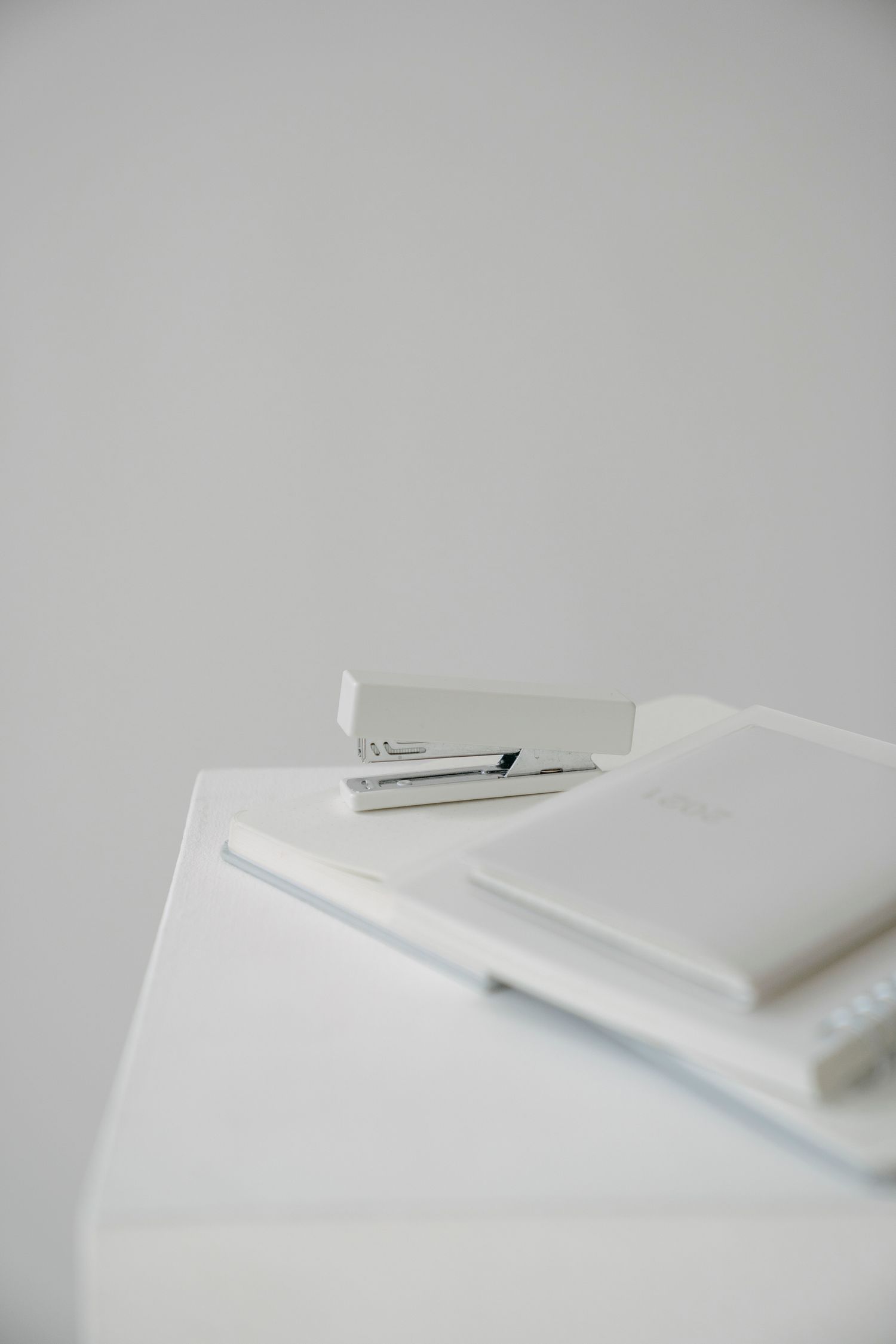
Count a normal document
Gather a few representative stacks, including any cover sheet or thicker insert. Read the stapler's capacity conditions, especially the paper weight used for the claim. A stack with card covers should not be treated as the same number of ordinary sheets. Select within the documented range instead of forcing an oversized packet through a smaller mechanism.
Decide whether the papers will remain together or need frequent separation. A binder clip or folder may suit a changing document better than repeated stapling and removal. Keep a stapler for the tasks where a fixed join is actually useful. That avoids buying extra capacity to solve a problem better handled by a different filing method.
Use the specified staples
Check the exact staple sizes accepted by the model and which size is intended for the paper thickness. Similar-looking strips can have different dimensions. Do not assume that any staple fitting into the magazine is suitable. Keep the correct box with the stapler so a later refill does not become a search through several unmarked strips.
Try the loading mechanism and inspect how clearly it shows the staple orientation. A rear-loading tray, lift-up top and cartridge system require different handling. Follow the instructions for clearing a jam and keep fingers away from the working area. Do not force the handle repeatedly when the mechanism is blocked.
Check the join on both sides
Use a modest sample within the stated limits and inspect the front and back. The staple should be seated as intended without a loose raised end or torn corner. Check whether the paper can be aligned consistently before pressing. A useful paper stop can make repeated placement easier, but it should not obstruct unusually shaped documents you actually use.
Compare the effort and stability on the desk. A broad base may be easier to keep still, while a compact handheld design fits a drawer. Test the ordinary action rather than assuming a heavy body always needs less force. If the stapler must reach farther into a sheet, verify its throat depth rather than its overall length.
Keep the tool in a place where the handle cannot be pressed accidentally against loose objects. Store staple strips dry and in their labeled packaging. For routine paperwork, a clearly matched stapler and staple supply are more useful than multiple partly compatible tools that create a different fastening result each time.