Storage labels that can be removed
A label can make a box easy to find and awkward to repurpose. For changing storage, the useful question is not just whether you can write on the label, but what happens when the contents change.
Removable is different from repositionable
Avery distinguishes removable adhesive from repositionable adhesive; some of its repositionable labels become permanent over time. Therefore, a label that can be adjusted during application is not necessarily intended to peel away cleanly months later. Read the description for the exact material instead of assuming those two terms mean the same thing.
Also separate the adhesive from the face material. A paper label may accept handwriting easily, while a film label may need a particular pen or printer. Neither description alone establishes suitability for washing, a damp room or a curved container. Decide how the box will be cleaned and handled before selecting a label stock.
Choose a position that remains visible
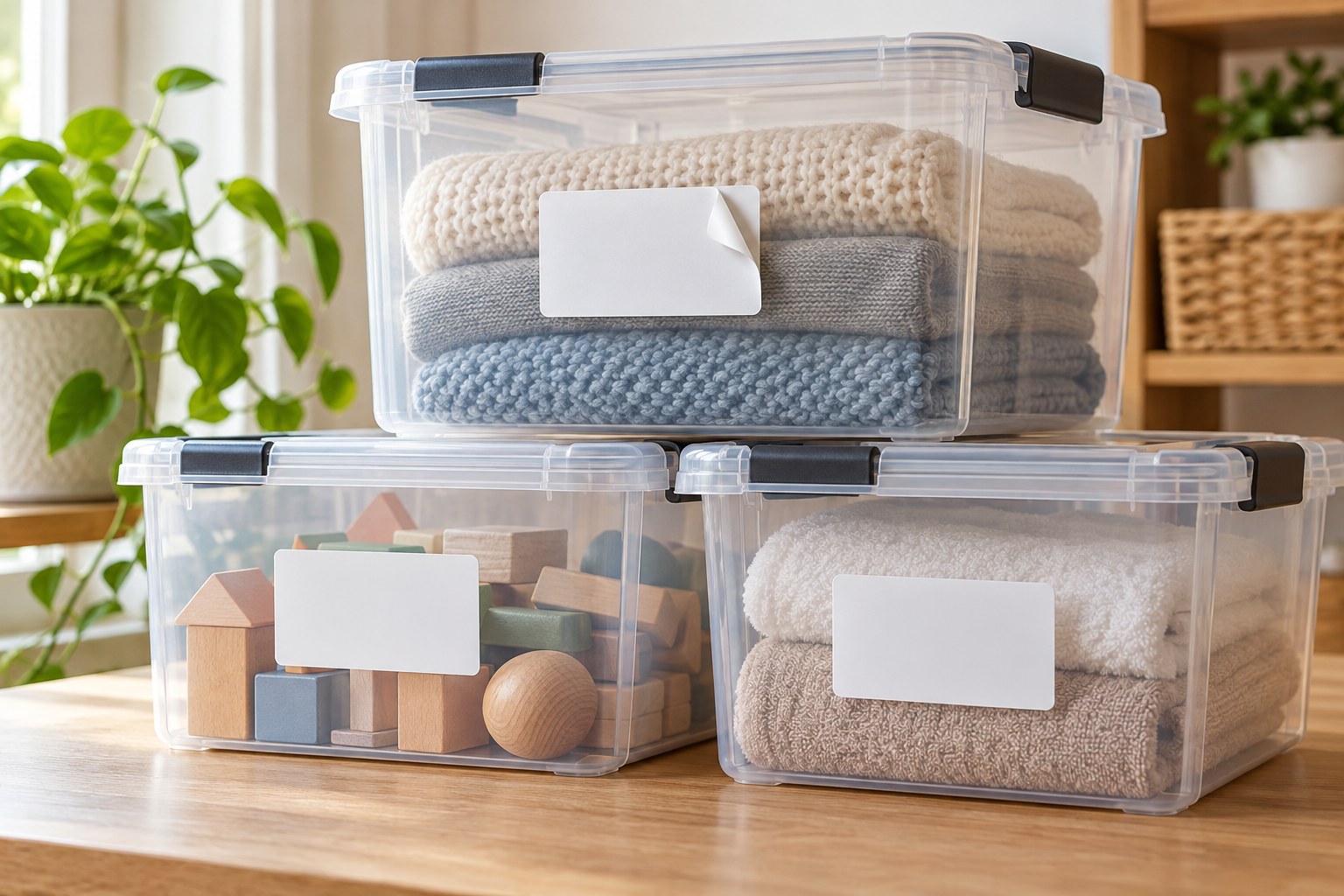
Stack the boxes as they will normally be stored. Label the face that stays exposed, not the lid that disappears under the next container. Leave handles, latch paths and ventilation openings unobstructed. On a transparent box, choose enough contrast for the words to remain readable when darker or patterned contents sit behind them.
Try a paper mock-up from the distance at which you normally look for the box. A short, specific title often works better than a miniature inventory. If several boxes hold similar things, add a meaningful qualifier such as season, room or project. Keep changing details on an index card inside rather than crowding every item onto the outside.
Test the complete pairing
Use a spare label on an inconspicuous part of the actual container where a test will not damage a valuable finish. Check both adhesion and removal after a representative period; a quick peel immediately after application does not demonstrate long-term behavior. Avery notes that removable adhesives can hold less well on curved objects and certain low-energy plastics.
A removable label is therefore not a universal surface treatment. Avoid covering damaged coatings, decorative paper or another surface that might lift with the adhesive. For frequently changing contents, a clip-on holder or a card behind an existing clear window may be more predictable. The holder still needs to stay out of the stacking and opening paths.
Keep the labeling routine small
Use one consistent location and a readable pen for the boxes in a single group. Keep a few matching blanks nearby so a new box can join the arrangement without a separate printing project. Replace an outdated label as soon as the contents change; leaving two competing names creates more searching than having no label.
Remove labels according to their maker's directions and the container's care guidance. Do not begin with a strong solvent or abrasive pad merely because a corner is stubborn. If the combination leaves residue or lifts the finish, stop using it on the remaining boxes and choose another labeling method. Save the material name of a successful pairing so the next purchase is an informed repeat.