Vacuum storage bags and sealing checks
A vacuum storage bag is useful only if the contents tolerate compression and the sealed package fits the place where it will be stored. The closure and valve deserve a test before an entire seasonal wardrobe is packed away.
Check the textile before reducing its volume
Read the storage instructions for the clothing, bedding or filling material. Not every textile should be compressed for long periods, and a bag manufacturer's broad example does not override the item maker's guidance. Pack only suitable clean, fully dry contents. A sealed bag should not be used to hide a moisture or odor problem.
Choose the amount by the bag's stated fill limit and the space needed around the closure. Leave sharp hardware and other puncture risks out unless the instructions provide a suitable method. A bag that can physically be forced shut is not necessarily filled correctly. Smaller separate packages may be easier to handle than one large, heavy block.
Distinguish valves from roll-up systems
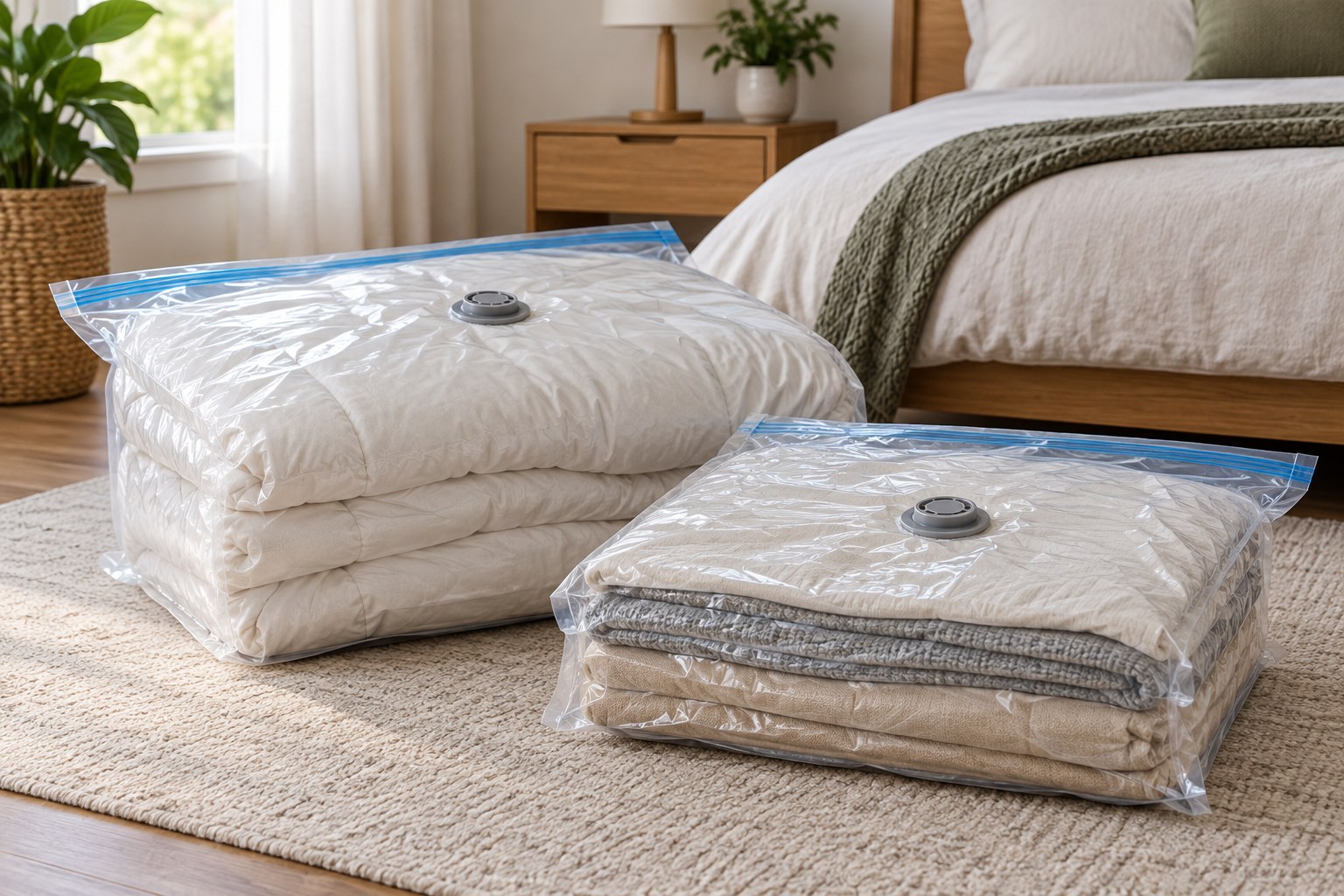
Check how the air is removed. Some bags use a vacuum connection or compatible hand pump; others are rolled to expel air through their designed outlet. IKEA's SPANTAD range includes distinct vacuum and roll-up versions. Read the instructions for the exact product rather than applying the procedure from another bag that looks similar.
If a pump or vacuum connection is used, confirm its fit and permitted use. A valve diameter or adapter requirement can matter. Keep the valve area clear of folded fabric and do not remove components that the instructions say must stay in place. Store any loose cap or slider with the system so the next use does not require an improvised replacement.
Check the seal before final storage
Inspect the closure channel for trapped fibers, folds or debris. Close it using the specified method and check along its full length. Remove air only as directed, then leave the package in an accessible place long enough to notice an obvious loss of compression. A bag that expands again needs inspection rather than immediate concealment at the back of a cupboard.
If a leak is suspected, check the closure and valve first and inspect the film for damage. Follow the manufacturer's repair or replacement guidance. Do not assume household tape restores the intended seal or material performance. Repeatedly extracting air without addressing a damaged area does not create a dependable storage arrangement.
Measure the final package
Compression changes thickness but may create a stiff shape that is awkward around shelf supports. Measure the sealed package rather than relying on the empty bag dimensions. Leave access to lift it without dragging the film across rough edges. A protective storage box may be useful if it fits the package without crushing the valve.
Label the contents where the marking is permitted and record what is inside without opening it. Keep bags and small accessories away from young children as directed. Review stored items periodically according to their care needs. Space saved is useful only when the contents remain suitable for use and can be retrieved without damaging the bag or the furniture around it.