A shoe rack for a narrow hallway
A narrow hall needs room for people carrying bags, not just a place for shoes. The right rack is the one that holds the pairs in daily use while leaving the entrance easy to cross.
Count the shoes that are actually waiting
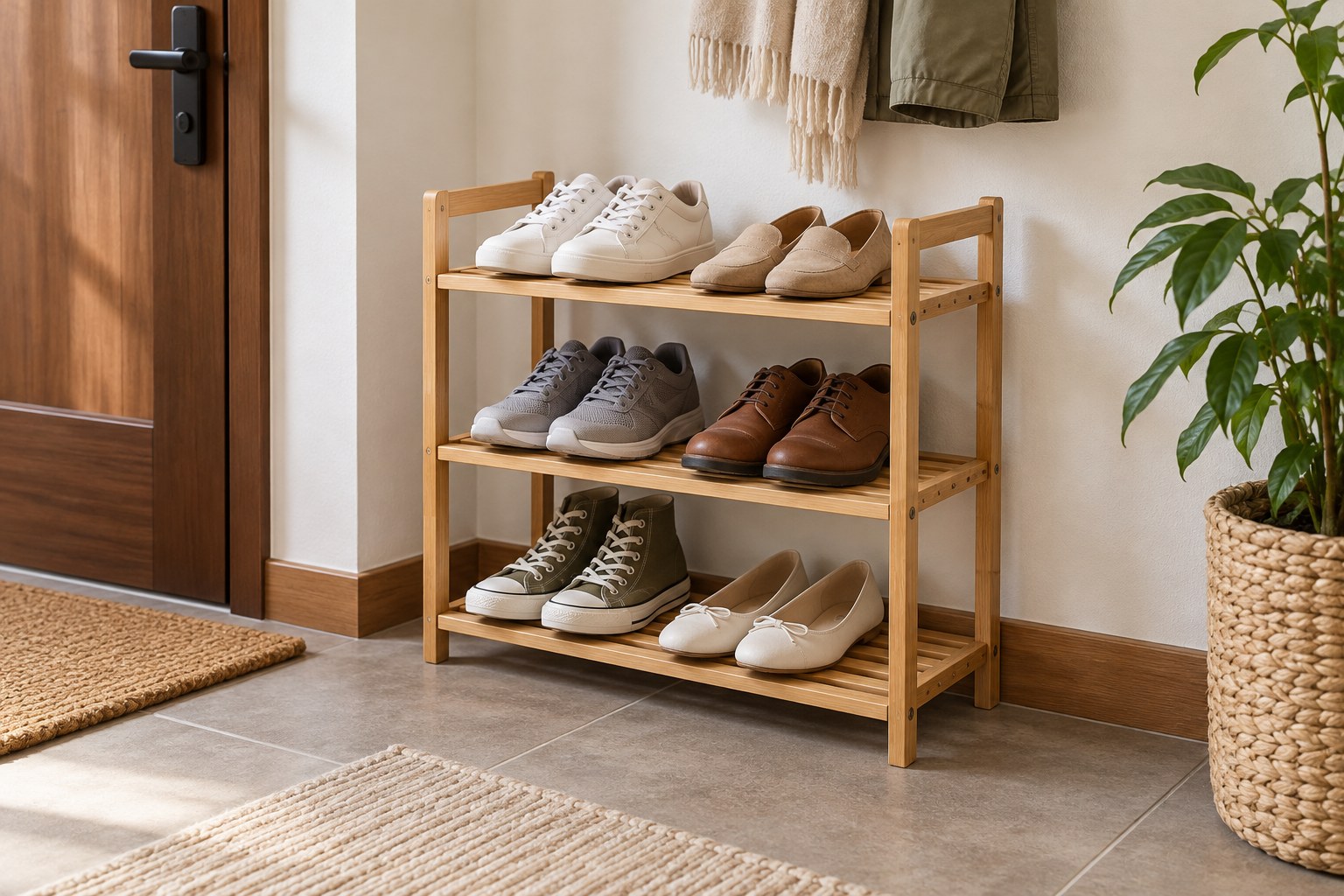
Separate everyday pairs from shoes that can live elsewhere. Measure the longest shoe, the tallest ankle boot and the widest pair placed side by side. Advertised pair counts often assume similar small shoes; your mix may use the shelves very differently. Sketch each level using the shoes you own rather than multiplying a claimed capacity by the number of shelves.
Leave enough height to lift shoes out without scraping the shelf above. If one level needs to hold boots, adjustable spacing can be more useful than an extra fixed shelf. For children's shoes, check gaps between bars: short soles may sit unevenly on a rack intended for longer footwear. A solid removable tray is an option only when the rack allows it.
Test the hallway with the rack in place
Mark the rack footprint on the floor, including feet that extend beyond its shelves. Open nearby doors fully and walk past with a shopping bag in each hand. Check the route to a coat closet and the place where someone normally sits to change shoes. A rack that fits against the wall can still block a door handle or create a difficult turn.
Tilt-out cabinets trade depth for a different opening movement. Their fronts need clear space while open, and the compartments may not accommodate tall boots. An open rack makes pairs easier to spot but leaves them visible. Neither layout is automatically better; choose according to the real opening space and whether being able to find shoes quickly matters more than concealing them.
Make wet weather manageable
Wet soles should not drip onto stored pairs below. A removable tray under the relevant level makes dirt easier to collect, provided it does not obstruct the rack's intended use. Choose a finish with care instructions you can follow and avoid assuming that every metal rack is suitable for repeated water exposure. Let shoes dry as their manufacturer recommends before putting them away tightly.
For a tall or narrow cabinet, follow the manufacturer's stability and wall-fixing instructions. A freestanding appearance in a photograph does not tell you whether anchoring is required. Keep the heaviest footwear low where the design permits, and do not use a shoe rack as a seat unless it is made for that purpose. Reassess capacity when seasons change rather than adding another unstable layer on top.