Drawer dividers that fit
A drawer divider earns its space when it stops objects from sliding together without making them harder to reach. Before choosing bamboo rails, plastic trays or soft boxes, map the drawer you already have. The most useful layout follows its contents, not the number of compartments pictured on a package.
Measure the inside, then check the moving parts
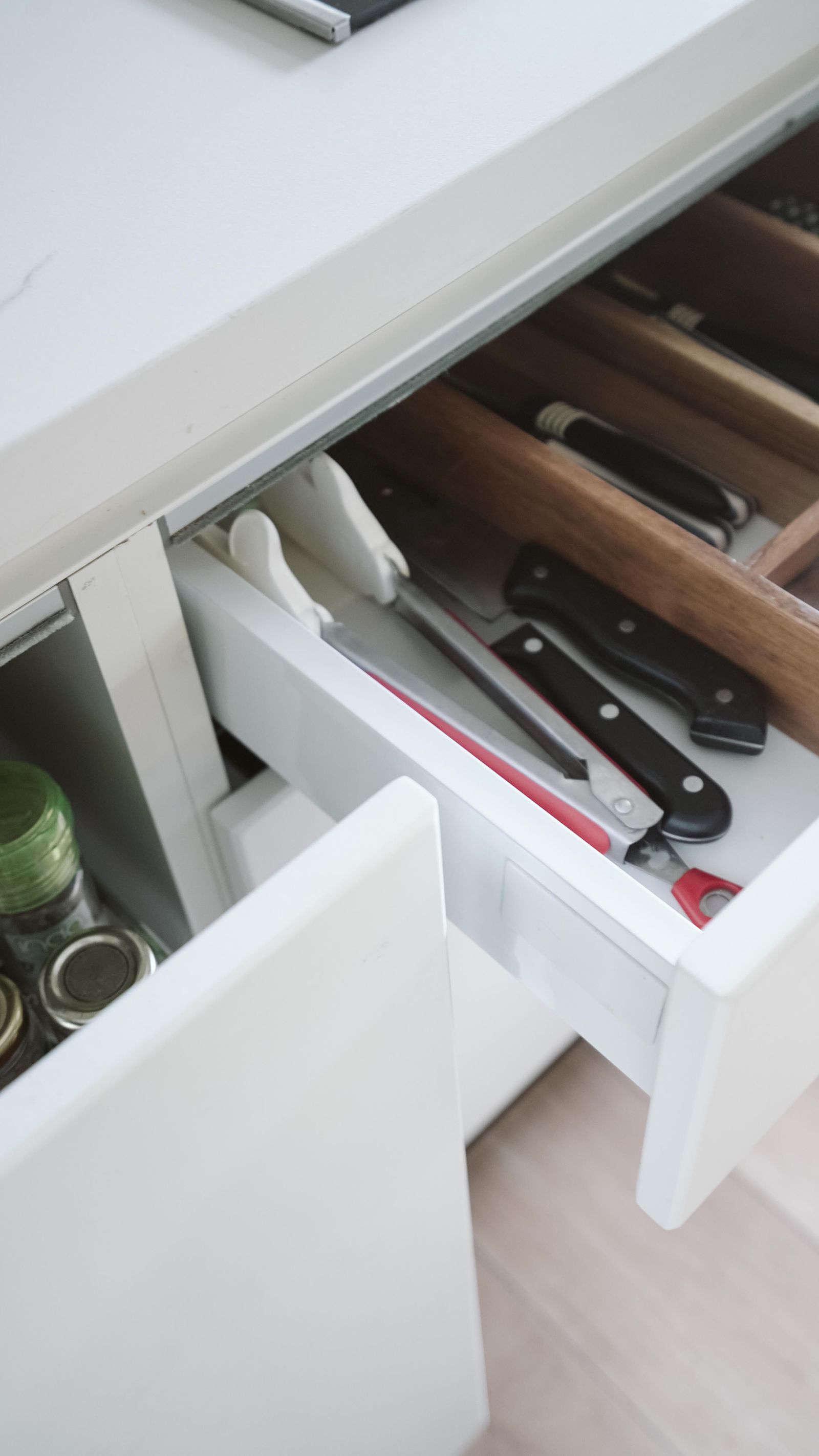
Empty the drawer and measure its internal width and depth at the bottom. Repeat the width measurement near the top if the sides slope. Note protruding screws, curved corners and the space underneath any rail above it. A divider can fit the floor perfectly and still prevent the drawer from closing because its top edge is too high.
Keep cabinet width separate from organizer width. IKEA’s UPPDATERA sliding organizer, for example, lists both its own width and a different frame width. That distinction is a reason to read a dimension drawing rather than selecting by the large measurement in a product name. Use the smallest clear internal measurement when comparing alternatives.
Arrange what needs to live there
Lay the contents on paper roughly the size of the drawer. Put the longest item down first, then group objects that are normally used together. In a household drawer, scissors and tape might share one compartment while keys need a shallow tray. Leave enough room to put a hand around an item; a tightly packed drawing can be awkward in use.
Try temporary strips of folded cardboard before buying a full set. Open and close the drawer several times and retrieve the items at the back. This inexpensive trial reveals whether a front-to-back divider is useful or whether a few removable boxes would give better access. It also makes an unnecessary compartment easy to remove before money is spent.
Choose how the divider stays put
Expanding dividers suit changing arrangements, but their stated adjustment range needs to cover the actual drawer width. Check whether the contact ends are padded and whether the drawer sides can tolerate the proposed fixing method. Do not force a tension divider against a thin panel. Freestanding trays avoid outward pressure, although a slippery drawer floor can let them move.
Tall rails help separate folded clothing; shallow trays are easier for loose small items. Soft-sided boxes can compress into gaps but may lose their shape when partly empty. Wood, plastic and fabric should be compared by their actual finish and care instructions rather than by appearance alone. Fabric does not automatically mean machine washable: the referenced IKEA organizer is intended for wiping or vacuuming.
Make cleaning part of the layout
Choose sections you can lift out without unloading the entire drawer. Crumbs collect at intersections, and narrow channels are frustrating to wipe. Reserve a little unallocated space rather than filling every centimeter with another container. After a week of ordinary use, move any compartment that repeatedly catches your hand or hides its contents. A successful arrangement stays easy to put back, even when the drawer is not perfectly full.