Choosing kitchen shears
Kitchen shears are most useful when their handles fit comfortably and their intended jobs match the food and packaging you cut. Extra functions are secondary to a controlled cutting action and a cleaning method you can follow.
Choose the jobs before the features
Make a short list of recurring uses: trimming herbs, opening food packaging or cutting a particular ingredient. General kitchen shears and poultry shears are not interchangeable merely because both have two blades. Read the maker's intended tasks and limitations. Do not use an ordinary pair for bones or other hard material unless that use is explicitly supported.
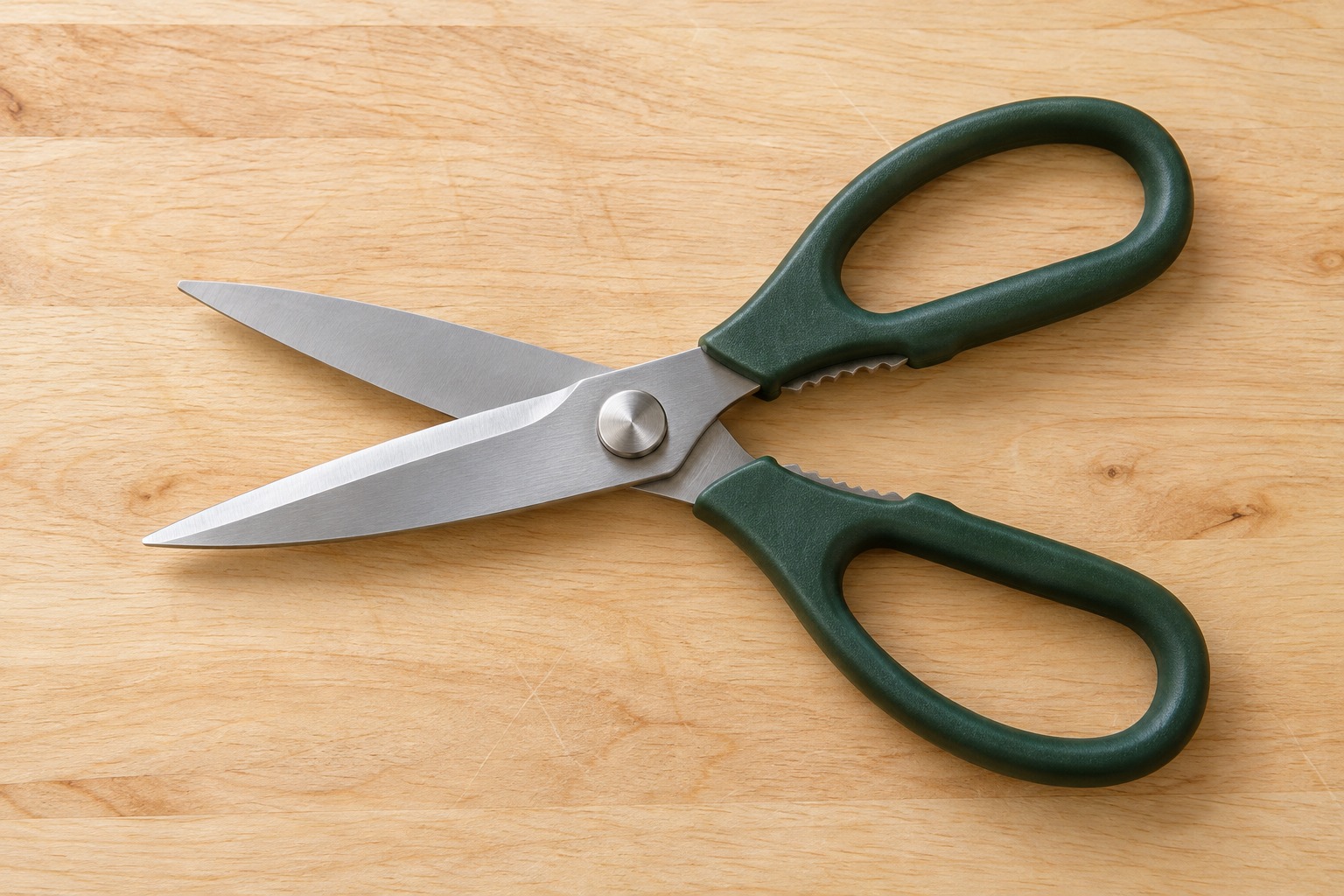
Built-in cap openers or notches may be useful, but check whether they make the grip awkward. A large collection of secondary functions cannot compensate for handles that pinch or require an uncomfortable opening span. If several people use the shears, consider hand size and any left- or right-handed design information. Symmetrical-looking handles do not necessarily mean the complete cutting geometry works identically in either hand.
Inspect the joint and cleaning access
Food can reach the area where the blades meet. Some shears are designed to separate for cleaning, while others stay assembled. Follow the specific instructions for taking them apart and rejoining them; do not loosen an ordinary pivot screw simply because another model comes apart. After assembly, the blades should engage exactly as the manufacturer describes before the tool is used again.
Check whether the care guidance calls for handwashing or permits a dishwasher, and whether all components share the same instructions. Handles, coatings and joints may need different attention from the blade surface. Clean promptly after the intended food-preparation task and dry as directed. Keep food shears separate from tools used for household chemicals or unrelated dirty jobs.
Plan the grip and storage
A protective cover should fit the actual closed blades without making removal difficult. If the shears use a locking mechanism, check that it can be operated deliberately and will not be mistaken for a carrying loop. Store the tool so fingers do not encounter open blades while reaching for another utensil. Keep it out of children's reach.
For a replacement purchase, identify what failed in the previous pair. A difficult-to-clean joint, uncomfortable handle or oversized blade points toward a different solution. Buying a more elaborate version of the same unsuitable shape may not help. Choose a pair whose normal opening, closing, cleaning and storage steps are clear, and keep its instructions for any future disassembly or maintenance.