Travel adapters and device compatibility
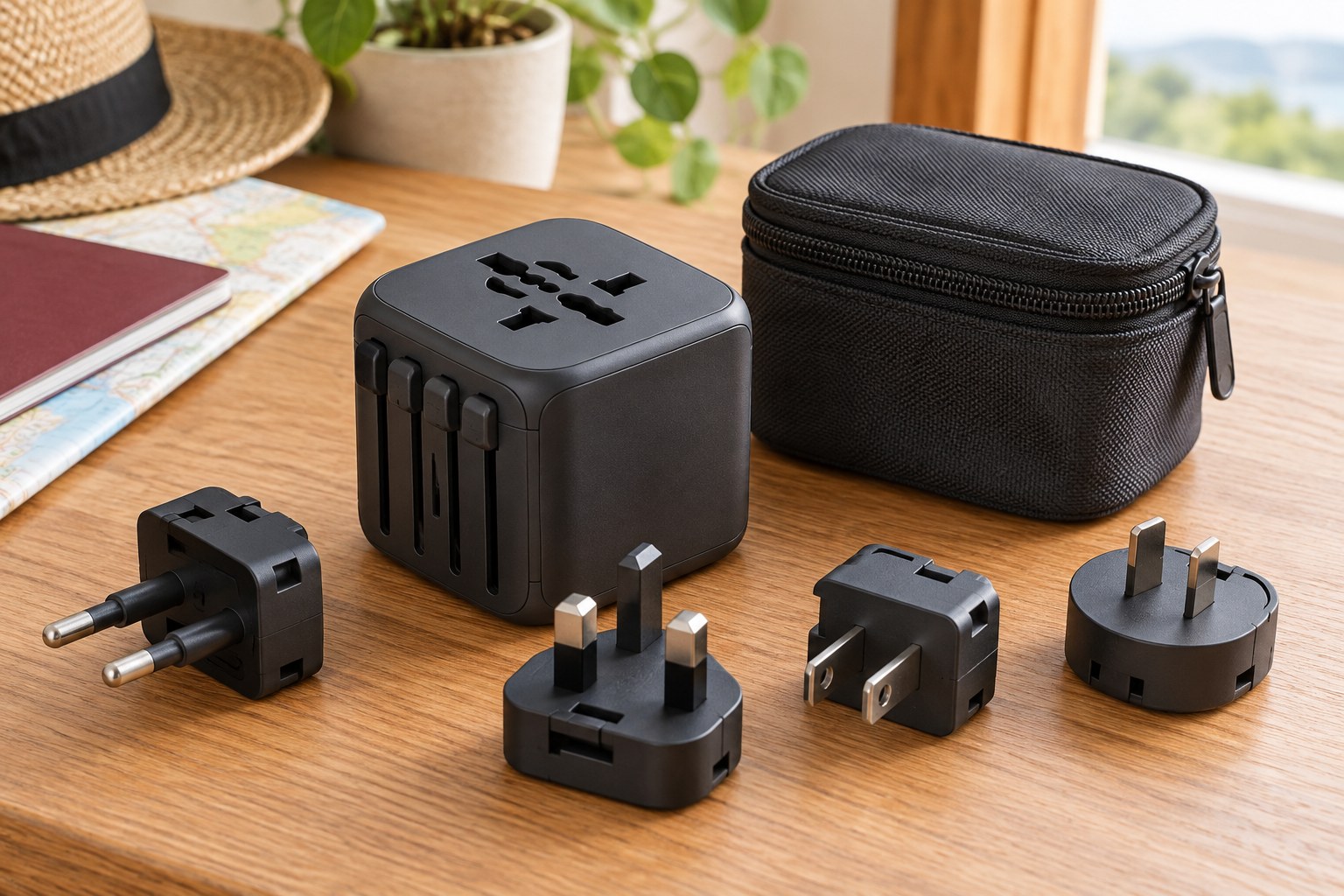
A travel adapter changes the plug connection; it should not be assumed to change the electricity supplied to a device. Build a travel charging kit from the destination and the exact equipment labels, not from the number of countries printed on a package.
Read the input label before packing
For each device or its power supply, find the input-voltage and frequency information. Compare it with the destination's supply using current official travel or electrical-safety guidance. An adapter that accepts a US plug does not establish that the connected appliance can use the local voltage. Electrical Safety First explicitly distinguishes plug adaptation from voltage and frequency conversion.
Do not infer compatibility from the product category. A laptop charger, a personal-care appliance and a camera charger can have different input requirements. If the label is unclear, use the manufacturer's documentation or ask its support service. A device should not be connected abroad as an experiment to see whether it works.
Check grounding and load limits
Identify whether the equipment requires a protective ground connection and confirm that the entire adapter arrangement preserves the required connection. Some adapters are intended only for double-insulated equipment. The shape of a universal-looking socket is not sufficient evidence that every inserted plug receives the grounding arrangement it needs.
Read the adapter's maximum current or power rating and the permitted types of use. Include every connected device when a product offers multiple outlets. Do not assume that several available sockets each provide the full headline rating simultaneously. Avoid stacking adapters to solve an incompatible combination; choose a documented arrangement for the equipment and destination.
Separate USB charging from the AC outlet
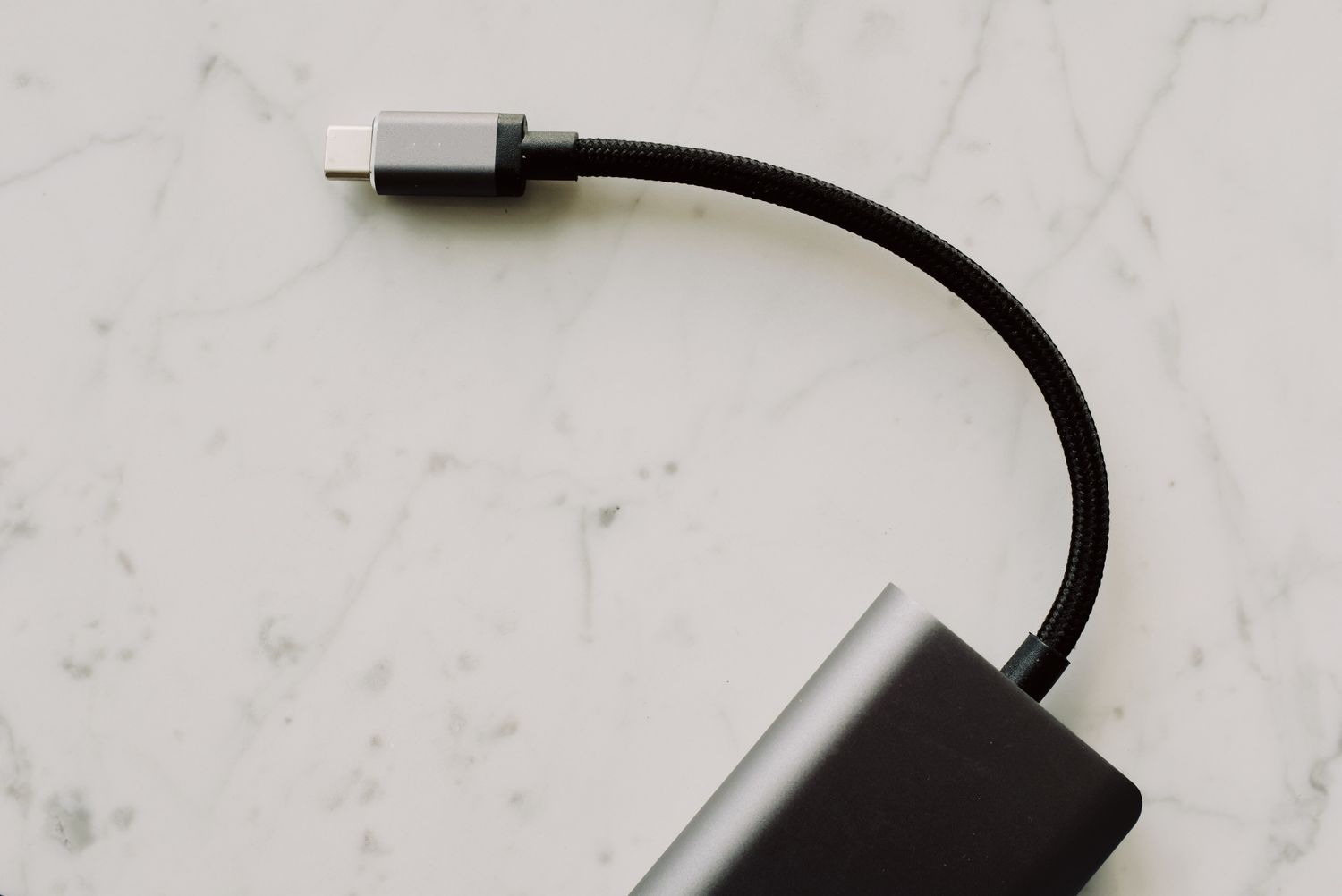
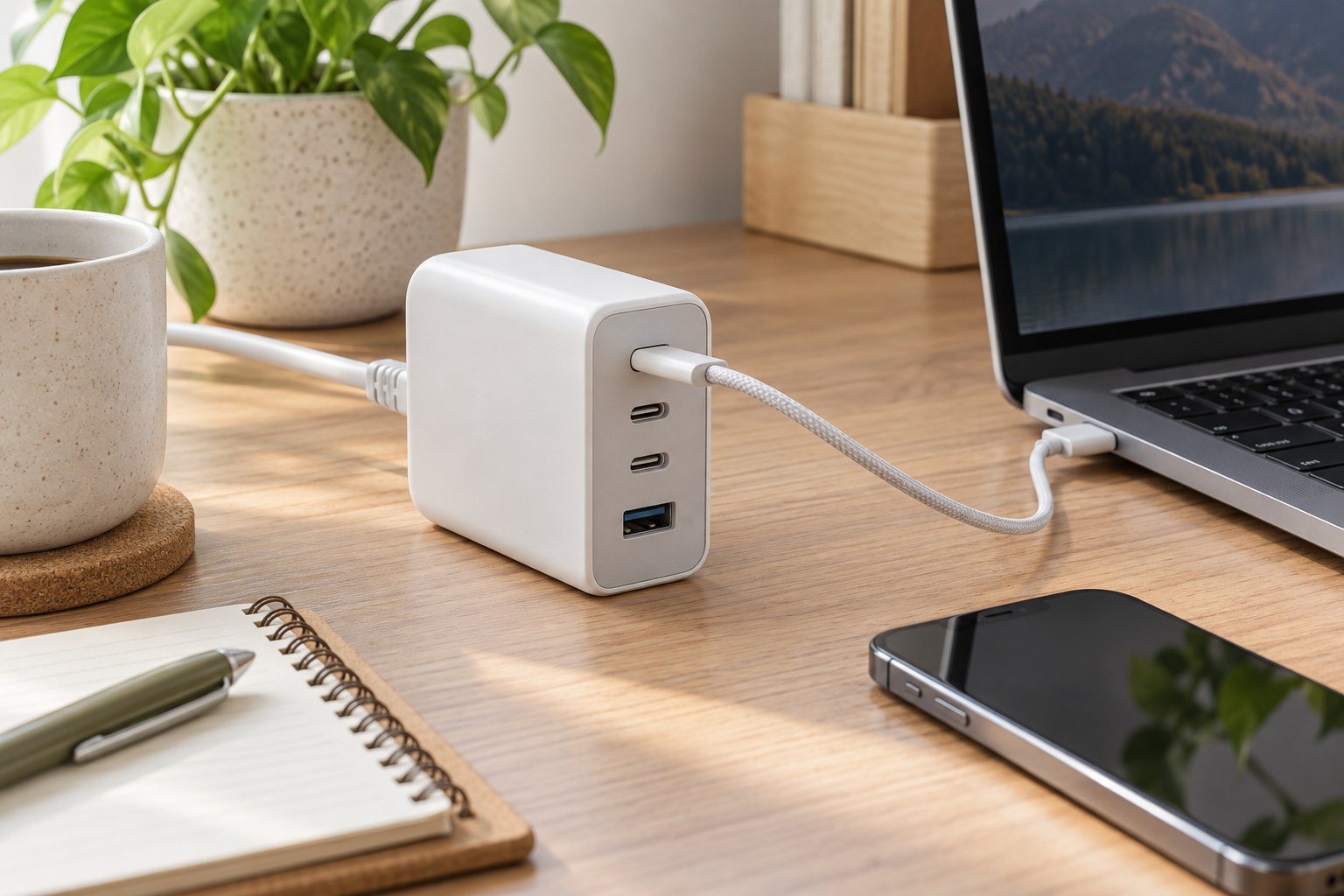
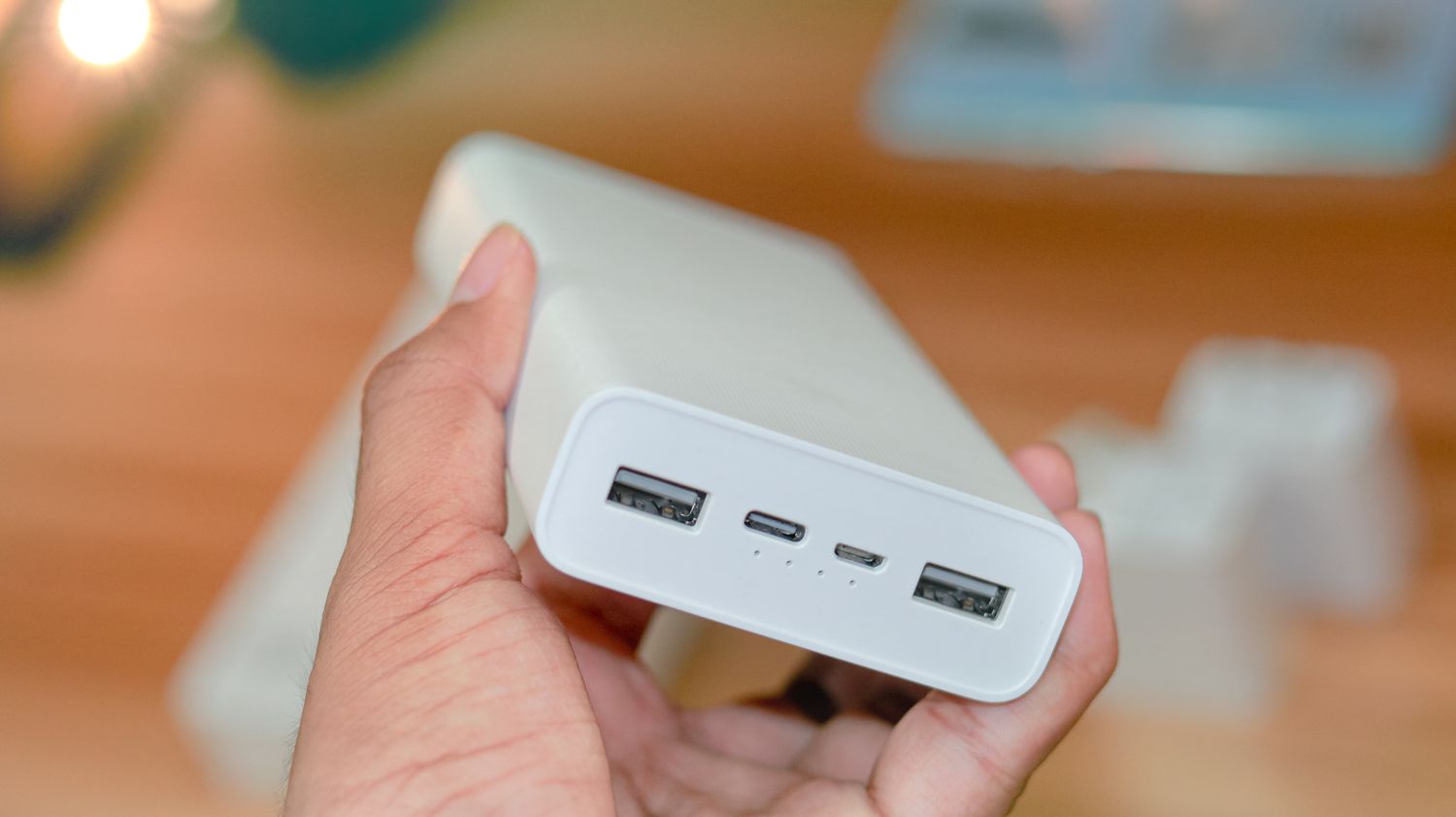
An adapter with USB charging ports combines two functions that need separate checks. Read the USB output capabilities and how power is shared when several devices charge together. Check the required cable as well. A suitable phone-charging output does not establish that a laptop will charge at the rate you expect.
Count what needs charging at the same time rather than every electronic item in the suitcase. One compatible charger with enough supported outputs may make the kit simpler, but it still needs the correct input rating and destination connection. Keep the charging equipment identifiable so it is not confused with another traveler's similar-looking adapter.
Inspect the physical setup on arrival
Choose a sound, accessible outlet and make sure the adapter sits securely without the weight of attached equipment pulling it loose. Keep it away from wet areas and do not cover it with luggage or bedding. Follow the adapter and appliance instructions, and stop using damaged equipment. A compact design is useful only if it remains stable with the actual plugs inserted.
Before leaving the accommodation, unplug and inspect the kit rather than pulling it out by its leads. Keep a small checklist of the adapter, charger and essential cables. A destination-specific setup with clear ratings is easier to understand than a large collection of interchangeable parts whose permitted combinations are no longer obvious.