A rug that fits the seating area
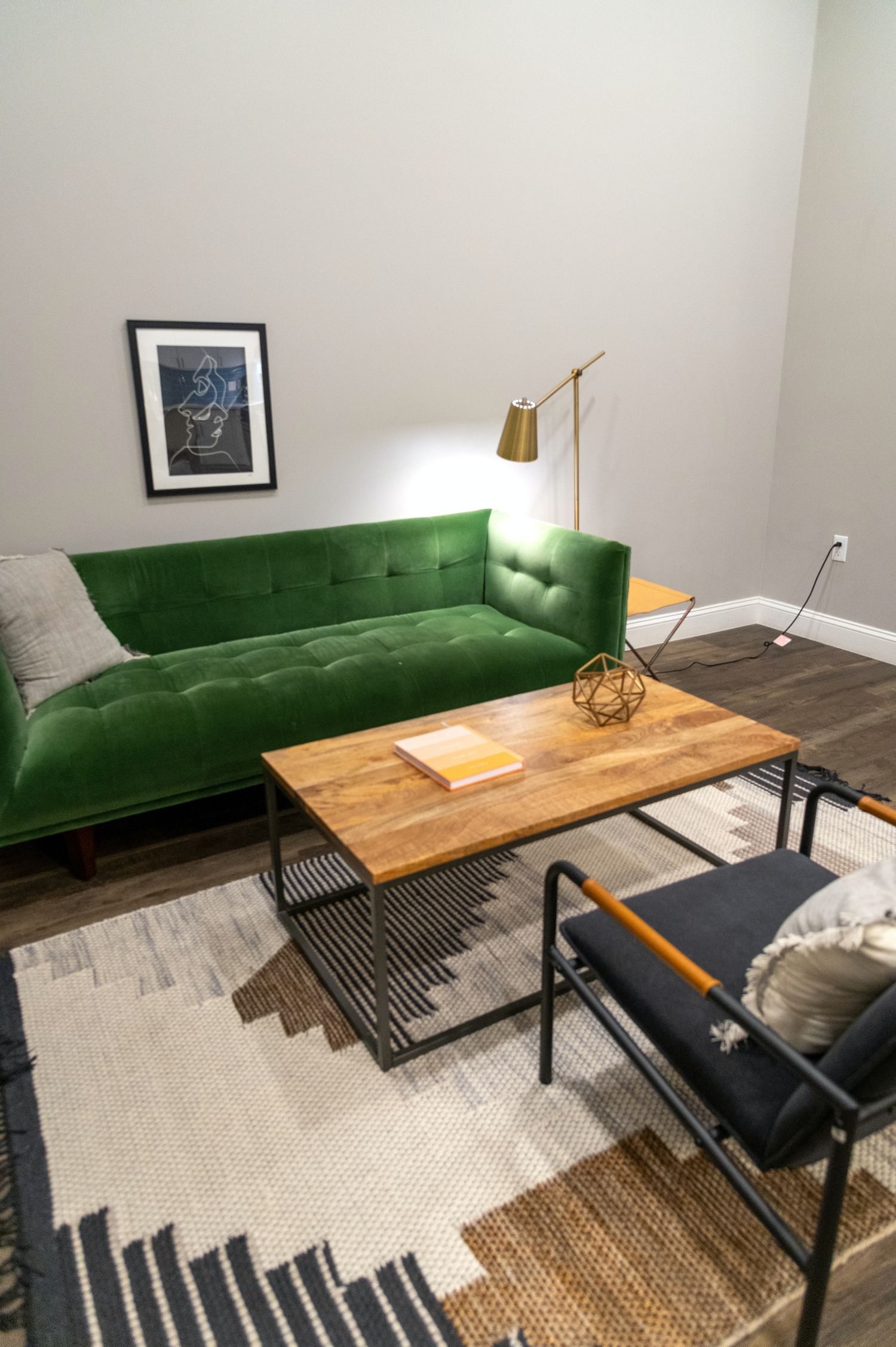
A rug should relate to the furniture people use, not just to an empty patch of floor. Start with the seating arrangement, then choose a size that makes its edges behave sensibly around feet and table legs.
Mark the outline with furniture in place
Use removable tape or sheets of paper to mark candidate sizes on the floor. Keep the sofa, chairs and coffee table in their normal positions. Sit down and stand up from each seat. Notice where your feet land and whether a chair moves across a proposed edge. A size that looks balanced from the doorway may create an awkward boundary during everyday use.
There is no single compulsory rule for how many furniture legs must sit on a rug. What matters is a consistent arrangement that does not leave a frequently moved chair half supported by a thick edge. Check the space under doors and beneath furniture too. Rug thickness and any underlay can change clearance, even when the length and width are suitable.
Compare texture with the way the room is used
A dense low surface may be easier to move a small table across than a deep pile, but suitability depends on the actual product. If children play on the floor or pets use the area, consider how easily crumbs, hair and small objects can be removed. Read the care instructions and compare them with the cleaning equipment you already have.
A rug described as washable may still require a machine capacity or drying method you cannot provide at home. Check the full care process before using washability as the deciding feature. A removable cover and a one-piece rug are different systems with different handling requirements. Large wet textiles can be awkward to lift, so dimensions matter during cleaning as well as while the rug is laid out.
Keep the edges predictable
Choose any underlay according to both the rug and the floor manufacturer's guidance. Do not assume one backing suits every wood, vinyl or tiled surface. The underlay should not project beyond the rug or bunch beneath it. Follow the product instructions for laying out a rolled rug and addressing curled edges rather than hiding them beneath heavy objects indefinitely.
Check the proposed position in the actual walking route between seats, doors and storage. An edge directly under a busy turning point can be more troublesome than one slightly farther away. If two sizes both look plausible, prefer the one that works with moving furniture and cleaning access. The useful size is the one that stays unobtrusive while the room is being used.