Bathroom shelves around plumbing
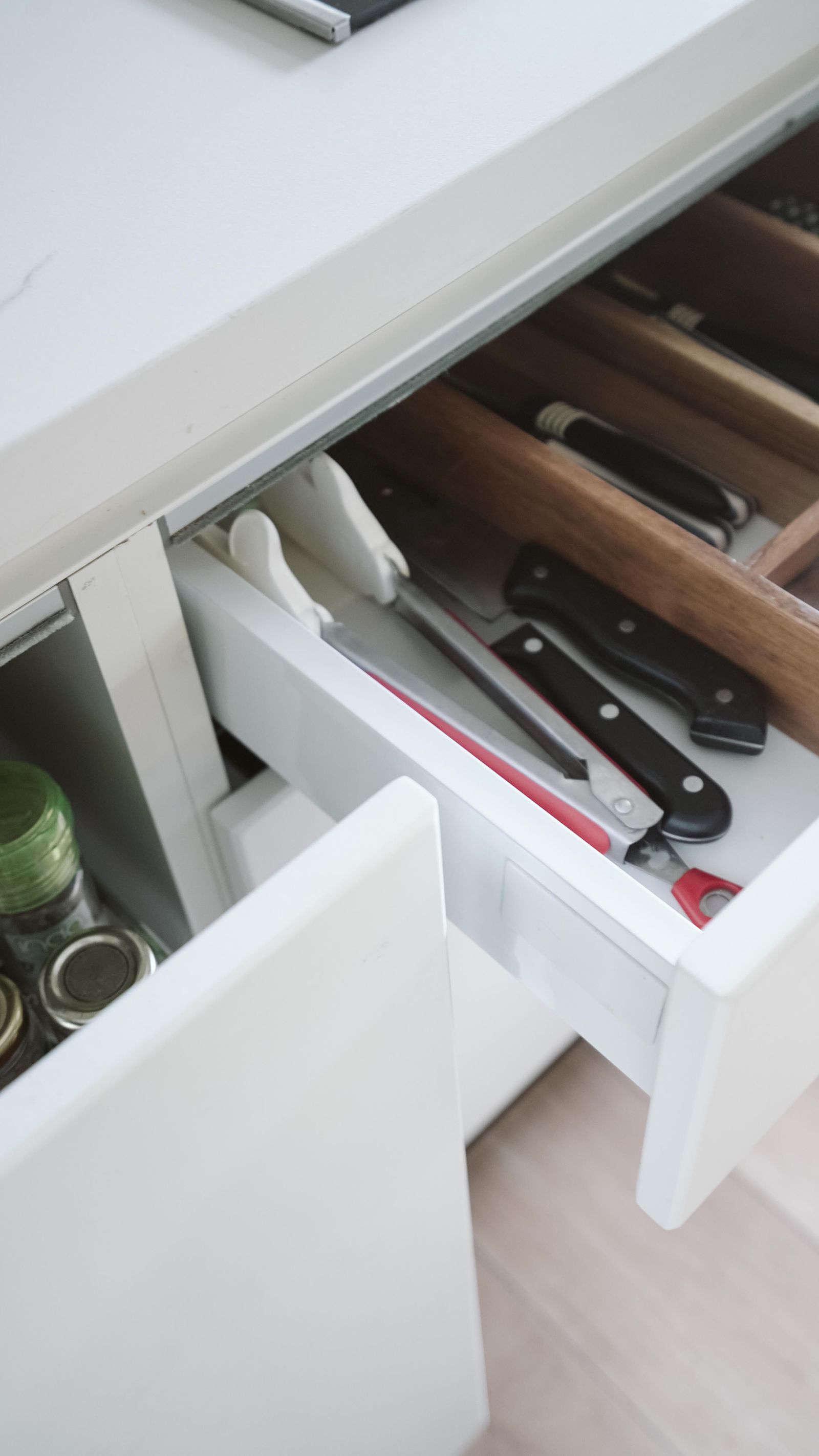
Plumbing turns the space beneath or beside a sink into an irregular shape. A bathroom shelf needs to work around that shape while leaving taps, traps and service points accessible.
Make a measured obstacle map
Sketch the cabinet or wall area from the front and from above. Mark pipes, the drain trap, valves and any flexible hoses. Measure the free space around them without pushing or repositioning the plumbing. A shelf that seems shallow enough from the front may still collide with a pipe farther back. Include the thickness of its uprights and crossbars in the comparison.
Do not treat access space as unused storage. Parts that may need inspection or servicing should remain reachable without dismantling a permanently fitted shelf. A removable basket can be easier to move than a fixed divider. If you cannot identify which components need access, ask a suitable professional before choosing a layout that encloses them. Storage should adapt to the installation, not require casual changes to it.
Compare adjustable and fixed designs
Shelves with movable sections can accommodate some pipe positions, but adjustment has limits. Check the permitted arrangement and load for each configuration. Removing a structural piece to create a gap is not the same as using an intended adjustment. A product photograph with a centered drain does not guarantee that the system fits an offset installation or a deeper trap.
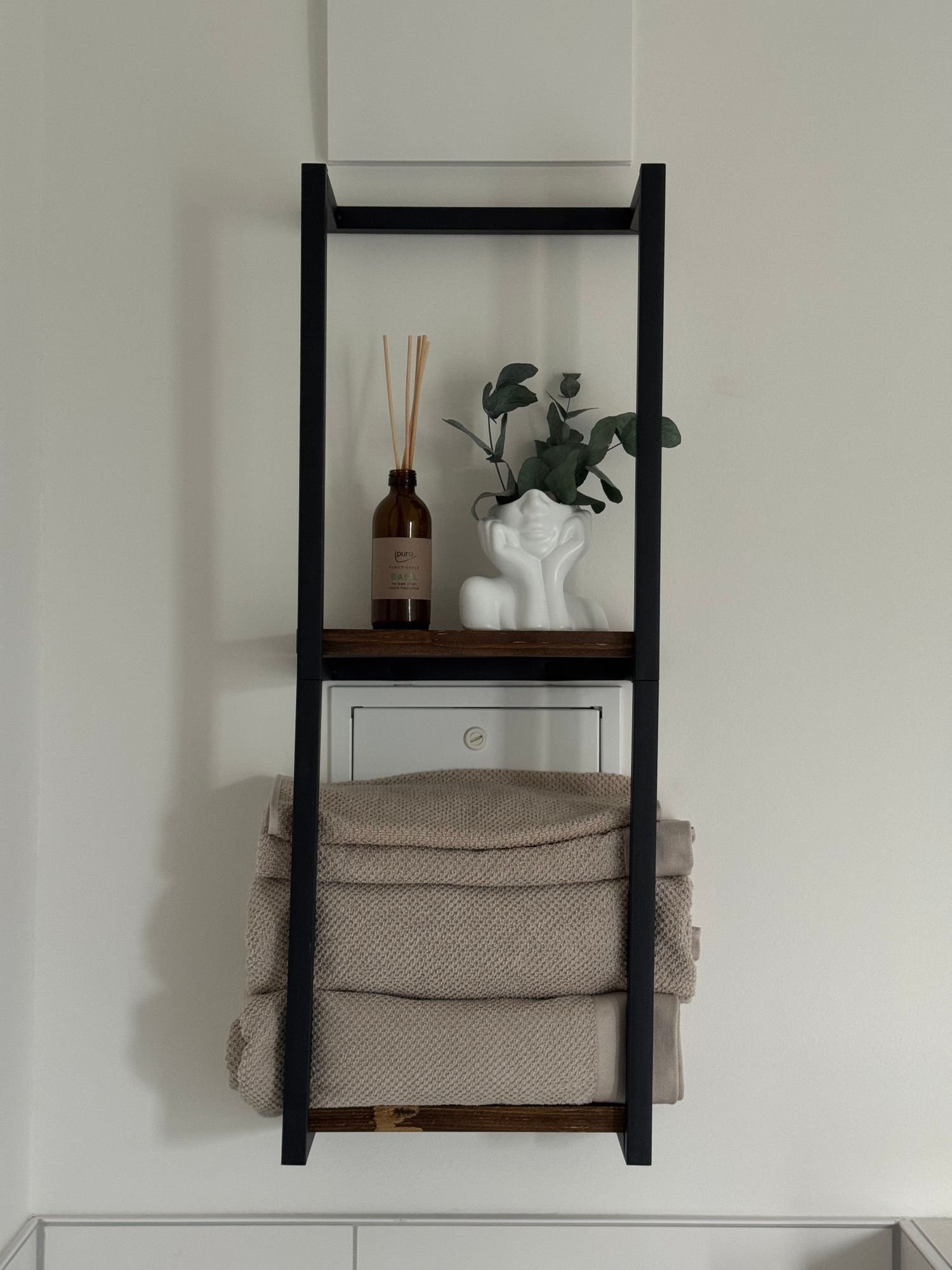
For a freestanding unit beside a pedestal sink, measure the pedestal at several heights. Curved ceramic can widen near the floor or basin. Check that the shelf does not press against it and that feet sit properly on the floor. Wall-mounted shelves need suitable fixings and careful attention to concealed services; do not drill near plumbing based solely on the visible pipe route.
Store only what is useful there
Choose containers that can be lifted out individually and keep spill-prone items upright. A low tray may help organize bottles, but it must not hide a leak or make the plumbing impossible to inspect. Avoid stacking items so high that they press against the basin or hoses. Leave labels visible when products need to be distinguished quickly.
Read the shelf material's care guidance for bathroom use. A wood-look surface is not automatically suitable for repeated splashes, and a metal frame still has joints and fixings to consider. Clean and inspect the area periodically, moving the stored items rather than only wiping the front. If the available space is too awkward, a separate narrow cabinet can be more useful than forcing storage into every gap around the sink.