Choosing a pour-over coffee dripper
A pour-over dripper is one part of a small system: paper, cup or server, kettle and a place to set down the wet filter. Choose the system you can use comfortably before comparing decorative materials.
Decide how much coffee you actually make
Start with the amount you normally serve, measured in your own cup or mug. A product's stated number of cups may not correspond to the large mug on your desk. Check the maker's intended brewing range and the receiving vessel's usable capacity. A dripper large enough for several people can be cumbersome if almost every brew is a single serving.
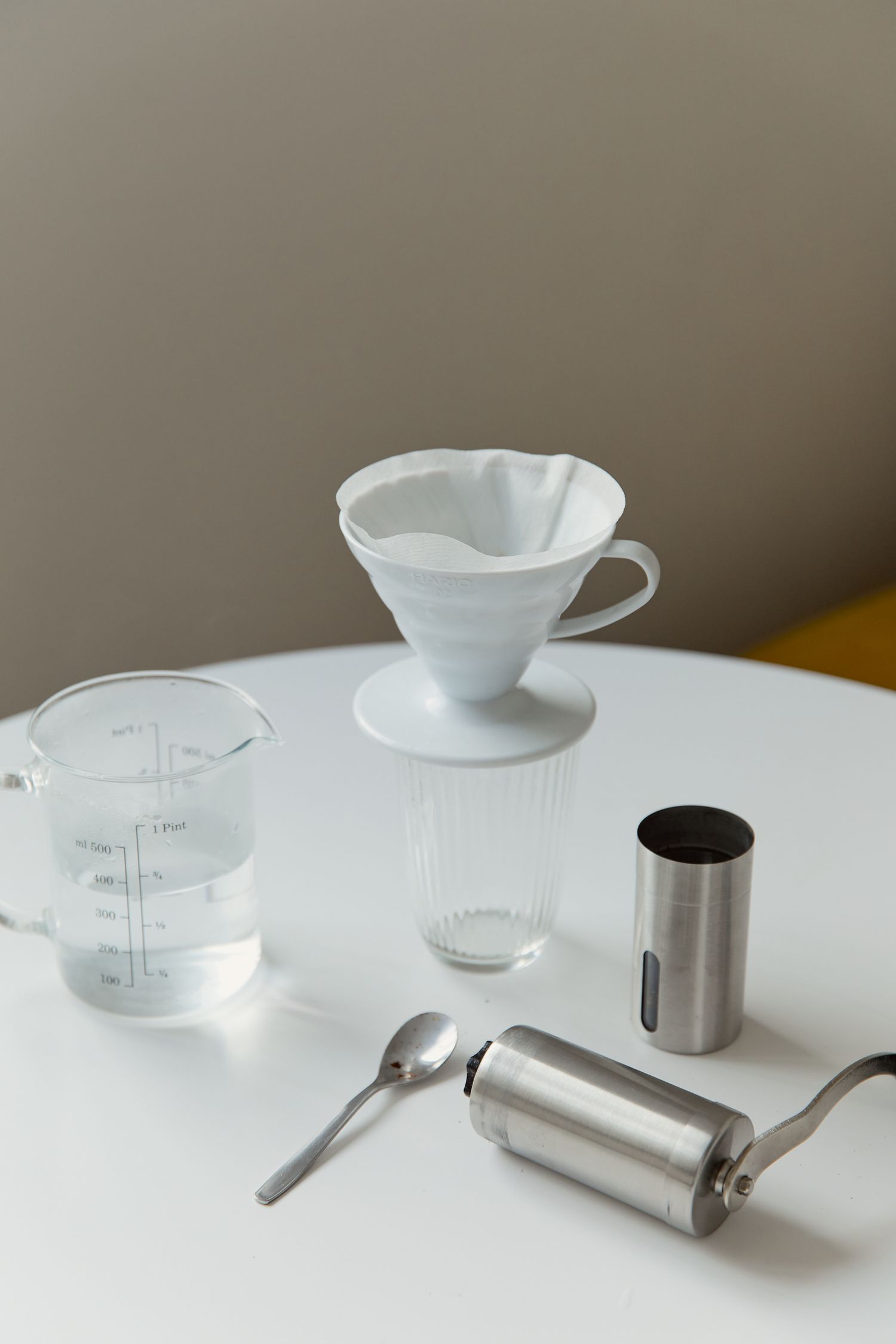
Think about whether you want to brew directly into a mug or into a server. Direct brewing uses fewer pieces, but a server lets you see the collected coffee more easily and share it between cups. The dripper's base must be suitable for the vessel beneath it. Compare the support diameter, opening and available clearance rather than assuming any cone will sit securely on any cup.
Identify the exact paper format
Filter shape and size are purchase criteria, not details to sort out later. Hario, for example, identifies its V60 01 papers specifically for the corresponding 01 dripper size. Record the required paper designation for your chosen brewer and check whether you can obtain it conveniently. A familiar-looking number on another brand's packet is not sufficient confirmation of compatibility.
Look at how the paper sits in the dripper and follow the maker's folding and preparation instructions. Do not cut a random filter to fit merely because the outer shape appears close. A reusable insert is also a separate brewing choice: confirm that it is designed for the dripper and consider its cleaning routine rather than assuming it behaves like the specified paper.
Consider the whole countertop arrangement
If you use a scale, the mug or server and dripper must all fit on it without hiding the display or exceeding its load limit. Check the height available under nearby shelves. You need room to pour without knocking the dripper, and a stable level surface for the entire assembly. A slim kettle spout cannot correct a wobbly base or a mug balanced on an undersized platform.
Compare handles and lifting points as well as appearance. Some brewers are designed to be lifted by a particular grip; others need to cool before handling as directed. Choose a material and shape whose care requirements fit your kitchen. A heavy ceramic body may feel substantial, but it adds weight to the setup and needs a suitable resting place when removed.
Make the routine easy to repeat
A beginner does not need to buy every accessory at once. Use the brewer's instructions as the starting point for coffee quantity and pouring, then change one variable at a time if you want to understand the result. Keep a brief note of quantities you enjoy. This makes comparison more meaningful than changing the coffee, paper and pouring pattern together.
Finally, plan where the used dripper goes. A small compatible stand or suitable heat-resistant dish can provide a defined landing spot while you serve the coffee. Remove used grounds and clean the brewer as directed, reaching ridges and the outlet without damaging them. A dripper that stores safely beside its correct papers is more convenient than a visually striking piece that requires a separate search before every cup.