Choosing a practical ironing board
An ironing board should fit the way you work and the place where you keep it. A broad surface can help with sheets, but a heavy frame is less attractive if it has to be carried from another floor.
Choose around the garments
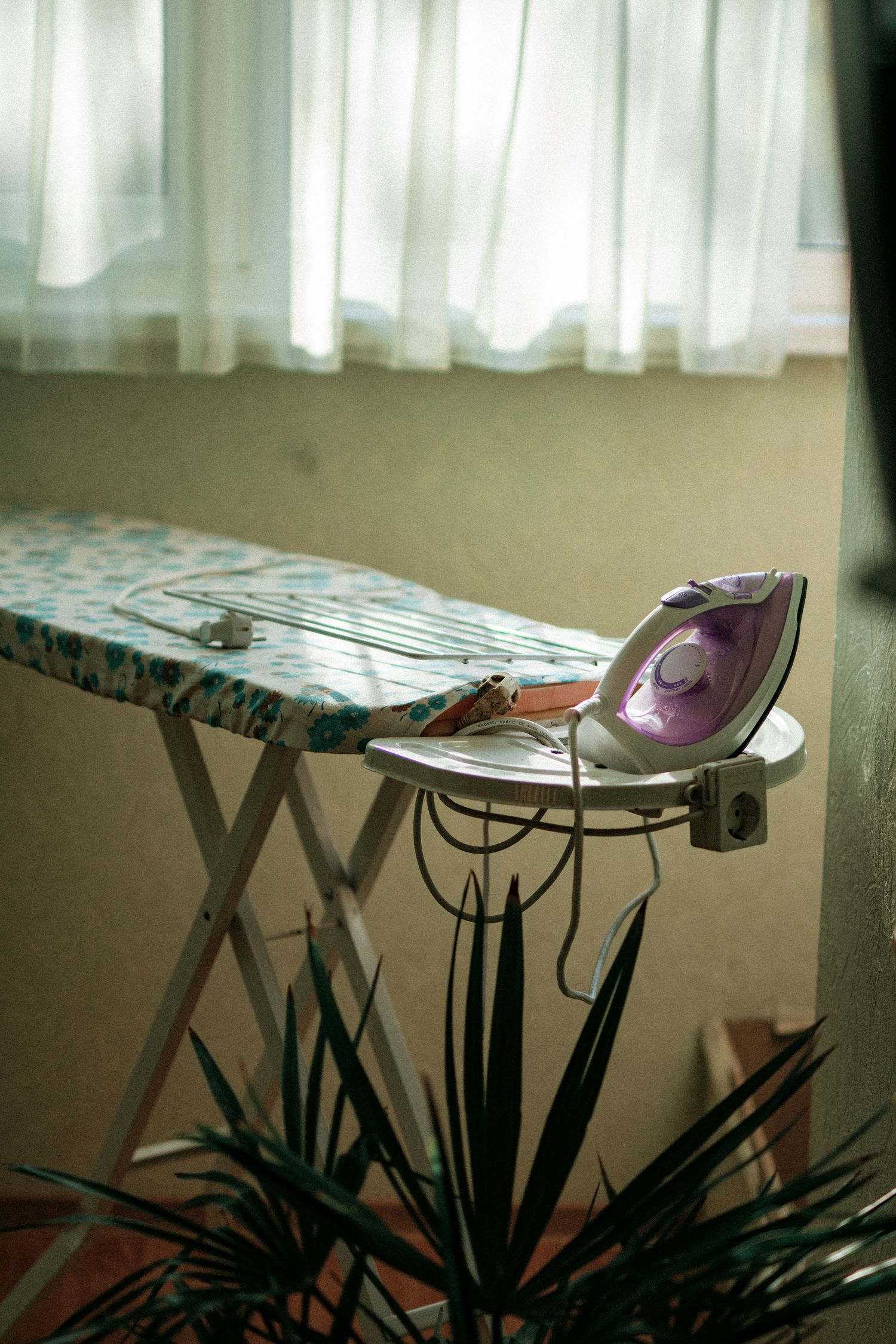
For shirts, a tapered end helps you position shoulders and smaller areas without gathering too much fabric. Larger flat textiles benefit from a wider uninterrupted surface. Measure the open board including the iron rest rather than relying only on the quoted ironing-surface length. Leave room to stand, move the garment and route the cord without stretching it across a walkway.
Check the usable height range from the manufacturer's specifications. You need to be able to set a working position that suits you, not simply the maximum height shown in a picture. If more than one person uses the board, confirm that changing the setting is straightforward and that the locking mechanism can be checked before the board is loaded.
The rest must match the iron
An ordinary iron rest is not automatically suitable for a steam-generator base. Compare the rest's dimensions and stated capacity with your appliance, including any relevant operating instructions. The appliance must sit as intended without overhanging or requiring an improvised platform. Keep the hose and power cord positioned so they do not pull against the board as you move.
Look for access to replacement covers in the correct size and shape. A cover can look similar yet fit poorly around the nose or fastening points. Follow the board and cover instructions for padding and attachment. Adding arbitrary layers can change the fit and the way the appliance interacts with the surface, so do not treat extra thickness as an automatic improvement.
Folding and storage are part of the job
Compare the folded length with the height of the intended cupboard and the folded width with the available gap. Include the projecting iron rest and feet. A board that fits inside a closet may still be awkward to turn through its doorway. Consider its weight and the position where you will grip it once it is folded and secured.
Open the board on a stable level surface, engage its supports as directed and keep fingers away from folding joints. Follow the iron's instructions for cooling and storage before putting equipment away. A tabletop board can suit occasional small tasks when used on an appropriate surface, but it is not simply a smaller substitute for every full-size job. Choose the format that reduces the handling you actually find inconvenient.