Choosing a stable plant stand
A plant stand carries more than an empty pot. Its load includes the container, soil, plant and water, while its position must allow ordinary watering without turning the whole arrangement into a balancing exercise.
Match the support to the pot base
Measure the pot's actual bottom, not only its widest rim. A stand with a circular opening may be intended to support a particular pot profile rather than a flat base. Check the manufacturer's description of the contact points. A pot that rests on a decorative edge or bridges a gap is not necessarily supported in the way the stand was designed to work.
For a platform-style stand, compare usable surface area and any raised edge. The saucer belongs in the measurement too. It should not overhang awkwardly or prevent the pot from sitting level. Keep drainage and removal accessible. A plant that can only be lifted out by grasping fragile stems is in an arrangement that needs reconsidering before the stand is put into service.
Use the complete load information
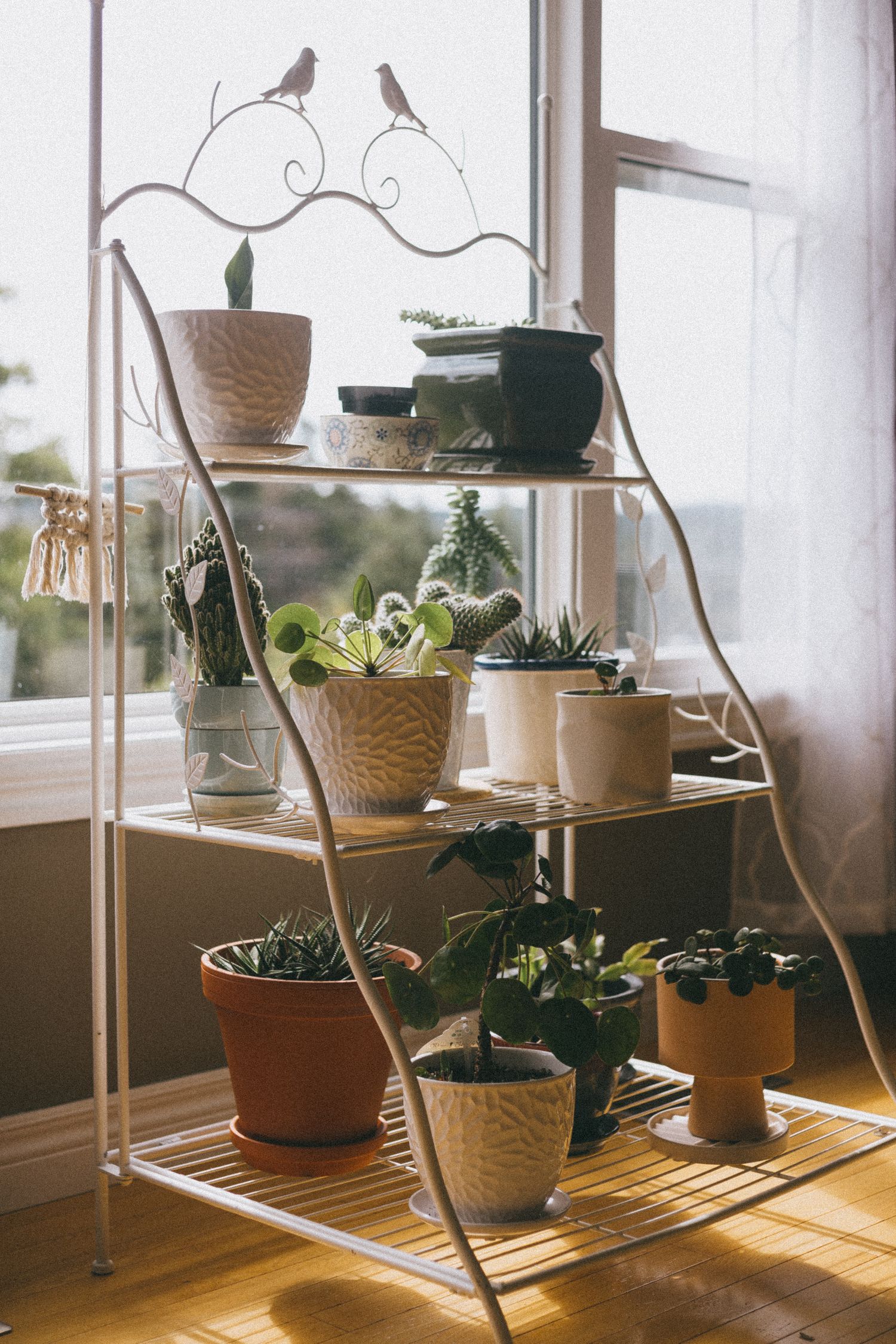
Check the stand's stated capacity for each level, especially on tiered models. The limit for one shelf may differ from the total limit. Use the full planted and appropriately watered setup when assessing the load. If the weight cannot be established confidently, choose a clearly suitable alternative or ask the manufacturer rather than relying on the empty pot's weight alone.
Follow instructions on assembly, placement and any required fixing. A photograph showing a stand without visible wall attachments does not establish that none are required. Do not remove braces to fit a larger pot. Keep heavier arrangements where the design specifies, and do not treat an unused lower shelf as a step for reaching the top plant.
Check the floor and the route around it
The floor should support the stand levelly and be compatible with its feet. A thick rug can change how a narrow-legged stand sits. Consider the route used for opening curtains, cleaning windows or passing through the room. Leaves can project much farther than the stand itself, so the plant's full shape belongs in the footprint sketch.
Where pets or children use the room, a stand should not become an attractive climbing route or an easy object to pull over. Choose placement and securing methods appropriate to the actual product and household. Keep dangling accessories and trailing plant material away from busy routes. If the location cannot be made suitable, a lower plant position may be the better arrangement.
Watering should remain ordinary
Plan where excess water will go and how the pot or saucer can be removed. Protect nearby surfaces using methods compatible with both the stand and floor. Check the finish's care requirements; indoor use does not make every material tolerant of repeated wet contact. Clean up spills as directed instead of allowing them to remain around joints or feet.
Recheck the setup as the plant grows or when the pot changes. A stand that suited a small plant may not suit the next container. Keep the assembly information and model details available for later reference. The stand should remain a supported, accessible part of plant care rather than a fixed display that cannot be adjusted when the plant's needs change.