Choosing a stockpot for batch cooking
Batch cooking needs a pot that can hold the planned food and still be lifted, stirred and cleaned in the available kitchen. Start with a realistic batch size rather than the largest capacity that fits a cupboard.
Work backward from the portions
Use a familiar recipe to estimate the quantity you actually prepare. The pot's total volume is not a recommendation to fill it to the rim. Leave the working space specified for the task and follow the cookware instructions. Ingredients that need stirring or room to move require a different allowance from an empty volume measurement with water.
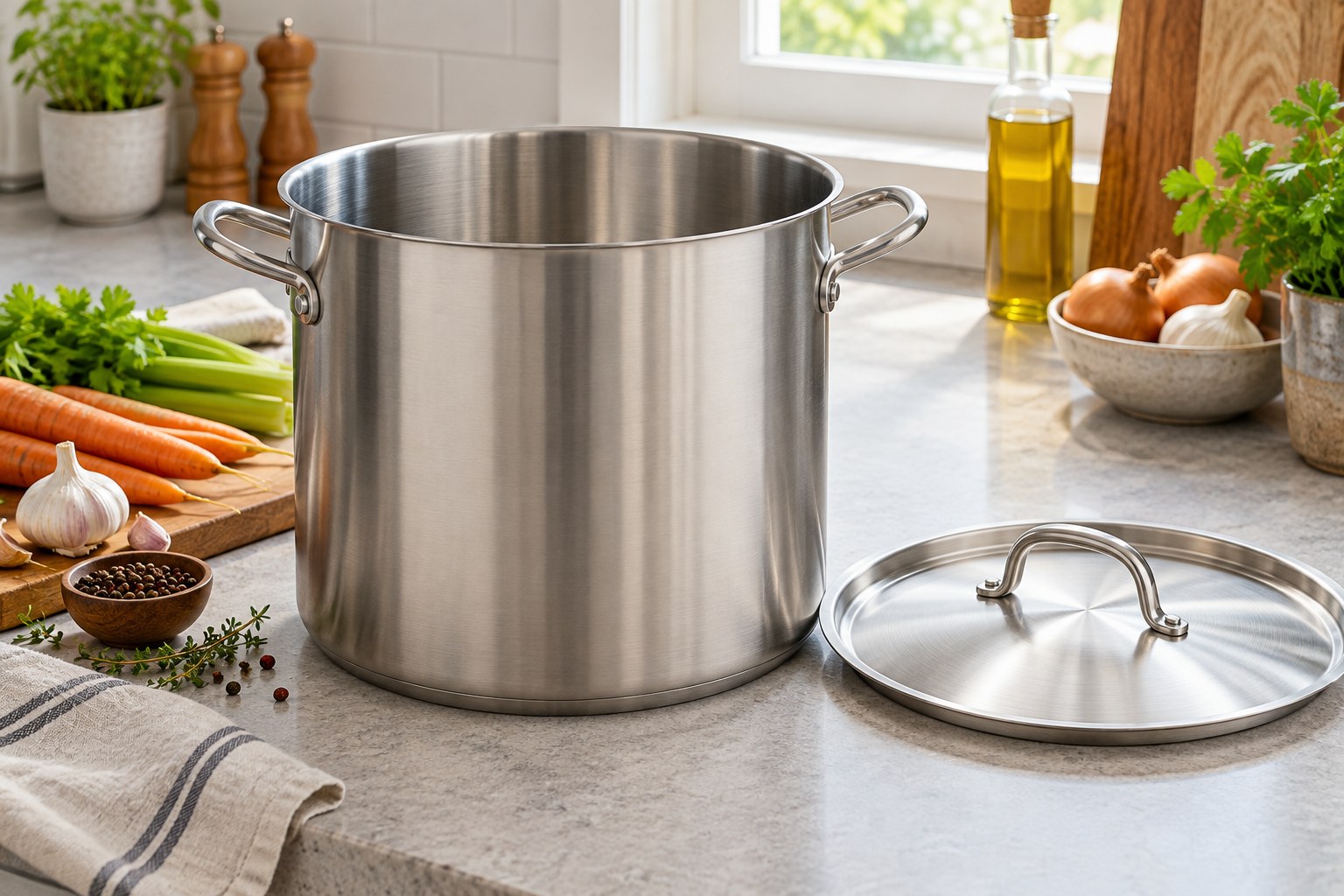
A tall narrow pot and a wide lower pot can offer similar capacity but different access. Think about reaching the bottom with the utensils you use and lifting ingredients out. A very tall pot may be awkward under a low range hood or when standing at a particular counter height. Compare the complete open working space, including the lid when it is removed.
Check the cooktop and handles
Confirm compatibility with the actual cooktop and follow its guidance on cookware base size. The rim diameter can differ from the contact base. On a small stove, a wide pot may limit use of an adjacent zone. Place a paper footprint on the cold cooktop to compare positions without assuming that fitting physically proves suitability for the appliance.
Two side handles need enough space for the appropriate grip and protection. Compare the pot's empty weight with the added weight of its expected contents. A large full pot can be difficult to move even when its handles look substantial. Plan a way of serving or transferring food that does not require carrying more than you can safely control.
Plan the next stage before cooking
Think about where the finished food will go, including suitable containers and space for the storage method appropriate to the recipe. Food safety requirements are not solved by using a larger pot. Follow current official guidance for the particular food and do not leave a batch waiting simply because its storage containers have not been organized.
If draining is part of the task, compare the sink, colander and transfer route in advance using empty equipment. A pot that cannot be positioned comfortably above the sink may be unsuitable for that routine. A built-in straining feature should only be used according to its instructions; it does not automatically remove the weight and handling issues of a full vessel.
Cleaning can set the practical size limit
Measure whether the pot can be turned in the sink without striking the faucet or nearby surfaces. Follow the material's cleaning guidance rather than forcing a large item into a dishwasher because its finish is described as dishwasher safe. The machine's available space and the placement of other items still matter.
Choose a storage position that does not require lifting the pot over fragile objects. Keep its lid and model information identifiable. If a moderate-sized pot covers most batches and is much easier to handle, it may be a better purchase than a very large one used rarely. Capacity should support the cooking routine from preparation to cleanup, not become the feature that makes every later step harder.