Choosing a toilet brush holder
A toilet brush holder is easier to maintain when the parts that need cleaning can actually be reached. Compare the complete brush-and-holder arrangement, including replacement options, instead of choosing the outer container alone.
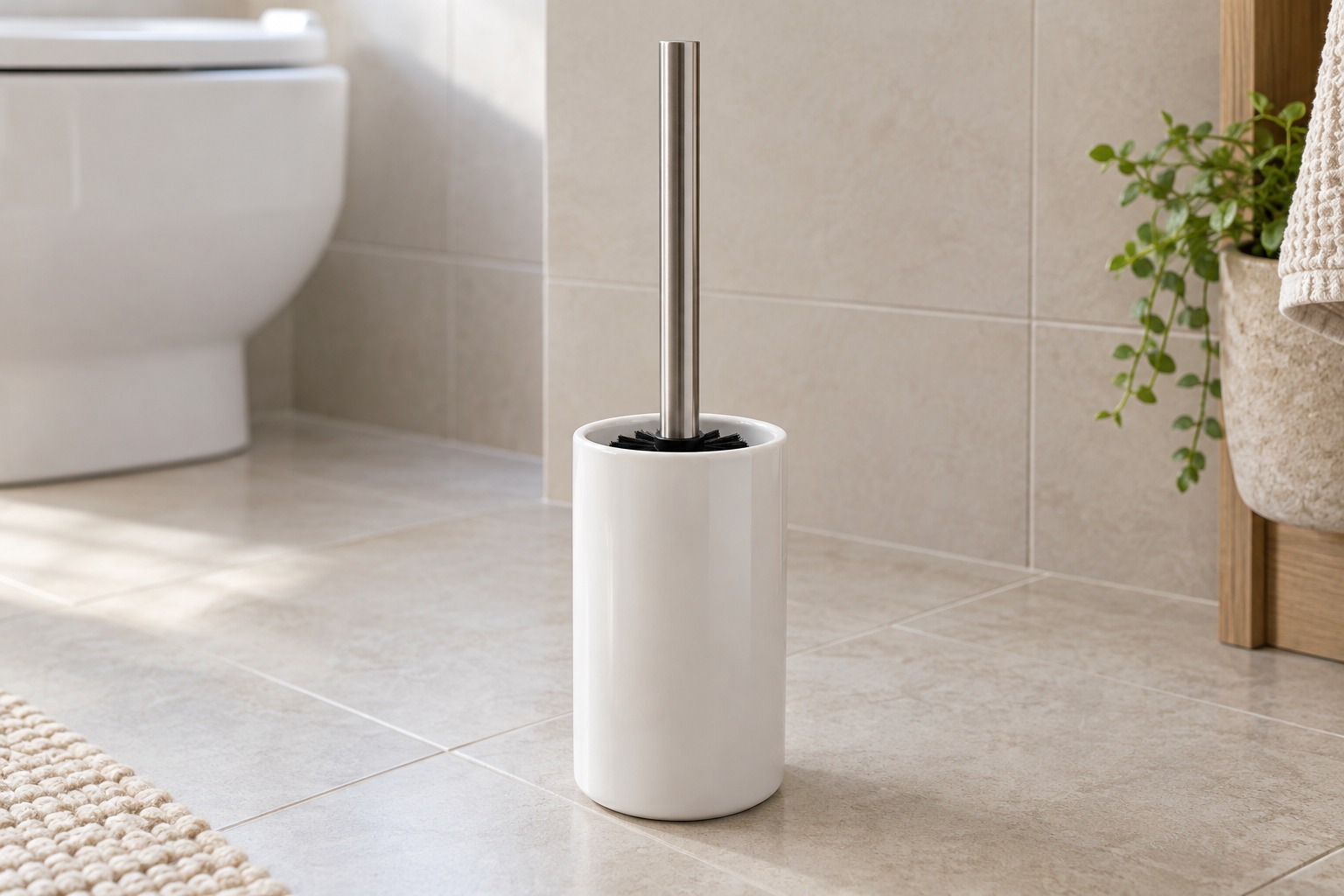
See how the brush rests
Check whether the brush sits directly in the bottom or is supported above an inner collection area. Either arrangement still requires cleaning according to the maker's instructions. A lid can conceal the head, but it should not make removal awkward or trap the handle at an angle. Examine how the brush is lifted out and returned without scraping the opening.
The holder should have a stable base suitable for the floor. A tall narrow outer shell may look compact but still be easy to disturb in a cramped space. Include the handle height when measuring under a shelf. If the holder will be wall mounted, confirm the fixing method and the clearance needed to remove the inner cup for cleaning.
Check the parts that can be replaced
A replaceable brush head can extend the usefulness of a holder, but only if the correct replacement is available and identifiable. Save the model or part number rather than relying on an apparently common screw connection. Head size and handle fit vary. A generic replacement that prevents the lid from closing is not necessarily a useful substitute.
Look for an inner cup that can be removed and cleaned without dismantling the decorative shell. Check material care for every part, including any coating or adhesive fixing. Do not assume that a product can tolerate a particular disinfectant just because it is used in a bathroom. Follow the cleaning product label and the holder's instructions, and never mix cleaning chemicals.
Give cleaning equipment its own place
Position the holder where it can be reached without moving stored toiletries. Keep it separate from clean towel storage and leave enough floor access to clean around it. A narrow gap behind the toilet may conceal the holder but make routine maintenance unnecessarily difficult. Choose visibility and access together rather than treating concealment as the only goal.
Inspect the brush and holder during cleaning. Damaged bristles, cracked cups or loose mounting parts are reasons to follow the maker's replacement or repair guidance. Keep the setup simple: a stable holder, accessible removable parts and an identifiable replacement brush often matter more than decorative extras. The arrangement should make the ordinary cleaning routine possible without adding several hard-to-clean surfaces around the tool.