Colanders for small sinks
In a small sink, a colander needs space for its handles and for water to leave underneath. A bowl that fits the basin tightly can be less useful than a smaller one with a clear drainage route.
Choose where it will sit
Compare a freestanding colander with one designed to span the sink. A freestanding model needs stable feet and clearance above the basin bottom. A spanning model needs compatible sink edges and an adjustment range that fits the opening. Do not balance an ordinary handled bowl across a sink unless it is designed for that use.
Measure the sink opening, its internal depth and the distance to the faucet. Include handles, feet and any extending arms. A deep colander may fit below the rim yet leave too little room for a pot to be tipped safely into it. Think through the complete transfer with empty items before choosing the size, keeping the manufacturer's heat and use limits in mind.
Match the holes to the ingredients
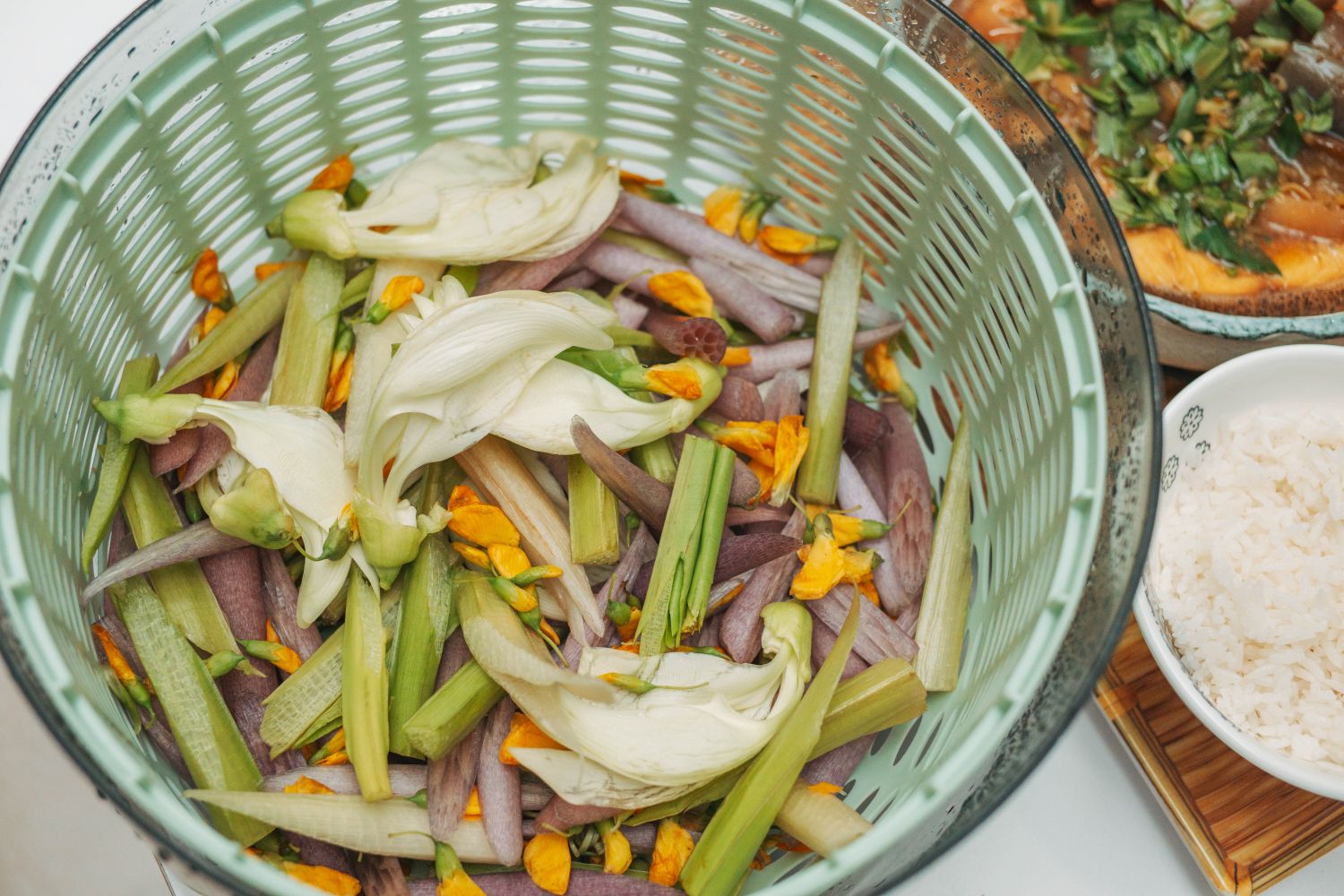
Large holes suit some tasks but can release small ingredients. A fine mesh strainer and a perforated colander are different tools. Choose according to the food you drain most often rather than expecting one opening size to work equally well for pasta, tiny grains and washed leaves. The available draining area also matters when ingredients spread against the sides.
Check that the handles remain accessible once the colander is filled. Small decorative loops may be awkward when hands need to stay away from hot contents. Use the tool only for temperatures and loads supported by its maker. A collapsible design needs to lock or open as intended; do not assume every flexible bowl is suitable for handling hot food.
Cleaning and storage complete the choice
Inspect the joins around handles, rims and feet. Food can lodge in a rolled edge or around a removable base. Follow the stated cleaning method, including any dishwasher restrictions. Mesh needs particular attention to trapped particles, while small perforations may need a suitable brush used without damaging the surface.
Measure the storage shape as well as the working shape. A collapsible bowl saves space only if its folded form fits a useful location and can dry before storage. Nesting inside another bowl may be convenient, but do not trap moisture between them. A smaller easy-to-clean colander can be a better match for a compact kitchen than a large one that complicates every draining and washing task.