Curtain length before you buy
Curtain length starts at the hanging system, not at the top of the glass. Decide how the fabric will be attached and where it should finish before choosing a ready-made size.
Establish the two endpoints
Locate the actual point from which the fabric hangs. Rings, hooks, tabs and eyelets can place the top of the curtain at different heights relative to a rod. Read the curtain's measurement convention and the hardware instructions together. Measure to the intended lower edge at several places across the opening, since a floor or window sill may not be perfectly level.
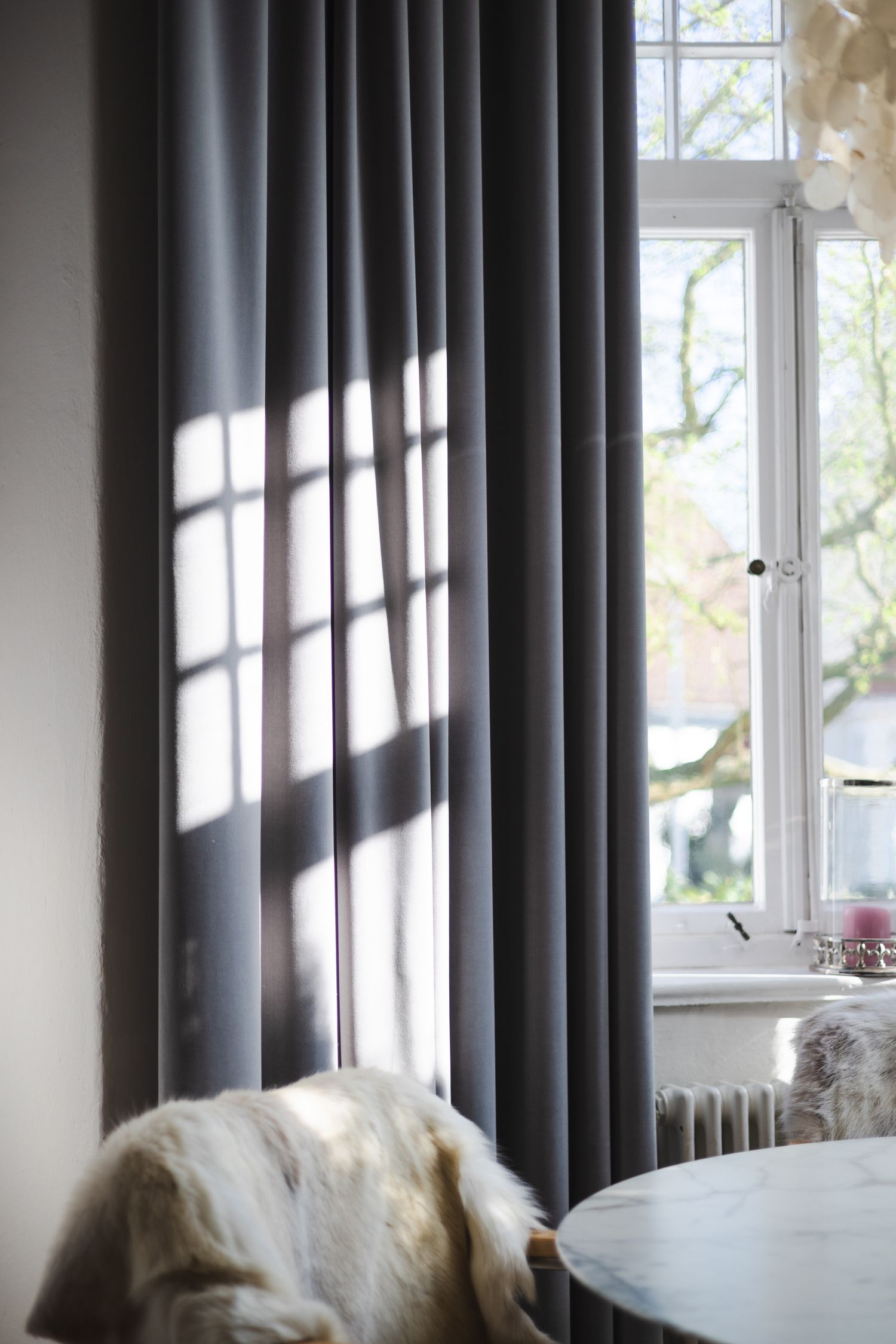
Choose the finish according to the room. A curtain that clears the floor can move without dragging through everyday dust. A sill-length curtain may suit a space where furniture occupies the wall below. Fabric pooling on the floor is a deliberate styling choice with extra handling implications. Do not let any style choice override required clearances around heaters or other nearby equipment.
Check width before committing to length
A panel's flat width is not necessarily the width it covers once gathered. Compare the recommended fullness for its heading style with the rod or track length. Confirm whether the package contains one panel or a pair. Two long curtains that are too narrow can leave a gap in the middle even though their height was measured carefully.
Consider where the fabric rests when open. Bulky panels may cover part of the glass unless the track has suitable space beyond it. Check nearby cabinets and wall fittings before extending a rod. If you are also using a blind, allow for both layers and verify that neither prevents the other from moving. Draw their positions from the side as well as from the front.
Order with alterations in mind
Read washing and shrinkage information before deciding on a final hem. If the maker recommends washing before shortening, follow that order. Some ready-made curtains include hemming options, while others need sewing or professional alteration. Do not assume that a heat-bonded hem is appropriate for every fabric. Keep the original care label attached or stored with the product information.
For an uncertain size, test the proposed length with a piece of paper or spare fabric hung at the intended attachment point. Look from both inside and outside the room where possible. Check the opening and closing movement with furniture in its normal position. Write down the finished length, the measurement starting point and the number of panels so a later order does not confuse three different decisions.
When the two sides are different
A window beside a sloped ceiling or a low cabinet may not allow equal panels on both sides. Sketch the fixed obstacles separately instead of forcing a symmetrical arrangement that prevents opening. If one panel must stay almost permanently gathered, check whether it will conceal a switch or access panel. A simpler single-panel solution can be appropriate when the hardware and available width support it.
For multiple windows, label measurements by room and position. Do not copy the first window's dimensions to another opening that looks similar. Keep finished curtain length separate from the unaltered product length on your notes. This is particularly useful when an alteration service is involved: the person doing the work needs an unambiguous target, rather than a mixture of window height and estimated fabric allowance.