Hangers for different garment shapes
A single style of hanger rarely suits every garment. Shoulder width, fabric weight and the way an item is stored matter more than making the entire closet look identical.
Support the garment's own shape
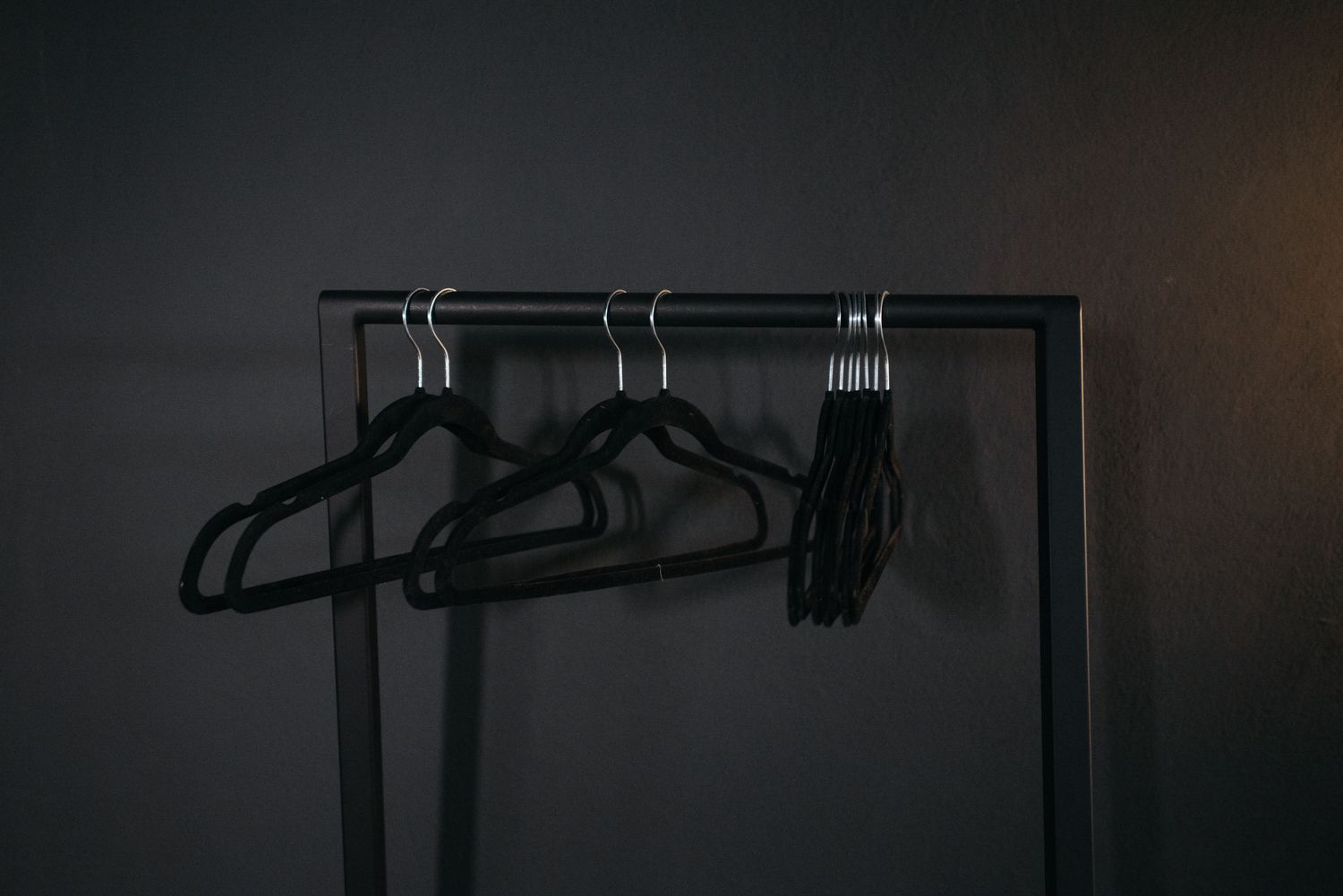
Compare the hanger width with the garment's shoulders. A very wide hanger can push into sleeves; a narrow one leaves heavier shoulders unsupported. Rounded, broader ends may suit structured jackets, while a slim hanger can save room for light shirts. The useful comparison is the actual contact area, not simply whether the hanger is described as wooden, plastic or metal.
Heavy knitwear is often better stored folded when its care guidance permits, rather than suspended by a narrow shoulder line. Hanging loops sewn into dresses can distribute support differently from the neckline. Use them where intended and avoid assuming that every strap can carry the full weight of a garment. Examine delicate fabric for snagging points before choosing textured or notched hangers.
Decide how trousers and skirts will hang
A trouser bar needs enough width for the folded garment without bunching. Check that its coating does not have rough joins and that the bar can be reached without removing the hanger from the rail. Open-ended designs make access simpler in some closets, but their usefulness depends on which way they face and how close neighboring clothes are packed.
Clips offer an alternative for waistbands, yet the pad shape and clamping pressure matter. Test an inconspicuous area where appropriate and follow the garment's care advice. Adjustable clip spacing should match the garment rather than pulling it outward. Small children's clothes and wide adult waistbands may need different hangers even when the hook and overall style are similar.
Make the closet work as a system
Measure the rail and the available height before buying large quantities. A tall hanger hook can consume clearance above the garment, while wide shoulders can push clothing against doors. Swiveling hooks are helpful when hanging items temporarily on a different rail, but a rotating hook is not a promise that every part of the hanger can take twisting force.
Buy a small group first and use it with the clothing that caused the original problem. Check whether garments slide off, sleeves overlap awkwardly or the rack becomes harder to browse. Keep specialized hangers only where they solve a recurring task. Replacing every existing hanger at once can add cost without improving storage, particularly if the real issue is a rail that is already too tightly filled.