Magazine holders for mixed formats
Magazine holders are useful for more than magazines, but mixed paper formats can disappear inside a tall narrow box. Decide whether the contents will be filed upright, carried together or browsed frequently.
Let the largest item set the boundaries
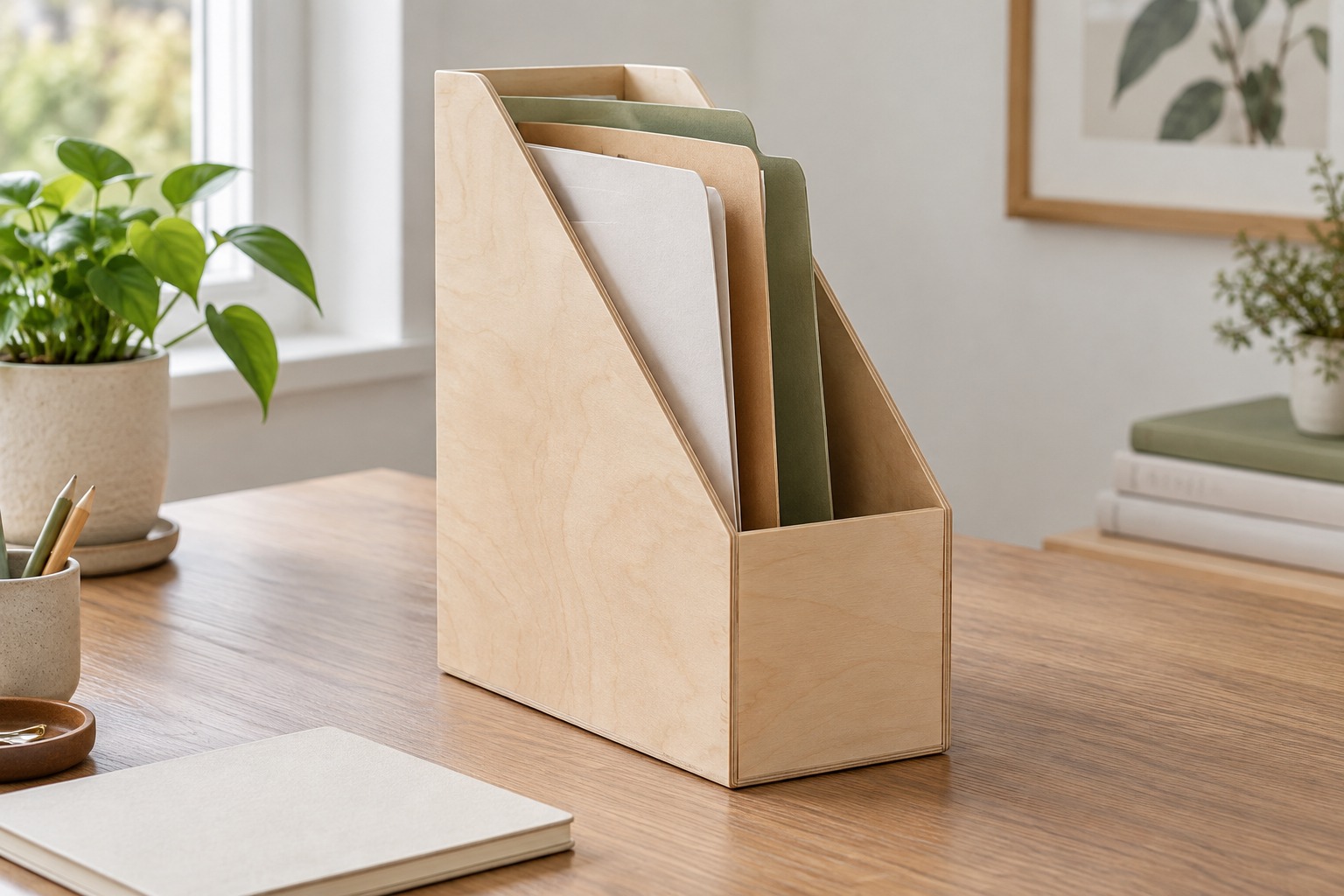
Measure the tallest and widest document in the group, including folders and protective covers. A holder described for a common paper size may not fit a bulky folder built around that paper. Compare the internal width and depth, not only the outside dimensions. If corners curl when an item is pushed into the holder, the fit is too tight for that use.
A cutaway front makes short documents easier to spot, while a high front hides the contents more completely. Think about which side will face outward on the shelf. Some holders are used with the tall back toward the room to create a tidy label surface; that arrangement requires pulling out the whole holder before browsing. Choose deliberately rather than discovering the access problem after filling a shelf.
For thin booklets, a very wide holder can let them slump sideways. Smaller groups or a suitable internal divider may work better. Do not pack the holder so tightly that pulling one item bends its neighbors. Paper that is needed every day deserves a different arrangement from material kept only for occasional reference, even if the two groups share the same printed format.
Move and label the group sensibly
A finger hole can help slide a holder forward, but it is not necessarily a carrying handle for a heavy load. Check the construction and the intended use before lifting a full unit by a small cutout. Cardboard, plastic and metal designs have different care and handling needs. A folded cardboard base should be assembled correctly rather than reinforced with improvised pressure from its contents.
Use a label that describes the group clearly enough to find it later. Dates, household categories or project names can work, but avoid putting every loose paper into one vague miscellaneous file. Leave room for new material without treating the whole shelf as permanent storage. Review the contents when a project ends or a new annual set begins.
Place heavy groups on a shelf that can support them and at a height that allows comfortable removal. Keep holders dry and away from likely spills. If the papers must travel, a closed folder may be more suitable than an open magazine holder. The right format depends on the next action you need to perform, not simply on making the shelf look uniform.