Muffin tins for different portions
A muffin tin is a collection of individual molds, so count the usable cavities as well as the outside size. Mini, standard and large are helpful descriptions, but their actual dimensions still need checking.
Match the cavity to the intended portion
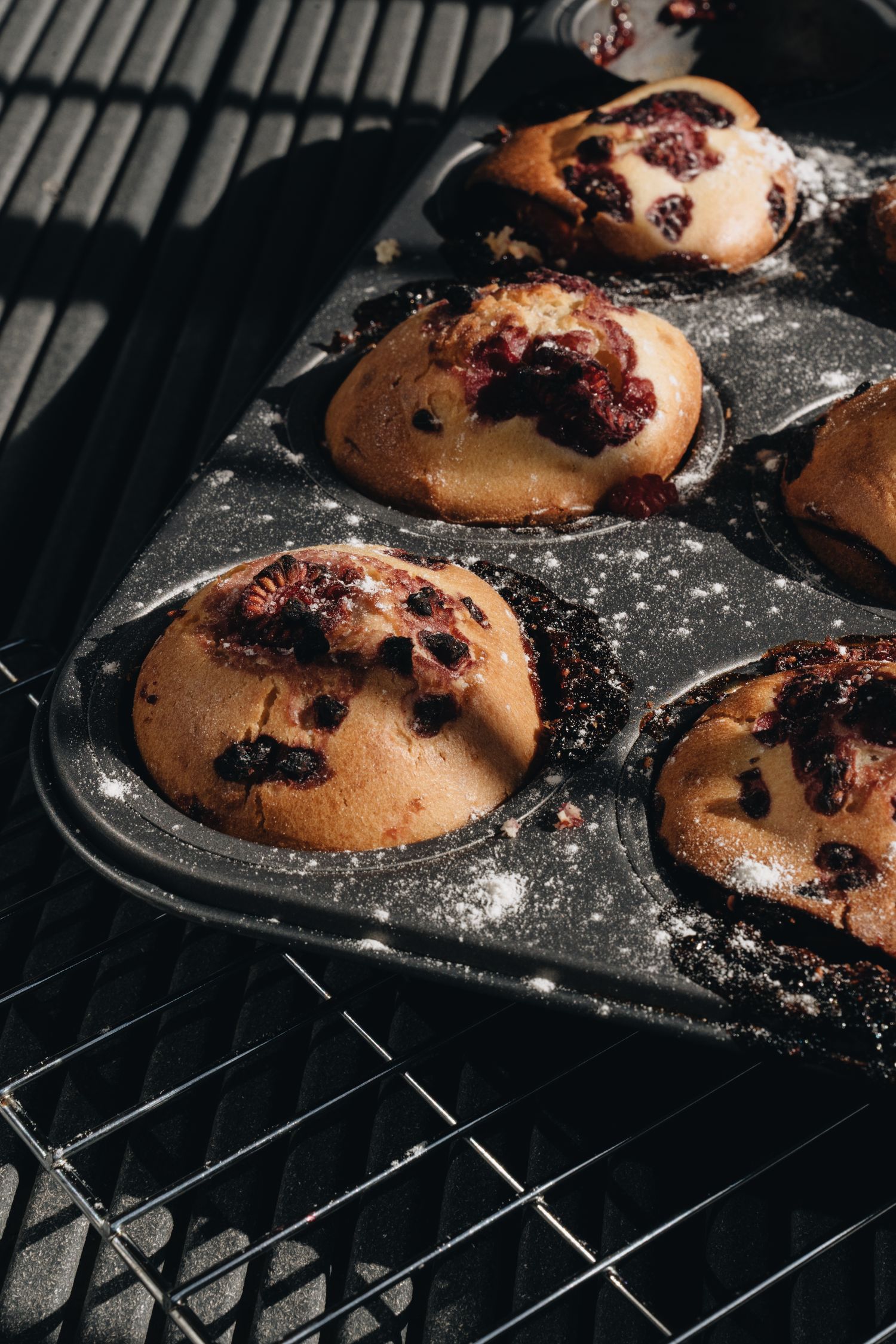
Compare the opening diameter, base and depth of one cavity with the recipe and liners you use. Two tins with the same number of holes can produce different portion shapes. A liner should fit the intended cavity without being crushed into it or standing so loosely that it folds awkwardly. Read the tin maker's guidance where a particular liner size is specified.
The stated capacity of a cavity is not automatically the amount of batter to add. Follow the recipe's filling instructions and allow the required space for the mixture. If changing from one portion size to another, use a recipe or method appropriate to the change rather than simply dividing the same batter and assuming the baking time stays identical.
Check the whole tray in the oven
Include rims and handles in the external measurements. A twelve-cavity tray can be wider than expected, while two smaller trays may fit differently on a rack. Follow the oven's placement and clearance guidance. Make sure the tray can be gripped with appropriate heat protection without touching the filled cavities or forcing hands against the oven walls.
If the design is flexible, read whether it needs support from a rigid tray during filling and baking. Do not assume a silicone appearance means it can be carried safely by its edges when full. The product's material, structure and instructions determine the intended handling. Plan the cold filling position and the hot landing area before starting.
Cleaning many small spaces
Look at the joins around the cavity rims and the underside. Overflow can reach areas that are less obvious from above. Follow instructions for soaking, washing and suitable utensils. A coating or flexible surface can be damaged by cleaning methods that work on a different pan. Dishwasher suitability must be stated for the actual product.
Store the tin so other cookware does not press sharp edges into its cavities. Keep its liner size and care details noted if the dimensions are unusual. For occasional baking, a straightforward tin with a useful portion size may be better than a large assortment of specialty shapes. Each additional cavity and contour should earn its place through the baking you actually do.