Oil bottles that pour cleanly
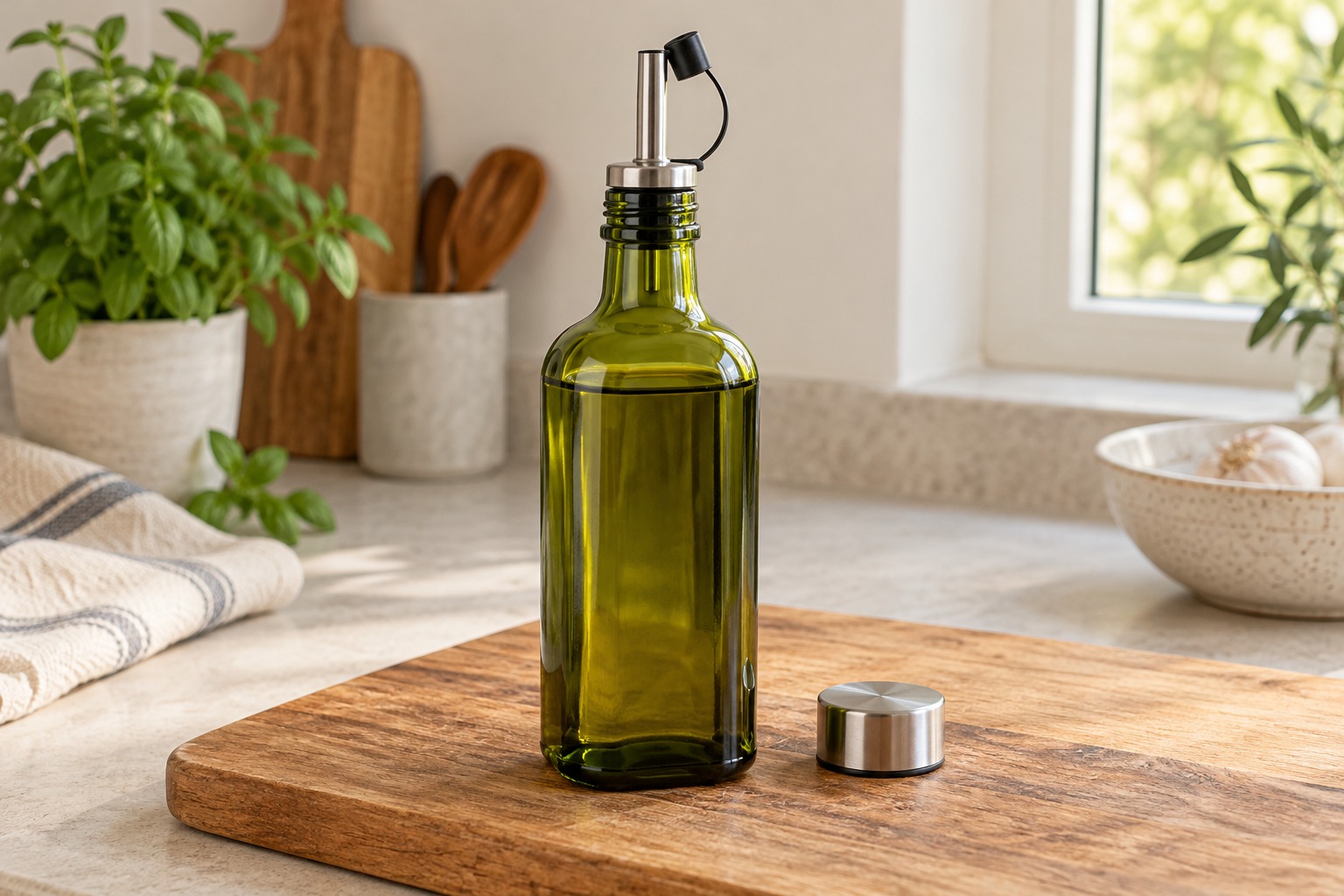
A neat oil bottle should be easy to fill, comfortable to tilt and simple to close after pouring. The spout alone cannot make a bottle convenient if the body is slippery or the opening is difficult to clean.
Match the pour to the task
Think about whether you normally add a few drops to a dish, a short stream to a pan or a measured amount to a bowl. These actions benefit from different levels of control. A narrow spout may suit small additions, while a larger opening can be more convenient for frequent measured pours. Product photographs rarely reveal the actual flow, so look for a clear description of how the outlet works.
Check the cap or closure as carefully as the spout. A tiny loose cover is easy to misplace during cooking. An attached cap should open clear of the pouring path and close without touching the outlet unnecessarily. Do not assume a pourer seals for transport: a countertop bottle and a leak-resistant travel container are different purchases with different requirements.
Pick up the filled bottle
Consider the full weight and the size of the gripping area. A beautiful large bottle may be awkward when nearly full, especially if it has a smooth rounded body and no useful neck. Where you can inspect it in person, hold the empty bottle in the position you would use, while recognizing that this does not reproduce its filled weight.
The base should sit securely on the intended surface. Tall bottles placed near a narrow counter edge are easier to knock while reaching past them. Give the bottle a defined place with enough room to put it down without precision. A small tray may catch stray drops, but it should not become a slippery platform or conceal a loose, poorly fitting stopper.
Refill without losing track
Choose an opening that accommodates an appropriate funnel or the neck of the original bottle. Check how far the pourer inserts before filling, because the displaced space may matter. Avoid mixing unidentified remnants from different products. Keep the oil's name and any useful packaging information associated with the refill bottle, particularly if several similar bottles stand together on the counter.
Follow the bottle and closure cleaning instructions, allowing parts to dry as required before refilling. Narrow channels that cannot be reached conveniently deserve attention before purchase, not after residue builds up. Also follow the oil producer's storage guidance instead of using a decorative display location automatically. Keep spare stoppers only if their fit is confirmed, and replace damaged parts rather than trying to compensate with a tighter push.