Room dividers that preserve light
A room divider can separate activities without turning one side of the room into a dark corridor. Evaluate it as an object people walk around, clean around and sometimes look through, rather than as a flat decorative panel.
Decide what should be separated
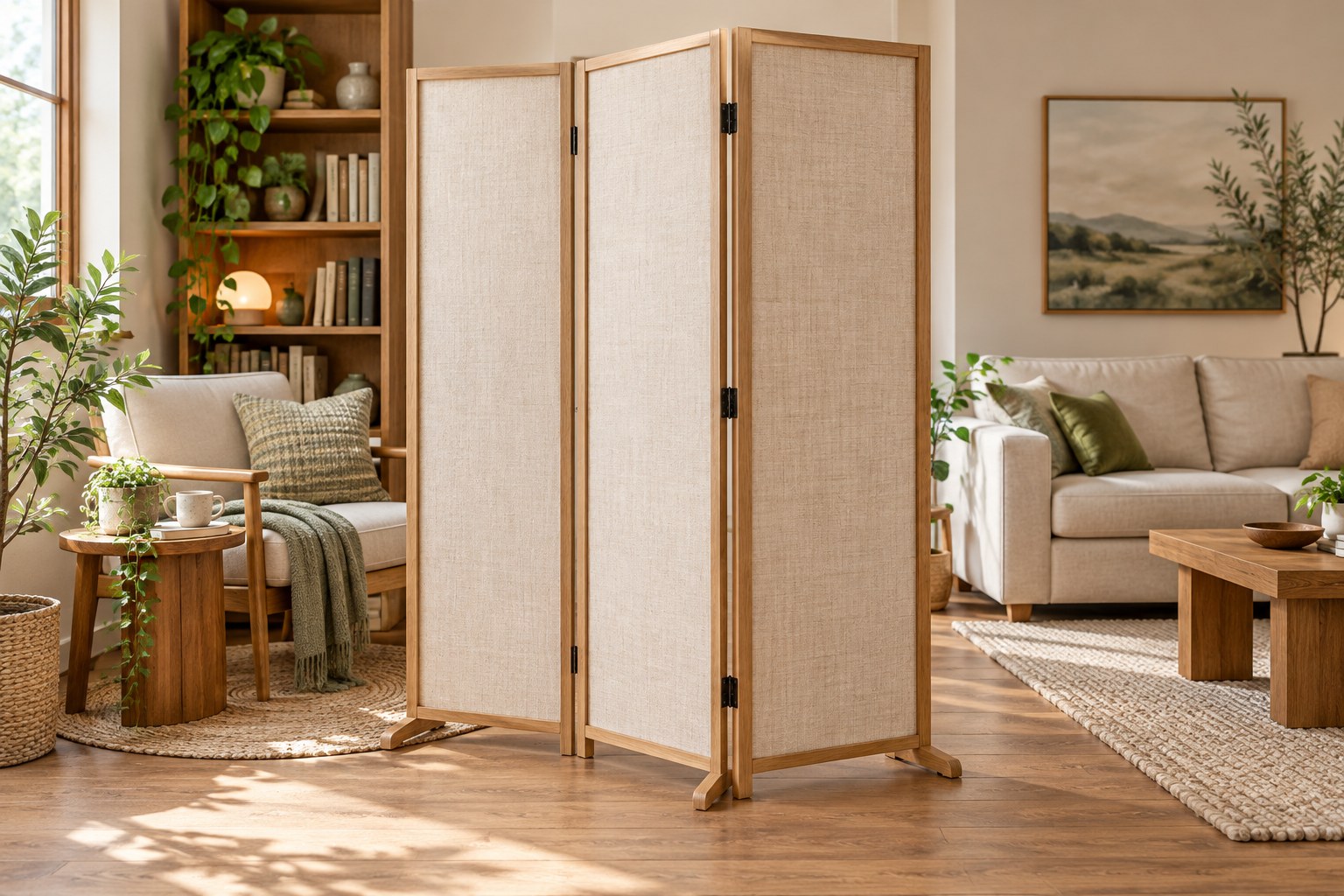
Privacy, visual order and the suggestion of two zones are different goals. An open shelf can mark a boundary while allowing views through it, but objects placed on that shelf change the effect. A folding screen can conceal a specific sightline without dividing the whole room. Identify the view you want to interrupt from the actual seated or standing position.
Mark the proposed divider line and walk through the room's normal routes. Keep access to doors, windows, outlets and frequently used storage. A divider that works from one viewpoint can create a difficult turn behind a sofa. Check both sides of the arrangement, including the place where a vacuum cleaner or laundry basket must pass.
Consider light over a normal day
Look at the room when daylight arrives from different directions and when artificial lighting is used. An opaque divider placed close to a window can affect more than the immediate area behind it. Open slats and translucent materials allow different kinds of visibility and light passage; neither should be judged only from a bright studio photograph.
If the divider is a shelving unit, sketch the intended contents as well as the frame. A mostly empty shelf and a row filled with books behave differently visually. Leaving selected openings clear may preserve sightlines without requiring a larger room. Do not assume that a pale color alone makes a solid tall divider equivalent to an open construction.
Choose a supported structure
Follow the manufacturer's instructions for freestanding use, wall fixing or ceiling attachment. A shelving unit designed to stand against a wall may not be suitable in the middle of a room. Visible backs, unfinished panels and stability requirements all matter. Do not remove a backing panel simply to let light through unless the product is specifically designed for that arrangement.
Folding screens need the specified opening angle and a suitable surface. A nearly straight screen may not stand as intended. Keep hinges and moving sections clear of fingers during adjustment, and consider children and pets when choosing placement. If the divider cannot be secured or positioned appropriately in the desired location, choose another method of zoning rather than improvising extra weight on its base.
Make the boundary reversible
Think about how the divider will move for cleaning or a different furniture layout. Large panels need a storage route as well as a final position. Check whether fabric sections can be removed and cleaned, and how they are refitted. Heavy decorative objects on divider shelves make every change more complicated, so reserve the unit for contents appropriate to its rated use.
Avoid running loose electrical cables through a walkway just because the new division hides an outlet. Plan lighting and access together. After setting up the divider, use the room normally before adding more decoration. The most successful boundary is often a little shorter or more open than the first sketch, leaving both sides usable without making the room feel like two poorly connected spaces.