Saucepans with useful pouring rims
A pouring rim can help move liquid from a saucepan into another vessel, but its usefulness depends on the pan's weight, handle and the size of the receiving opening. Look at the whole pouring movement.
Follow the liquid path
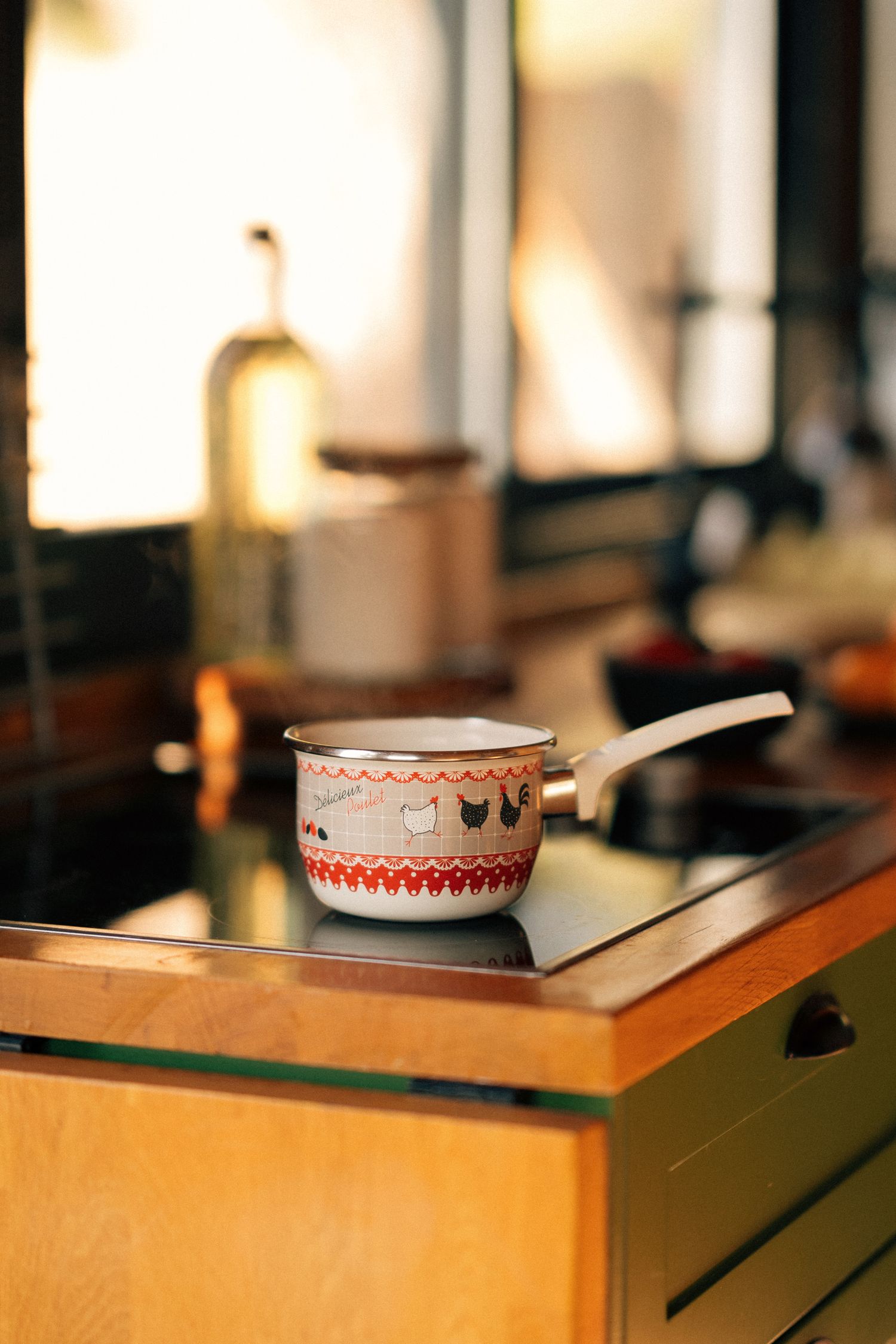
Some pans have a continuous shaped rim; others use a defined spout. Check which side the spout occupies and whether that suits the hand you use. A design with spouts on both sides may offer more flexibility, but the receiving bowl or jug still needs to be positioned comfortably. A pouring feature should guide the intended task without requiring an awkward reach across a hot cooking zone.
Consider the quantities you normally transfer. A small saucepan used for sauce is handled differently from a larger one holding several portions of liquid. Compare total weight when filled and whether a helper grip is provided for the intended use. Do not infer that a pour-friendly rim makes one-handed handling appropriate at every fill level.
Treat a straining lid as a separate feature
A lid with straining openings is not automatically locked in place. Read exactly how the manufacturer intends it to be used, including grip and protection requirements. Do not improvise a hold on a loose lid while tipping hot contents. If the technique is uncomfortable, a suitable separate colander and a different transfer method may be more manageable.
Check that the lid matches the pan's rim and spouts. An apparently similar spare lid can change the way steam or liquid exits. Keep the original model information so replacements can be identified accurately. Vent holes and straining sections also add areas that need cleaning; inspect whether those openings are accessible using the recommended method.
Compare the ordinary saucepan jobs too
The base must suit the actual cooktop and its guidance. Look at the usable interior for stirring, whisking and scraping, not just the top diameter. A narrow deep pan and a wider shallow one provide different access. Choose a shape that works for the food most often prepared, with the pouring rim as one useful detail rather than the only deciding feature.
Measure the pan in the sink and cupboard with its handle included. Read the finish's cleaning instructions and any oven-use limits for all components. A convenient pouring shape loses value if the pan is awkward to clean or store after every use. The best comparison is between complete routines: heating, stirring, transferring, washing and putting the pan away.