Sink strainers that fit the drain
Two sink strainers can look alike from above yet sit differently in the drain. Before buying a replacement, distinguish a loose debris-catching insert from a basket that also operates as part of the sink's stopper mechanism.
Identify what is already fitted
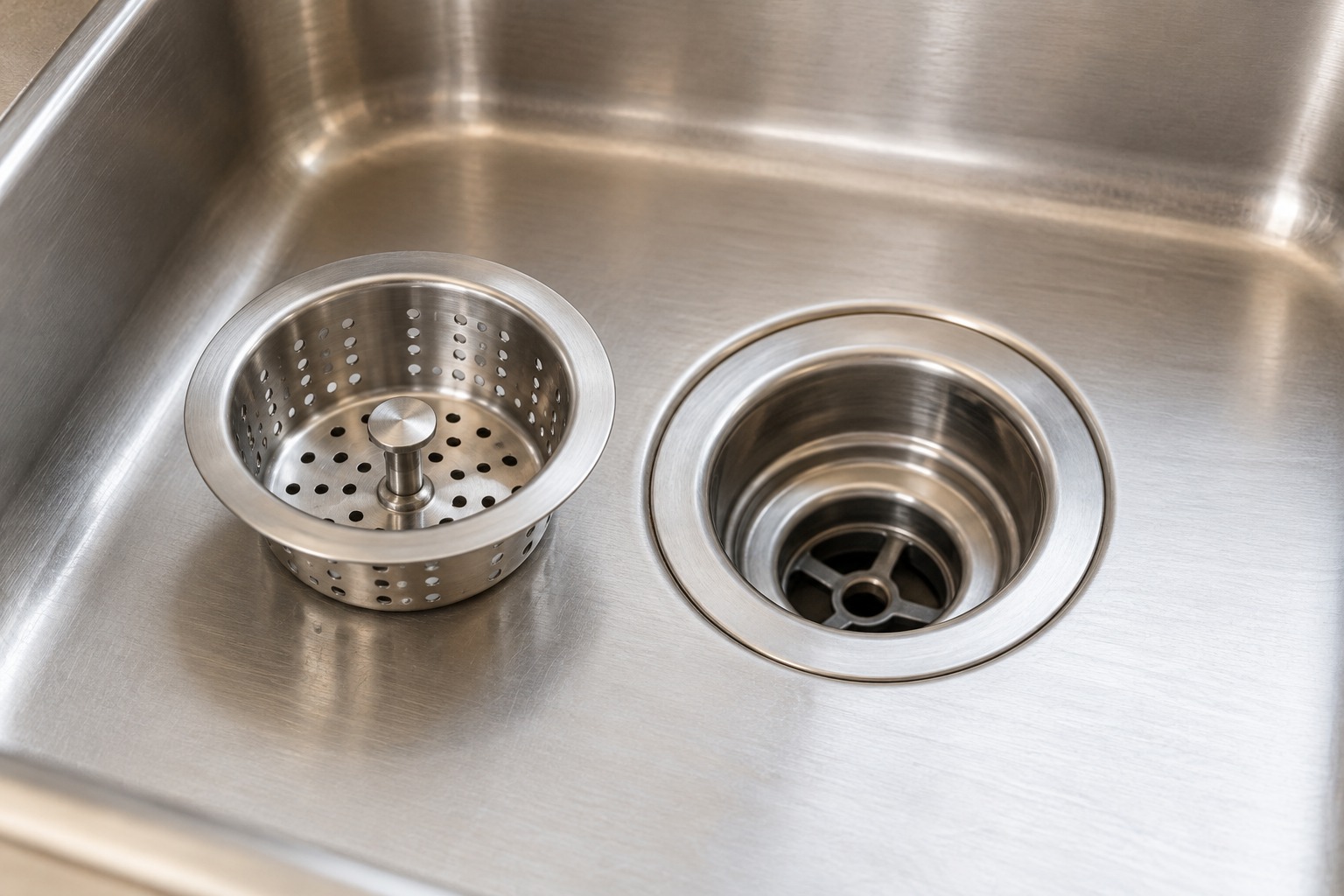
Lift out only the removable part intended for routine cleaning and photograph its top, underside and the drain opening. Note whether it has a central stem, a sealing ring or another feature that engages with the fitting. A basket that seals the sink is more than a perforated cup, and an approximate diameter match does not establish compatibility.
Look for the sink or waste-fitting model in the original paperwork or on accessible labeling. Use the manufacturer's replacement-part information when available. If the existing part is damaged, compare its original shape from documentation rather than copying a bent edge. Do not dismantle the fixed plumbing merely to identify a cleaning insert.
Separate rim size from basket size
Record the outer rim diameter, the body diameter and the depth below the rim. A wide rim can sit across the opening while a smaller basket drops into it. Measuring only the visible rim overlooks whether the body will fit or bottom out. Include the central stem dimensions when it is part of the mechanism.
A shallow overlay strainer has a different role from a replacement waste basket. Check whether it would interfere with the existing stopper or prevent access to its control. An extra insert should not be forced down into a fitting that was not designed to accept it. If the product description gives only a generic sink size, ask for the actual dimensions before ordering.
Balance debris collection with daily cleaning
Fine openings catch smaller pieces, but their usefulness depends on being easy to clear. Examine the basket from both sides and consider whether corners, seams or a central knob obstruct cleaning. Follow the component's care guidance instead of assuming every metal finish tolerates the same chemicals.
Empty collected debris into the appropriate household waste stream before rinsing the insert. A strainer does not make it suitable to pour grease or other unsuitable material into the drain. If water remains slow after the removable basket is clean, the cause may lie elsewhere; changing to a visually different strainer may not resolve it.
Check seating after replacement
Fit the replacement as directed and confirm that it sits evenly and can still be removed normally. Where the part is intended to seal, check that function separately from its drainage position. A basket that rocks, catches or needs pressure to stay in place is a reason to recheck compatibility.
Keep the part number with the sink information once a correct replacement is found. This is particularly useful when the same-looking fitting is sold in several versions. If a seal or small component is separately replaceable, identify the exact part rather than buying a whole new sink accessory each time. The goal is a correctly seated, serviceable insert with a clear cleaning routine.