Spatulas for nonstick cookware
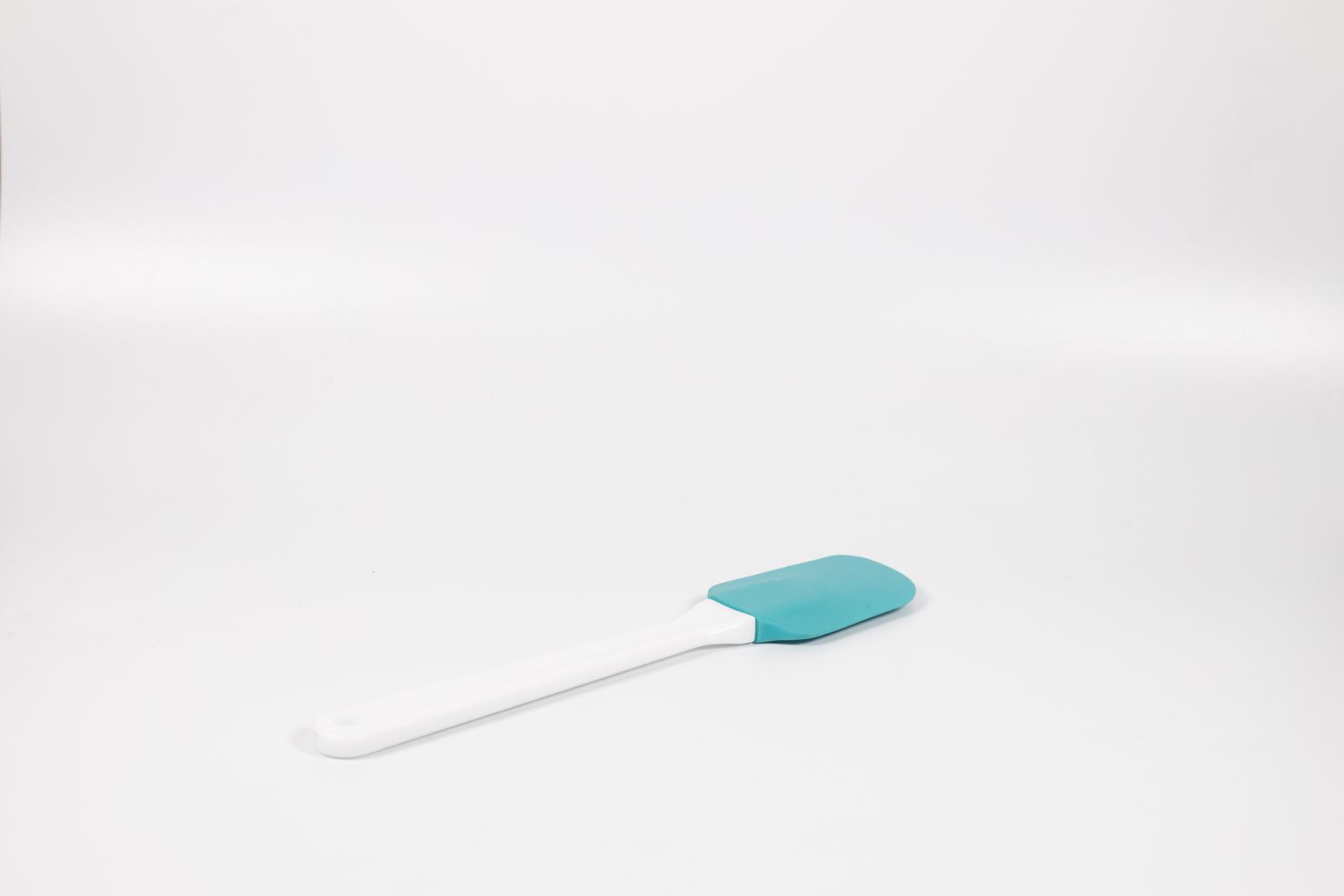
A spatula for coated cookware needs a suitable contact surface and a shape that can lift the food you cook. A soft-looking head alone does not tell you whether the edge, core and handle fit the task.
Begin with the pan's instructions
Follow the cookware maker's utensil guidance. Tefal's general care advice, for example, recommends plastic or wooden utensils for its nonstick cookware. The relevant instructions for your actual pan take priority over a broad claim on an accessory package. Avoid sharp or damaged edges that could contact the coating in a way the pan manufacturer does not permit.
Inspect the entire head rather than only its front face. Some utensils combine a softer exterior with a firmer internal structure. Check that the surface is intact and that no hard edge is exposed through damage. A tool that was suitable when new may no longer be appropriate after the tip splits or a corner wears through.
Choose a lifting shape for the food
A wide head can support a pancake or another broad item, while a narrow one reaches smaller spaces. Compare the usable head area with the pan's flat interior. An oversized spatula may be difficult to turn beneath food in a small pan. The angle between handle and head also determines whether the tool reaches the bottom comfortably without the hand crowding the rim.
Flexibility helps some lifting tasks but can be inconvenient with heavier food. A very soft head may fold where more support is needed; a rigid one may not slide under a delicate edge as easily. Choose around the food most often prepared rather than assuming maximum flexibility is always desirable. A second, differently shaped tool can be more useful than one advertised to do every job.
Heat limits apply to the actual tool
Read the manufacturer's temperature rating and usage restrictions for the complete utensil. A silicone head and a different handle material may have different limits. Heat resistance is not a reason to leave the utensil resting against a hot pan or heat source indefinitely. Follow the intended use and provide an appropriate rest between tasks.
Do not infer that all similarly colored or shaped utensils share the same rating. If the product information is unclear, choose one with explicit instructions. The pan, utensil and any nearby appliance each retain their own limits. A tool suitable for stirring on the cooktop is not automatically suitable for remaining inside an oven.
Cleaning and storage reveal small weaknesses
Look at the join between head and handle. One-piece designs and removable heads need different cleaning routines. If removal is intended, follow the assembly instructions and dry components as directed before joining them again. Do not pull apart a fixed head simply because a similar utensil can be dismantled.
Store the spatula so its working edge is not crushed beneath heavy tools or pressed against sharp blades. Inspect it during cleaning for cracks, loose joints or worn corners. Replace a damaged utensil according to the maker's guidance. A modest, intact tool matched to the pan and the food is more useful than a specialized-looking spatula whose head shape or maintenance needs do not suit ordinary cooking.