Spice jars and readable labels
Spice jars are easiest to use when the labels face you and a measuring spoon fits inside. A matching appearance is optional; a readable arrangement and a straightforward refill routine matter more during cooking.
Let the storage position determine the label
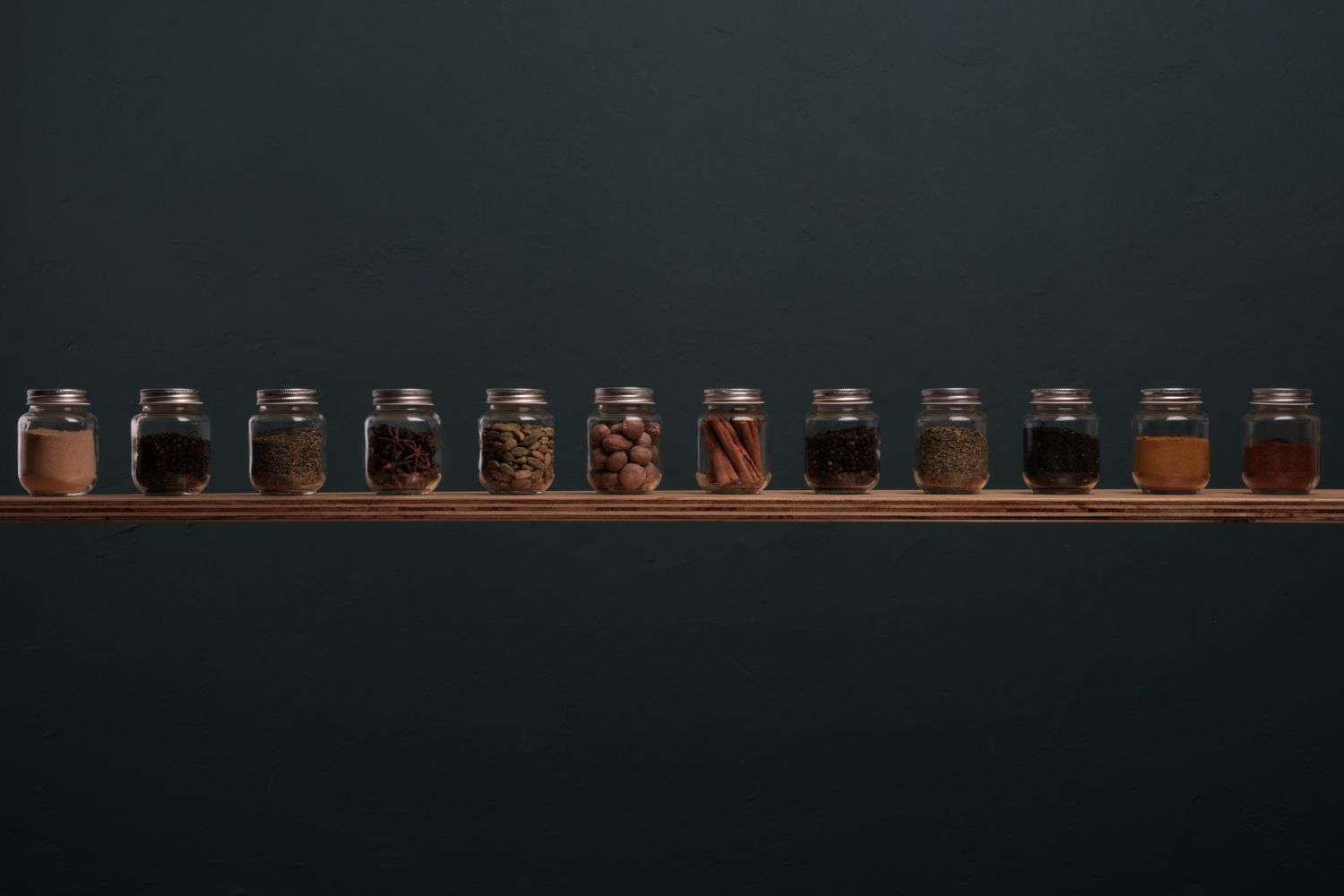
In a shallow drawer, labels on the lid can be read without lifting every jar. On a shelf, a front label is usually more useful. A stepped rack may expose only the top half of each container, so test the visible area before ordering printed labels. Place a few existing jars in the proposed position and look from your normal standing height.
Use lettering with enough contrast and space for the full ingredient name. Decorative script can make similar names harder to distinguish. Where jars hold changing ingredients, choose labels you can replace without leaving an unreadable pile of old text. Keep any information from the original packaging that you need, rather than assuming a short display label contains everything relevant.
Openings, lids and refill quantities
Compare the neck width with the measuring spoon you actually use. A wide body beneath a narrow opening may hold plenty of spice but still require pouring it out for every recipe. If a shaker insert is included, check whether it can be removed as intended and refitted securely. Large flakes and fine powders will not necessarily pass through the same holes conveniently.
Choose a size around the quantity normally bought, allowing room for a manageable refill. A huge collection of identical jars can leave half a packet outside every small container. Larger jars are useful for frequently used ingredients, while a compact jar may suit occasional use. There is no need to make every ingredient fit one volume just to preserve a uniform line.
Keep refilling deliberate
Before changing contents, clean and dry the jar and lid as directed. Remove obsolete labels before adding the new ingredient. Avoid continually topping up a partly filled jar without tracking what is already inside. If retaining dates or batch details helps your routine, transfer those details from the packaging or keep the packaging information somewhere clearly connected to the jar.
Make the final layout easy to restore. Alphabetical order works for some kitchens; grouping frequently combined ingredients works for others. Either approach should leave enough space to grasp a jar without knocking over its neighbors. A small tray for commonly used seasonings can be convenient if it remains stable and does not hide the labels. Reconsider the arrangement when the collection changes instead of squeezing extra jars into every gap.